

Yes, 52 Movies in 52 Weeks was meant to happen in one singular year, and I promise it still will! Nobody ever said I couldn’t watch—and review—multiple movies in a single week.
With my vacation to Yellowstone and Grand Teton last week, my movie-watching schedule was completely thrown off (I promise I’ve seen The Fantastic Four: First Steps; a review is coming soon.) Also, to be honest, this week’s movie kind of left me without words.
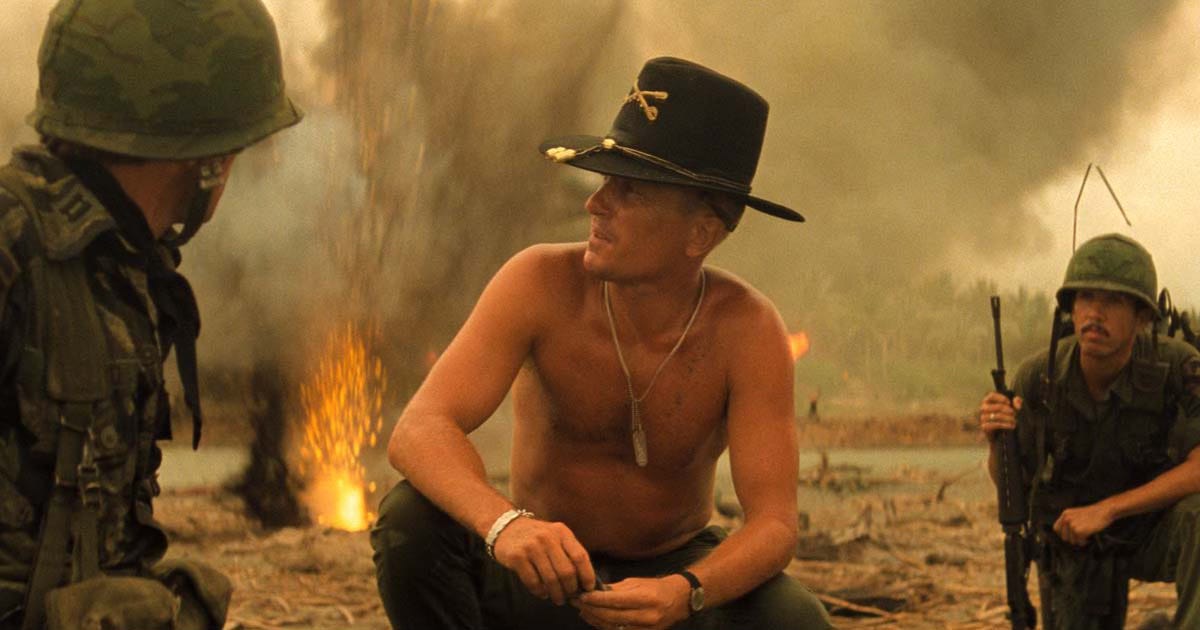
Apocalypse Now is intense. For those who have seen it, or those familiar with its subject matter, that’s a fairly obvious statement. It takes place at the height of the Vietnam War and follows Captain Benjamin Willard (played by Martin Sheen), a disillusioned soldier sent on a mission to kill a rogue colonel. Along the way, we—as well as Willard and those around him—are exposed to the horrific nature of the conflict.
After finishing the movie about a week and a half ago, I was struck by just how poignant the images director Francis Ford Coppola managed to portray on the screen were. Contrary to popular belief, filmmaking is an art form, and Coppola pushes the medium to its furthest extent in Apocalypse Now.
In many ways, the movie is the antithesis of 2025 filmmaking. Sure, there are plenty of good movies being made today that are full of iconic style (Denis Villeneuve’s two Dune films come to mind), but nothing really touches what Coppola accomplished back in 1979. What he was able to do with that film is extraordinary on so many levels, and as I mentioned earlier, I’m frankly at a loss for words to describe my experience watching it.
But I have to try. I’ll start with this: it’s a fever dream of horror and chaos, all filtered through the lens of Coppola’s genius. It’s a movie I don’t really ever have a desire to watch again—the images, motifs, and themes laid before my eyes were that horrifying and chilling—but at the same time, I’m not sure what I saw will ever leave my mind.
Isn’t that the whole point of this entire movie exercise in the first place? Nowadays, the silver screen is filled with pictures made just to entertain the lowest common denominator. As I’ve continually reached back in time, watching older movies that might not be as accessible as some today, I’ve realized that they truly don’t make them like they used to. And as many have realized long before I did, that’s really such a shame.
What makes Apocalypse Now special, at least in my opinion, is that it goes all out. Whether it’s the theatrical cut (which I watched) or one of the film’s many alternate editions, Coppola, in the words of John Hammond from Jurassic Park, “spared no expense.”
That’s partially true in the literal sense—Coppola partially self-funded the project. Despite the success of his earlier work in the ’70s, Hollywood studios refused to greenlight Apocalypse Now. This baffled Coppola, who, at the height of his powers, couldn’t understand why Warner, Universal, or Paramount wouldn’t pony up $12–14 million to make what ended up being heralded as one of the best war films of all time.
It was a complicated situation, but it most likely came down to this: 1) it wasn’t just any war movie—it was a movie about the Vietnam War, and 2) Coppola wanted to own the negative (i.e., the original, unedited strip of film the movie was shot on), which would, in practice, mean he owned the movie. Those two things were nonstarters from the studios’ perspective. They didn’t want to touch Vietnam—the U.S. Army had just evacuated Saigon in defeat around the time this film was being pitched—and a director practically owning a movie was something they simply wouldn’t allow.
So, Coppola had to fight tooth and nail to make Apocalypse Now. That fight didn’t stop once shooting began in 1976, as it was a train wreck from the start. Harvey Keitel was originally cast as the lead, but after a few days of shooting in the Philippines, he left the project. Coppola brought in Sheen to take over, but that didn’t stop the troubles. Here’s just a small list of unfortunate occurrences that made the production of Apocalypse Now, much like the events it portrays, a living hell:
A typhoon shut down production and destroyed a good portion of the sets. Most of the crew returned to the United States for several weeks.
Martin Sheen, who was only 36 years old, suffered a near-fatal heart attack during production, leaving him unable to work for months. His brother filled in during his recovery, but they could only film him from behind (obviously).
When Marlon Brando, who played the rogue Colonel Kurtz, finally arrived in the Philippines, he was so overweight that Coppola opted to film only his face, using a body double for any wide shots.
Once filming concluded, the post-production team struggled with the audio because the on-set crew didn’t capture proper ambient sound of the jungle. There was also difficulty acquiring studio recordings of gunfire, as such a library didn’t exist at the time.
That’s just a small glimpse into the nightmare that was the making of Apocalypse Now. I’m sure that with a deep dive, one could uncover many more instances of turbulence throughout the production.
When everything was said and done, the originally planned $12–14 million budget had ballooned to around $25 million. Coppola resorted to putting up his car, house, and all the profits he made from The Godfather as security to finish the project. Talk about dedication to one’s craft.
It’s a miracle that anything coherent came out of all that. It’s an even greater miracle that one of the greatest movies of all time emerged from such a maligned process.
As I said earlier, writing coherent thoughts about what makes Apocalypse Now so great is really difficult for me. The proof is just in watching it. Francis Ford Coppola is a filmmaker who, at his best, creates movies that transcend time. The Godfather and The Godfather Part II—two films I’ve seen before but will revisit during this 52 Movies in 52 Weeks journey—will be talked about forever. Same with Apocalypse Now.
The themes, ideas, and images displayed on movie screens in 1979 still communicate that war, no matter the justification, is always ugly. It’s the curse of the human experience that such great lengths can be taken to harm one another. Apocalypse Now illustrates that perfectly.
Well, I guess I could get coherent thoughts out after all. Look at me go!
Final Score: 4.5/5
It’s time for the Letterboxd Minute. Here are some of my favorite reviews from Letterboxd, the best social media app on the planet:
Jay (4.5/5): “All that teasing of Marlon Brando to reveal he was Baron Harkonnen.”
Marianna (5/5): “I refuse to believe that this lost Best Picture to Kramer vs. Kramer… I just know Coppola was embarrassed too.”
Maria (4.5/5): “I love the smell of Marlon Brando inventing acting through three seconds of screen time and literally obliterating every other actor ever in the morning. Also, napalm.”
At the end of each review, I’ll update my rankings of the 52 movies I’ll be watching throughout the year. With only two movies watched, it’s still a fairly easy exercise, but I foresee it becoming much more difficult down the road.
1. The Apartment (1960)
2. Apocalypse Now (1979)
To me, The Apartment is just a film I imagine I’ll want to rewatch in the near future. That doesn’t mean Apocalypse Nowisn’t good—I think I’ve said enough times that it’s quite good, actually—but its premise is such that it’s just a hard movie to want to see again, and that knocks it down a peg for me.