

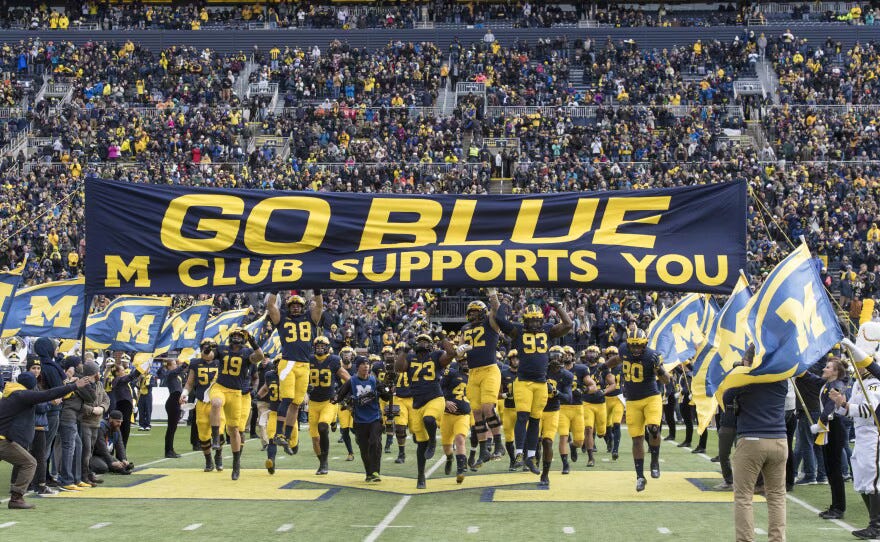
Michigan’s wallets are going to be stinging for a little while.
Since 2023, when news of Conor Stalions and sign stealing at Michigan first broke, everybody had been holding their breath to see what penalties the NCAA would bring down on the Maize and Blue. The Big Ten had already instituted its own penalties back in 2023, forcing then-head coach Jim Harbaugh to miss two crucial games against Penn State and Ohio State—both of which Michigan ended up winning. Then the university penalized itself by making Sherrone Moore, the new head man after Harbaugh left for the NFL following the 2023 campaign, miss two games—Weeks 3 and 4—of this season.
That wasn’t enough for the NCAA.
Yesterday, the NCAA’s Committee on Infractions showed that it actually has some teeth. Gone are the days of pretending games didn’t happen, and gone are the days of instituting postseason bans on student-athletes who weren’t even at the school when the infractions took place. It’s the dawn of a new era of penalization, and this one goes straight for the pocketbook.
Michigan is facing a financial hit of over $20 million—as much as $37 million, according to Yahoo Sports’ Ross Dellenger. Most of that will come in the form of lost postseason revenue over the next two years. And while some fans are disappointed there wasn’t a postseason ban, don’t get any of this twisted: it essentially is one. Yes, Michigan’s players, coaches, and fans will still get to enjoy the luxuries of participating in the postseason, but the people who fund the football operation will not. That’s right—Michigan will not receive a dime from any postseason game it plays over the next two seasons.
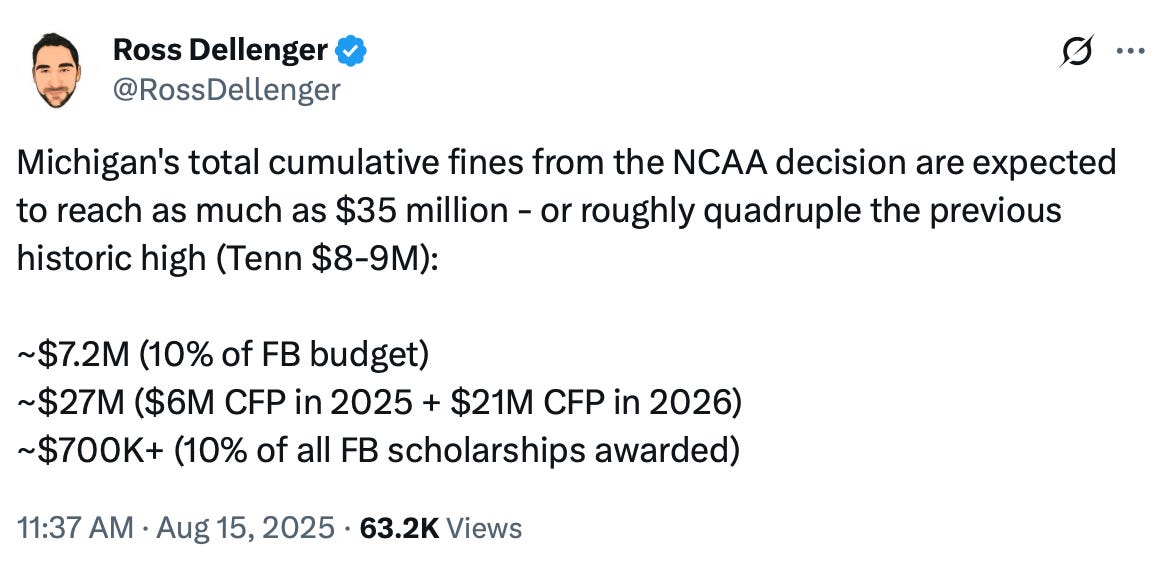
It’s a lot of money headed straight down the drain. Michigan’s ability to win football games probably won’t be affected in 2025, but moving forward, the limitations on roster building due to lost revenue could be significant. The Wolverines are not strapped for cash, but they might not have as much as they’re used to, and there will be some growing pains associated with that.
Michigan is going to appeal the NCAA’s ruling, though it’s not exactly clear if there’s any legal ground for the university to stand on. The football program broke a clear rule—it stole signs in a manner that was unbecoming. In fact, the NCAA deemed Michigan’s actions so egregious that a postseason ban would have been a worthy penalty, but the organization didn’t want to punish student-athletes who weren’t around when the infractions took place. That’s understandable.
Overall, Michigan fans will probably think they got off scot-free. All it takes is ~$20 million to cheat and win a national championship? I’m sure they’ll take that deal. But when it’s 2027 and the Wolverines can’t afford to land the next big transfer from the portal or sign the next star recruit—and the roster is severely depleted compared to rival Ohio State’s—they might be rethinking their choices.