

The second international break of the season has arrived, giving us a chance to assess the first 10 matchweeks, catch up on everything we’ve neglected over the past three months and, if you’re a Premier League manager, contemplate whether you’ll still have a job by the end of the month.
Some clubs have made enormous strides since August, while other have found themselves in circumstances that make a root canal sound like a pleasant alternative. Manchester United is in the relegation zone, Crystal Palace stinks and is at the bottom of the table, and Nottingham Forest just beat Manchester City in a match that might’ve saved Oliver Glasner’s job.
All 20 managers have survived the first 10 matchweeks, which feels like a clerical error considering the Premier League’s recent history. Eleven managers departed during the 2025-26 season, and according to the BBC, nearly a third of all managerial exits in Premier League history have occurred in November or December.
That’s right — the grim reaper is coming.
Of course, the logic behind making a chance now is straightforward. Clubs have two weeks without league football to evaluate their options, interview candidates and attempt to fix whatever has gone wrong before the congested December schedule arrives. Waiting until January might mean losing several more matches, while acting now could provide a new manager with enough time to potentially rescue the season.
But firing somebody is the easy part. Finding a replacement who makes things better is more complicated, and a couple of these clubs have already learned that lesson the expensive way.
So, we’re going to evaluate five managers who find themselves in some degree of danger, using three questions: What do the results tell us? Do the underlying statistics support those results? And would a managerial chance solve the problems?
First, some numbers.
Figures through 10 Premier League matches. Expected-goal difference (xGD) measures the quality of scoring chances created minus those conceded. It isn’t a forecast, but it helps distinguish poor performances from poor results.
Manchester United: Yes, It’s Time
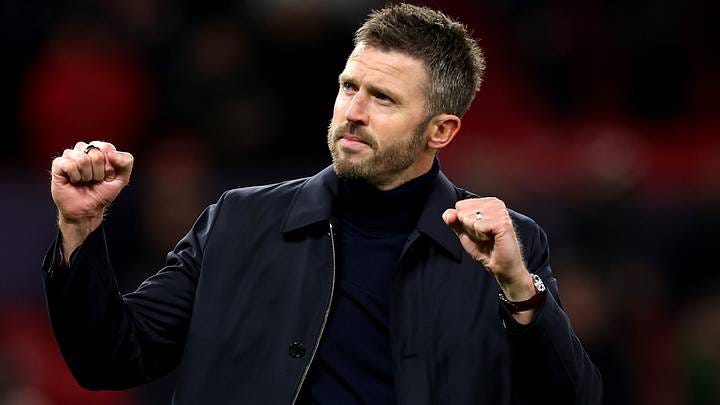
Michael Carrick seems like a good person, which is unfortunate because being a good person doesn’t appear to be worth much when you’re managing Manchester United. The former midfielder returned to Old Trafford with the unenviable responsibility of repairing the wreckage left behind by Ruben Amorim, although the results suggest that he may have underestimated just how much damage had been done. United has eight points through 10 league matches and sits 18th in the table, having failed to win any of its previous eight Premier League games.
Sunday’s 4-4 draw against Aston Villa was the sort of match that makes United supporters wonder whether watching football is a worthwhile use of their limited time on Earth. Villa scored twice inside four minutes, the earliest United has ever fallen two goals behind in a Premier League match, before Carrick’s side managed to drag itself level by halftime. The second half wasn’t much kinder, with Villa restoring its two-goal advantage before Joshua Zirkzee and Patrick Dorgu scored in stoppage time to rescue a point.
There is something admirable about a team refusing to surrender, especially after United’s extraordinary Champions League comeback against Roma earlier in the week. But the fact that United keeps requiring emergency rescue operations should probably concern the people responsible for preventing those emergencies in the first place. This isn’t a football club so much as an episode of Kitchen Nightmares, where everybody seems surprised that the restaurant keeps catching fire despite nobody bothering to fix the stove.
The expected-goals numbers are somewhat encouraging, with United generating 18.0 xG while allowing 17.9. That’s the statistical profile of a midtable team rather than one destined for relegation, suggesting that the results have been unkind to Carrick. But even the most generous interpretation of those numbers leaves United some distance from competing for Champions League qualification, and the fact that mediocrity represents the optimistic scenario should tell us something about the standard of football being produced.
Carrick didn’t appreciate questions about his future after the Villa match, challenging a reporter who suggested that discussions with the club’s leadership would take place during the international break. I admire the confidence, but it’s difficult to argue against having those conversations when your team hasn’t kept a clean sheet in its first 10 league matches, something United hadn’t managed to do since 1986-87.
There might come a time when Carrick becomes the manager Manchester United needs. For the moment, however, the performances haven’t demonstrated enough improvement to justify continuing with a project that appears to have reached its ceiling.
Verdict: Sack him.
Crystal Palace: Yes, and This One Isn’t Particularly Close
Crystal Palace has managed to produce a more depressing opening 10 matchweeks than Manchester United, which deserves some recognition considering the competition.
