

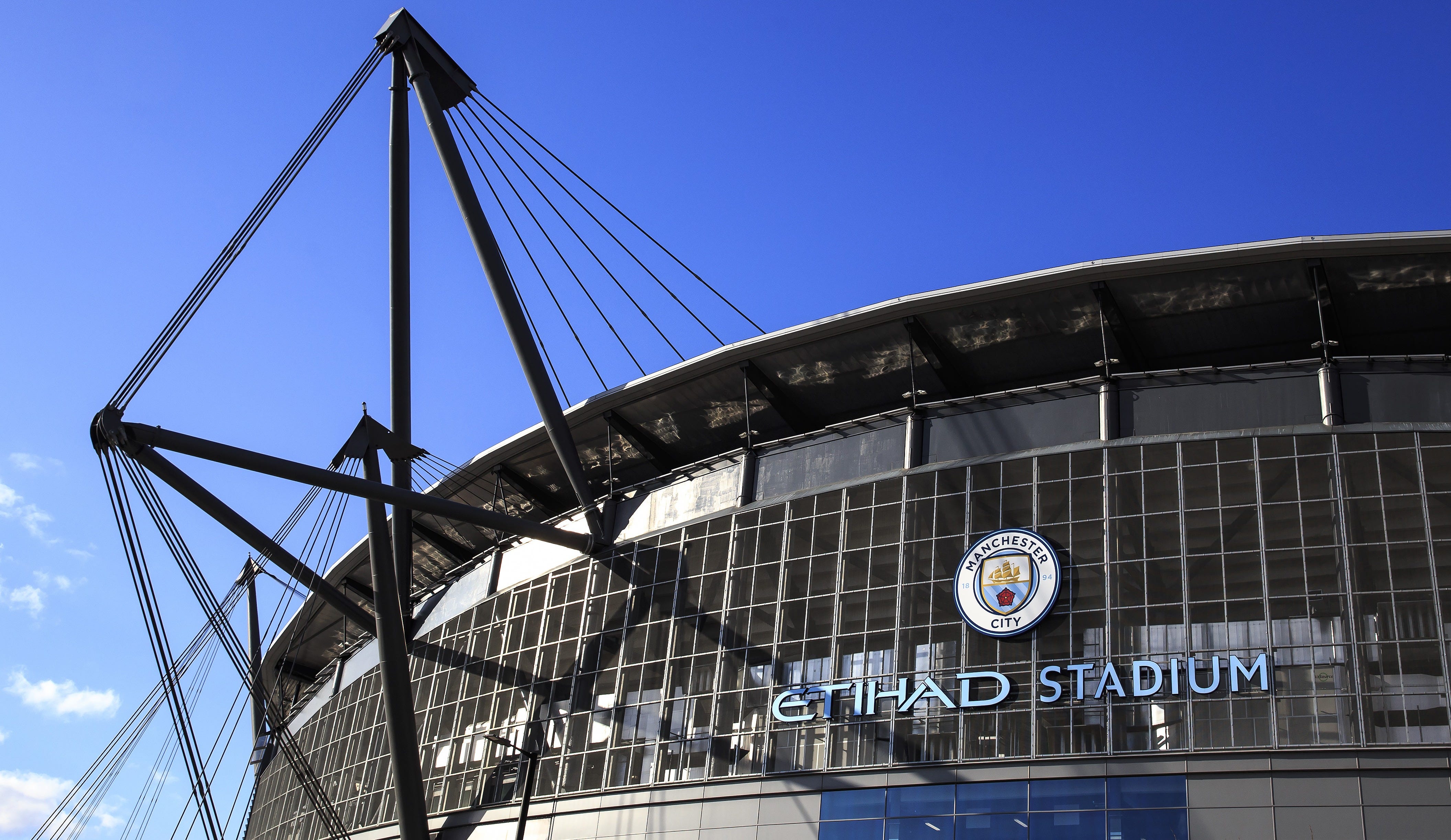
For more than three years, the number 115 has followed Manchester City like an annoying sibling.
It has been sung from away ends and plastered across social media, becoming shorthand for an enormously complicated case that most people, myself included, probably didn’t completely understand. There were sponsorships and emails and payments and arguments about cooperation, all of it buried beneath enough legal language to make a lawyer blush. Eventually, “115” became less a description of the allegations against Manchester City and more a thing people yelled whenever the club won something.
We can probably retire that version of the joke now.
An independent commission has reportedly found Manchester City guilty on all but one of the 115 charges brought against it by the Premier League, a remarkable conclusion to the first part of a case that has been hanging over the most successful English club of the last decade and a half. There is still quite a bit left to sort through — sanctions have not been decided and City is expected to appeal — but the uncertainty surrounding whether the Premier League could actually prove its case has disappeared.
It could. And 114 times over, apparently.
So, What Did Manchester City Actually Do?
Trying to explain 115 charges individually would be a particularly effective way to make sure nobody ever reads The Football Corner again, so let’s simplify things.
The charges broadly concerned three things. City was accused of providing inaccurate financial information, including information surrounding sponsorship revenue and payments to managers and players; breaking financial regulations imposed by both the Premier League and UEFA; and failing to cooperate with the Premier League’s investigation into all of it. The allegations stretched across nearly a decade, from 2009 to 2018, a period that happens to coincide with Manchester City transforming from the club that occasionally had Shaun Wright-Phillips (like, who is that?) running down the wing into one of the richest and most powerful teams on the planet.
Some of the most serious allegations involved sponsorship income. City was accused of presenting money as commercial revenue from sponsors when some of it was actually being supplied by the club’s ownership, effectively making the business appear to generate more revenue than it really did. That distinction was rather useful under financial regulations designed to limit how much clubs could lose, because more legitimate revenue meant more room to spend on players, wages and everything else required to turn a very wealthy football club into an almost impossibly good one.
There were also allegations involving payments to managers and players that were not fully reflected in the financial information City provided, along with a collection of charges concerning the club’s refusal to cooperate with the Premier League’s investigation. The latter has always seemed almost secondary because hidden payments and disguised sponsorship money sound considerably more dramatic, but it is difficult to have a regulatory system if the regulator cannot actually regulate. If every club is required to provide certain information and assist an investigation when questions arise, deciding not to do so is not some administrative footnote.
Football has dealt with financial violations before, including quite recently. Everton and Nottingham Forest were both docked points for exceeding the Premier League’s profitability and sustainability limits, while Chelsea has dealt with historical financial irregularities discovered after its ownership changed. Those cases were different in both nature and scale, particularly Chelsea’s, where the new ownership reported issues it discovered from the previous regime.
Now Comes the Punishment
There is a wonderfully absurd range of possibilities available here, running from the relatively mundane — fines, warnings and points deductions — all the way to expulsion from the Premier League. Rule W.51 of the Premier League handbook gives the independent commission broad authority when determining sanctions, including the ability to suspend a club, deduct points, order compensation or expel it from the league entirely. It can also impose another punishment it considers appropriate, which leaves considerably more on the table than the tidy list of penalties we normally associate with financial breaches.
My preference is considerably easier to explain.
Relegate them.
A points deduction large enough to make relegation almost unavoidable would accomplish that, although I would not be particularly bothered by something even harsher. Expulsion would go beyond ordinary relegation because City would not simply report to the Championship the following August; the Championship is operated by the English Football League, a separate organization, and City would have to apply for membership somewhere else in the English pyramid. That would be an extraordinary outcome, but after 114 guilty findings in a case that covers nearly a decade, we have probably exhausted the usefulness of pretending this is an ordinary situation.
More importantly, relegation does not appear to be some punishment existing exclusively in the imagination of rival supporters who have spent the last three years dreaming about Manchester City away at Luton Town. The commission has the authority to impose an enormous sporting sanction, and the breadth of Rule W.51 means the eventual punishment doesn’t have to resemble the relatively modest deductions handed to clubs for straightforward financial breaches in the past. Nobody outside the process knows exactly what the commission will decide, but a punishment severe enough to remove City from the Premier League is a legitimate possibility.
Every professional sports league is built on a collection of rules that are, at some level, completely arbitrary. There is nothing naturally occurring in the universe that says a Premier League club should only be allowed to lose a certain amount of money, just as there is no law of nature requiring a football field to be a certain size or declaring a player offside because his shoulder wandered six inches beyond the final defender. Somebody came up with those rules, everyone agreed to compete under them and the competition works because everyone involved accepts that agreement.
You can think the financial rules are stupid. City certainly has every right to argue they are stupid. Clubs can vote to change them, replace them or throw the entire rulebook into the Thames if enough of them decide that would improve English football.
What cannot work is one club operating under a different set of rules from everybody else.
The Harm is Irreparable
Liverpool supporters probably do not need much encouragement to think about 2018-19 or 2021-22, but indulge me anyway.
Manchester City won the Premier League by one point in both seasons. Liverpool accumulated 97 points in the first of those campaigns and 92 in the second, totals that would have been enough to win the league in plenty of other years and instead produced two second-place finishes. Two points across two seasons separated Liverpool from turning one of the greatest periods in its modern history into something even more ridiculous.
Arsenal supporters have their own scars from chasing City. Manchester United finished second behind its neighbor twice. Those are the clubs everyone will mention because title races are the easiest thing to remember, but the damage doesn’t stop at second place.
Move City out of a league table and everybody below it moves somewhere. Fifth becomes fourth. Seventh becomes sixth. A club that spent Wednesday nights watching the Champions League on television might have been playing in it instead, collecting the money that comes with it and using that money to sign players the following summer. Another might have reached the Europa League, another might have survived relegation and suddenly we are doing the sort of alternate-history exercise that eventually ends with somebody asking whether Tottenham would have won the Champions League by now.
Probably not. Sorry.
Still, that is the problem with trying to repair something like this retrospectively. Even stripping titles cannot recreate what disappeared.
Give Liverpool the 2019 title tomorrow and nobody gets to experience Liverpool winning the 2019 title. There is no final whistle, no celebration, no parade and no moment when supporters realize the thing they have spent nine months hoping for has actually happened. The same applies farther down the table, where Champions League qualification might have changed a transfer window, which might have changed the next season, which might have changed everything that came after it.
Football does not provide refunds on alternate realities.
Hit Them Hard
There is going to be a temptation, particularly once the lawyers really get involved, to reduce all of this back into numbers. How many points? How large a fine? Which seasons? Which regulations? Which charges survive the appeal? There will probably be enough hearings, documents and procedural arguments over the next several months to make all of us regret ever learning what financial fair play was in the first place.
The eventual number of points matters, of course, but only because of what those points actually do. A 10-point deduction that drops City from first to third would technically qualify as a significant sporting punishment while doing relatively little to alter the long-term trajectory of the club. Fifty points, 70 points or whatever ridiculous number would be required to make relegation essentially unavoidable is something else entirely, and Rule W.51 gives the commission enough latitude that we cannot dismiss an outcome along those lines simply because English football has never seen it before.
There is also a reason the punishment for this cannot simply be measured against Everton losing points for one PSR breach or Nottingham Forest losing points for another. Those cases established that violating the league’s financial rules can carry an immediate sporting consequence, but City has reportedly been found guilty on 114 charges covering years of financial reporting, sponsorship arrangements and failures to cooperate. Treating that as merely a larger version of the same offense would miss the scale of what the commission has apparently concluded.
Relegation would hurt Manchester City in ways a fine never could. It would affect revenue, European qualification, the players willing to remain at the club and probably quite a few other things nobody will fully appreciate until City is actually staring at the possibility of spending a season outside the Premier League. For a club that has spent the better part of two decades building itself into one of the most powerful institutions in world football, losing its place at the top of the English game would be an unmistakable consequence.
The Premier League cannot return those seasons to Liverpool or Arsenal or Manchester United, nor can it determine how every Champions League race, Europa League race or relegation battle might have unfolded under different circumstances. It can only decide what 114 guilty findings are worth now, knowing that every club watching this process will eventually have an answer to a much simpler question: Was breaking the rules worth whatever happened afterward?
If Manchester City pays a fine, loses a manageable number of points and continues along more or less unchanged, the answer becomes uncomfortable.
If Manchester City gets relegated, it does not.
I think the point deduction should be 2 years so the chance of promotion is a challenge the next year and possible relegation again to league one. Can you imagine man city in league one?