

With a little more than two hours left before the trade deadline yesterday, it appeared the Rangers were heading toward a disappointing day. They’d made zero significant moves, while the teams ahead of them in the standings—the Astros, Mariners, Yankees, and Red Sox—had all made trades that drastically improved their rosters.
But then the tides turned, and Texas pushed its chips to the middle of the table.
Three trades were made by the Rangers yesterday, each adding to the major league pitching staff. LHP Danny Coulombe, RHP Merrill Kelly, and RHP Phil Maton were the haul. All three are arms that make the best pitching staff in baseball that much better.
Zero external upgrades were made to the offense, which is the one gripe that could be had about the Rangers’ deadline decisions. The pitching—what Chris Young and the rest of the front office chose to improve—has been the team’s strength. It’s the lineup that’s lagged behind. Still, no bats. That’s curious.
I’m not sure whether that’s because they didn’t feel anything was worth it or because the prices for some of the impact bats that were moved were too high. Either way, it’s a bit of a letdown that nothing eye-popping was added offensively—especially since the front office and ownership seemingly decided that the budgetary restraints that appeared to be holding the team back weren’t in place during this deadline. More on that in a bit.
So, let’s dive into each of these trades one at a time and analyze what each brings to the table for the rest of the season.
LHP Danny Coulombe
The price: LHP Garrett Horn (Single-A Hickory)

On paper, trading for Coulombe isn’t a flashy move. In practice, however, it might end up being one of the more consequential deals of the deadline, especially at this price.
Coulombe has been one of the most underrated relief arms in the league since his age-31 season in 2021, during which he’s posted a 2.44 ERA over 158.2 IP. When healthy—and that’s been an issue throughout his career—he’s one of the better bullpen pieces a team can have.
What makes it even better is his performance this season. So far in 2025, he has an astounding 1.16 ERA over 31 IP.
Wow.
Just... whoa.
For a bullpen that’s already third in the majors in ERA to add a dude with those numbers is pretty neat, if I do say so myself.
If I had to guess, he’ll likely slot in with LHP Hoby Milner, RHP Shawn Armstrong, and RHP Chris Martin (when he returns from his calf injury) in that back-end leverage role. He’s a reverse-splits guy—he pitches better against righties (.164 BAA) than lefties (.211 BAA)—so expect him to face a lot of right-handed bats down the stretch.
Here’s a glimpse at some of the more advanced statistics, courtesy of Baseball Savant:
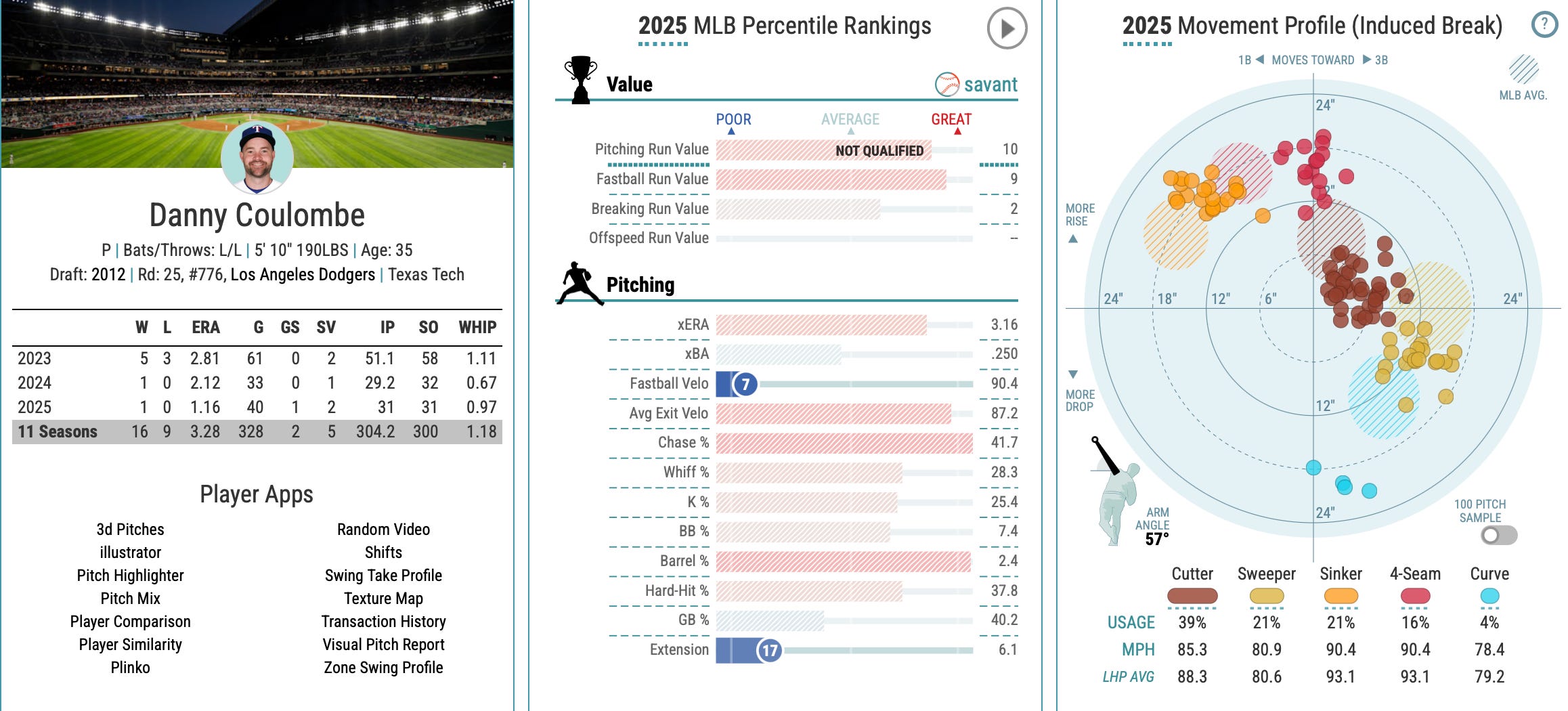
The succinct version? Coulombe will almost certainly be an integral piece of the bullpen puzzle the rest of the season. On its own, the move likely wasn’t enough to push the Rangers over the edge. But the trades that followed? Well, those might just be.
RHP Merrill Kelly
The price: LHP Mitch Bratt (Double-A Frisco), LHP Kohl Drake (Double-A Frisco), RHP David Hagaman (Single-A Hickory)
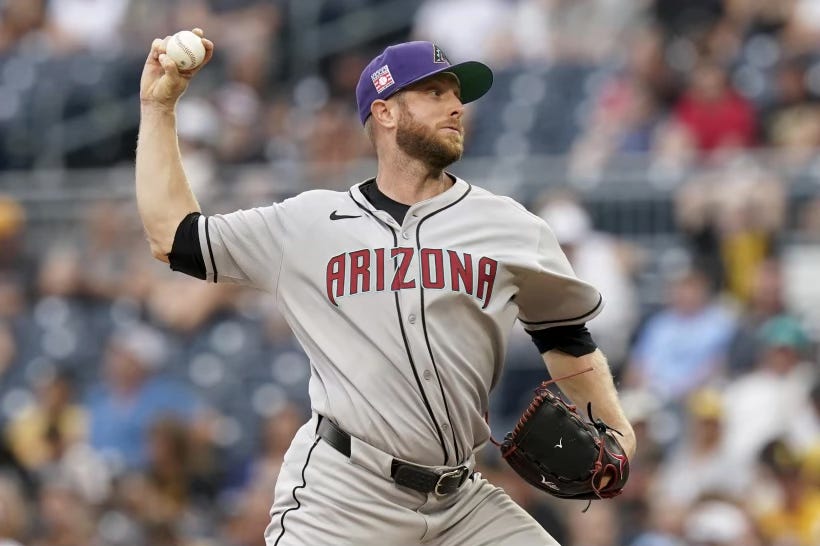
If you’d told me the Rangers would trade for an impact starting pitcher at the beginning of the day, I’d have probably thought you were bananas. But you’d have been right.
Kelly isn’t the flashiest of names, but he’s a solid starter who fits perfectly behind the two-headed monster of Jacob deGrom and Nathan Eovaldi. With that one-two-three punch, the top of the Rangers’ rotation is filthy. All they have to do is get into the postseason, and no team will want to face them because of that rotation.
The lowdown on Kelly: he’s a veteran arm who, at one point, looked bound never to step foot on a major league mound. But after being released by Tampa Bay in 2014, he went to South Korea and pitched well in the KBO. That caught the attention of MLB teams again, and the Diamondbacks ultimately brought him back stateside. Now, here we are—Kelly just brought in quite the haul for Arizona, while Texas gets a reliable pitcher posting one of the best seasons of his career.
It’s a remarkable story and a testament to how things can work out for those with the work ethic and determination to keep going.

The one glaring downside to this otherwise fantastic trade is the price. That trio of pitching prospects—Bratt, Drake, and Hagaman—were all arms I really liked. I’m not sure how the rest of their careers would’ve played out (in Bratt and Drake’s case, I could see a bullpen future), but it’s still sad to see familiar prospects leave. Trading Drake is especially tough—he’s a DFW native from Wylie, and it would’ve been cool to see him pitch for his hometown team.
Nonetheless, the Rangers got better by acquiring Kelly. He adds to what’s already one of the best rotations in baseball. If I had to guess, he’ll likely replace Kumar Rocker in the rotation, sending the rookie right-hander to the bullpen, a scenario I actually like.
Oh, one more thing: if you recall, the Rangers lost just one game in the 2023 World Series. Who started that game for Arizona? Merrill Kelly.
RHP Phil Maton
The price: RHP Skylar Hales, LHP Mason Molina, and international bonus pool money
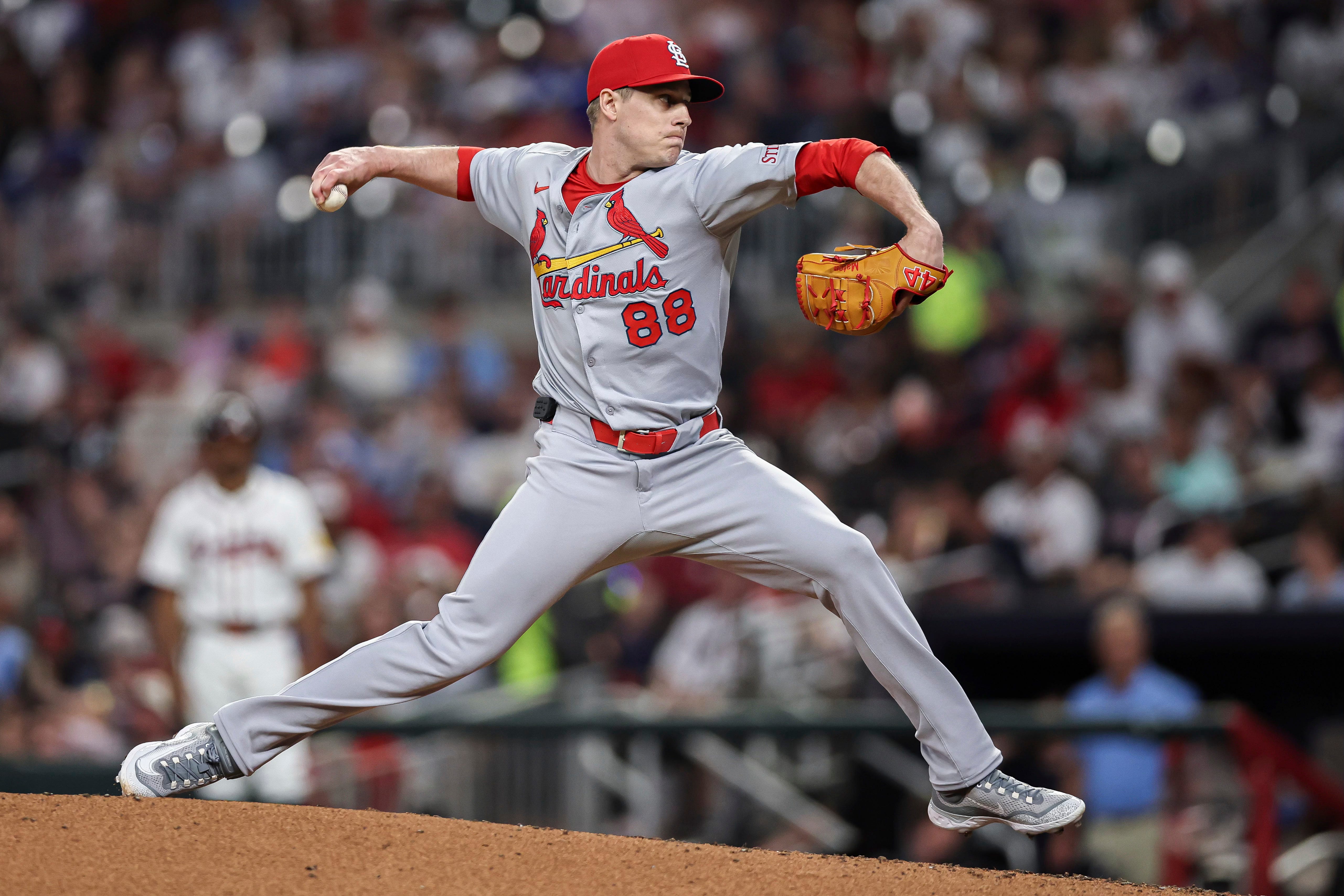
This one was surprising.
Never in a million years did I think Phil Maton, of all people, would be a Texas Ranger, especially given the history between him and the franchise.
Let me take you back to the beginning of the 2024 season. The Rangers started hot, with Josh Jung launching into the year on fire. That momentum was crushed when the team arrived in Tampa to face the Rays. Why? Because of what Phil Maton did.
Jung missed most of the 2024 season, and once he returned, he was never quite the same.
I have no definitive proof that Maton intentionally hit Jung’s hand. The only circumstantial evidence? Maton pitched for the Astros for several seasons, and the bad blood between Houston and Texas is well documented.
But once Jung and Maton hash things out—as they’ll no doubt have to in the coming days—the merits of this trade become clearer. For one, Maton is having a great year. Through 40 relief appearances, he has a 2.35 ERA. If the season ended today, that’d be the best ERA of his career. He’s got electric stuff, and according to some reports (though I’m not sure how well-founded they are), Maton could be an option at closer. Since the team doesn’t have a definitive ninth-inning stopper at the moment, any name in the mix is legitimate.
The end-all-be-all with Maton? He becomes a core member of a bullpen that’s already among the best in the league. That’s what I call strengthening a strength.
Perhaps the biggest development from the trade deadline is that the Rangers decided to soar past the Competitive Balance Tax line. This was a big surprise, given that it was previously believed the team would try to stay below that threshold at all costs. But owner Ray Davis pulled out the checkbook, and for that, we all should be grateful.
The most obvious reason to stay below that line is the penalties incurred when a team crosses it. Here’s the rule:
A team that exceeded the CBT threshold in the preceding season [the Rangers did] will lose its second- and fifth-highest selections in the following year’s Draft, as well as $1 million from its international bonus pool for the upcoming signing period. If such a team signs multiple qualifying-offer free agents, it will forfeit its third- and sixth-highest picks as well.
On its face, that’s a hefty penalty. But the Rangers are in win-now mode, so forfeiting draft picks and international bonus money isn’t as big of a deal (at least short term) as some might think.
If anything, it’s a vote of confidence in this year’s group. The Rangers are now betting on this pitching staff (heck yeah!) and this offense (that might be a bad idea) to get it done. We’ll see how it plays out. For now, let’s enjoy the fact that the Rangers are all-in on winning—more than you can say for half the teams in the majors.
Everybody be grateful that Adolis García is still on the team.
I wrote a couple of weeks ago about the possibility of García being traded, but once the team started winning, that concern faded. That is, until I saw this tweet.
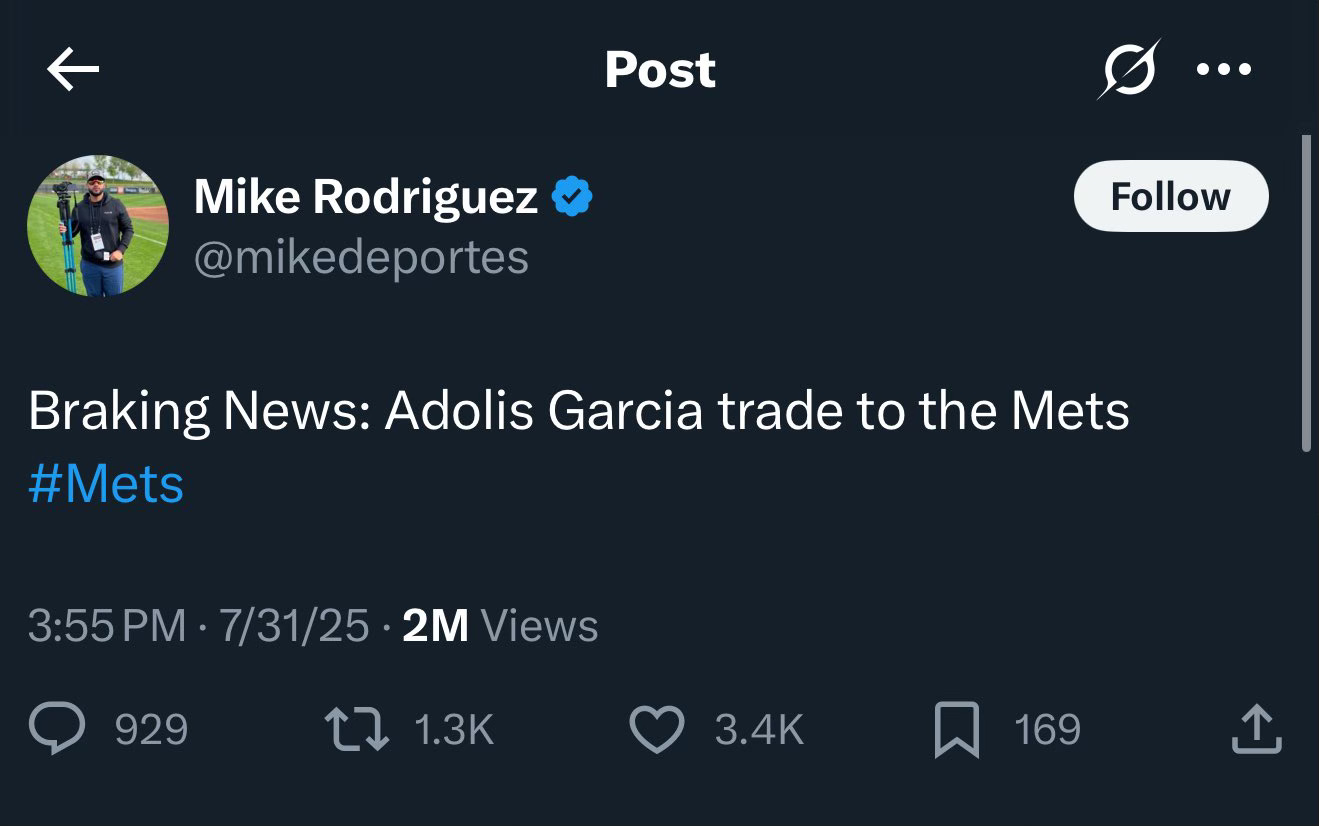
Panic ensued among Rangers fans. Was it real? If so, why? What was going on?
Well, it turns out it wasn’t real, and everything was OK. I think our biggest clue should’ve been the spelling errors.
And in the end, it all turned into a big ole joke on social media. You’ve got to love it when that happens.
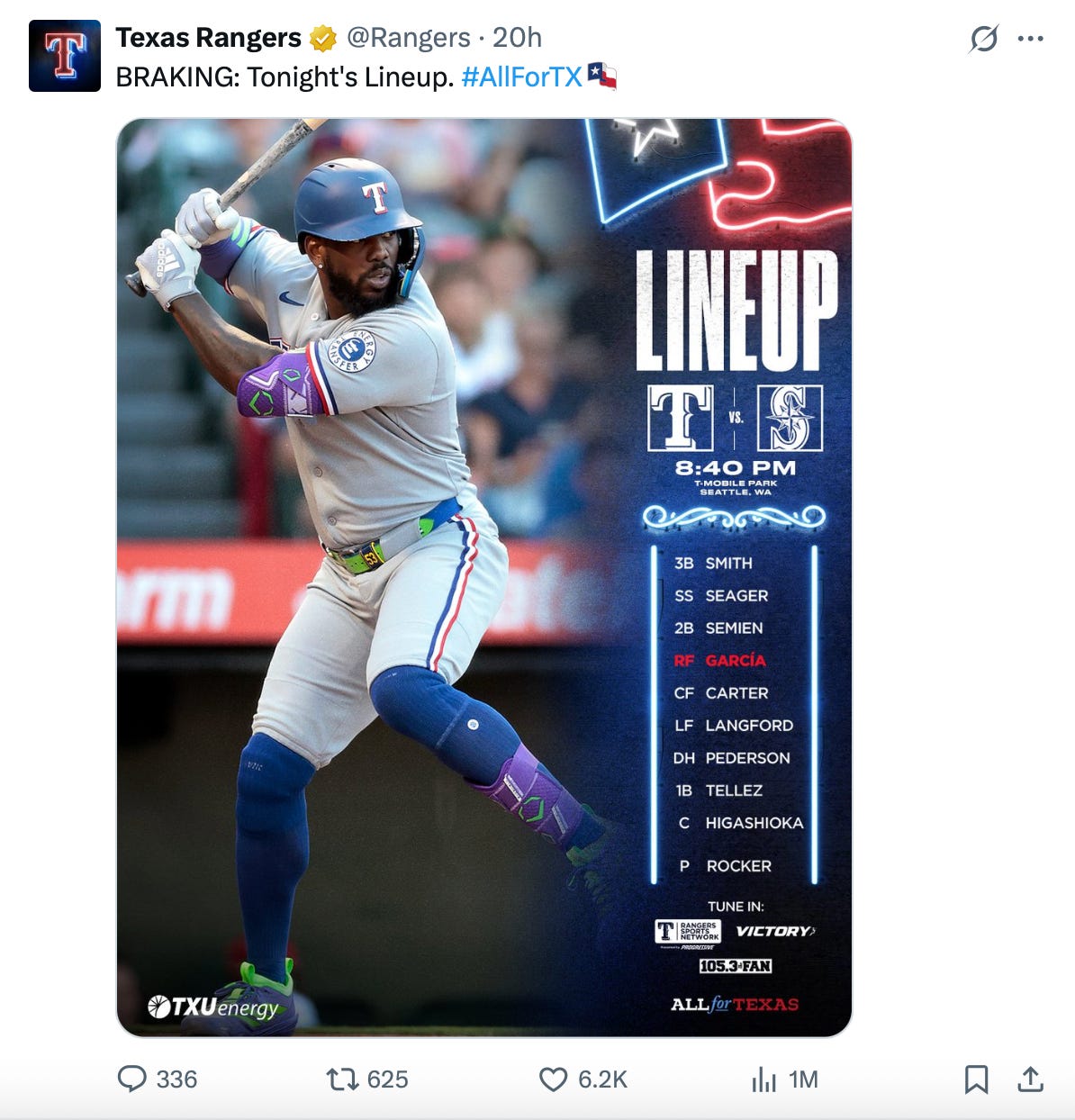
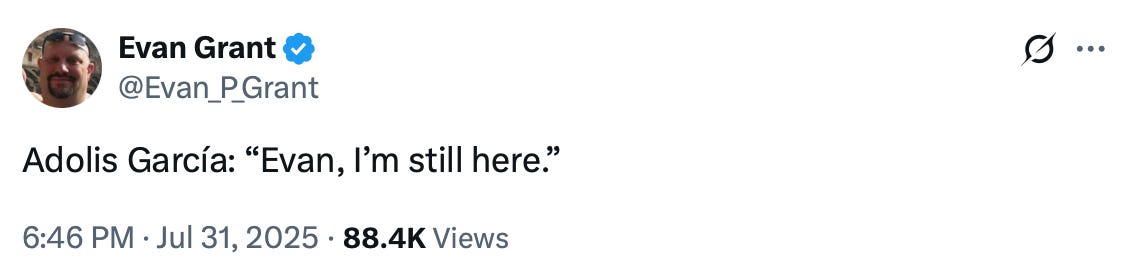
I’m glad García is still here. He’s a franchise legend and will have my wholehearted support as long as he’s an Arlington resident.
So, that’s where we stand. The Rangers dealt a big chunk of their pitching depth in the farm system with the goal of bolstering the big-league staff. The arms are better. The offense stayed the same.
Chris Young and the Rangers are clearly betting that the bats will improve down the stretch—and while that’s an admirable hope, I’m not sure it’s a realistic one. Personally, I’ve seen enough to know this group of offensive weapons is inconsistent at best and unwatchable at worst. But who knows? Maybe I’m wrong and they’ll ride their July hot streak all the way to the end.
As things stand, the Rangers are a game back of the final Wild Card spot, with three more games against the Mariners—the team directly ahead of them—on deck this weekend. There’s no doubt this is an important stretch. All that remains is to see how they perform.
the only disappointing thing about yesterday was after ownership and the front office showed so much confidence in this team, the laid an egg that night with a 6-0 on only 4 hits. Hopefully they can show in the next 3 games that ownership had a reason to invest in the rest of the season.