

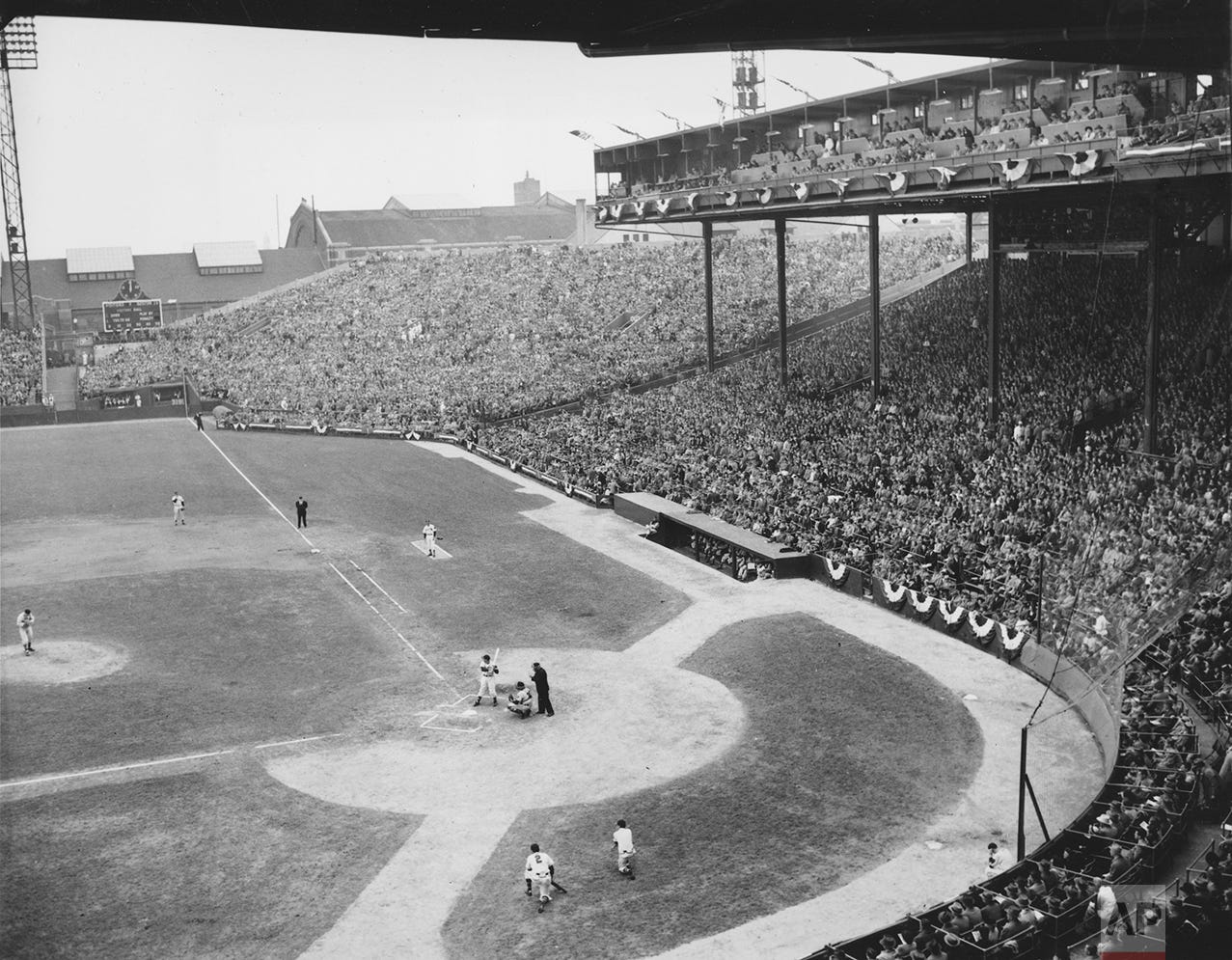
The Cleveland Guardians and the New York Mets, two teams with the longest World Series title droughts, were just eliminated from the postseason and will not have an opportunity to break their respective curses.
Cleveland hasn't won a championship since 1948, and the Mets haven't reached baseball's highest mountain since Bill Buckner let a ground ball go right through the wickets in 1986. It's been a long time.
As a fan of a team that didn't win its first World Series in franchise history until 2023, 51 years after the franchise had made its arrival in the Lone Star State, I know exactly what it feels like to crave the ultimate glory. Teams like the Yankees and the Cardinals are riddled with thrilling memories of championships gone by. Even if those moments of greatness happened over a generation ago, having hardware in the trophy case is still a luxury. The rest of us look on in envy, wondering what it's like to regularly soak in a champagne bath.
In hindsight, it was going to be difficult for either the Guardians or the Mets to triumph over the behemoths that the Yankees and Dodgers are. However, it was certainly still possible, which is what makes baseball great. But it didn't happen this time. The two passionate fan bases were left empty-handed once the final out of their seasons was recorded.
As the Dodgers and Yankees duke it out on the diamond this next week in what is certainly going to be a great World Series, I thought it would be entertaining to revisit the most recent championship for the team that's had to wait the longest to secure another piece of hardware once more. Many baseball fans, including me, might not be aware of how Cleveland won the 1948 World Series. That changes today. While I certainly can't capture the magic of anything written by a true fan of the Guardians or anything recorded about the series at the time, I can give you my perspective. Before each game of the 2024 World Series, I'll post a piece about that same game of the 1948 series.
Baseball's deep history resonates with so many. Baseball has been here forever. It's important to cherish all the memories we've had with it. I hope you'll walk with me as we learn about baseball’s storied history. It's going to be a lot of fun.
"The one constant through all the years, Ray, has been baseball. America has rolled by like an army of steamrollers. It's been erased like a blackboard, rebuilt, and erased again. But baseball has marked the time." - James Earl Jones, Field of Dreams
If it weren't for a win over the Boston Red Sox in a one-game playoff at the end of the regular season, then this drought of 75 seasons without a championship could've been even longer.
Both the Red Sox and Indians finished the regular season 96-58 (teams only played 154 games back then) and were forced to play in a final tiebreaker game to determine who was going to represent the American League in the World Series. It was a unique scenario; it was the first tiebreaker game in the American League to decide the pennant winner. The stakes were high. Red Sox fans were rooting for an all-Boston Fall Classic, while Cleveland devotees were hoping to reach the top of the mountain for the first time since 1920. Even in 1948, the drought was long for the folks in northern Ohio.
Cleveland started Gene Bearden, a rookie southpaw who had a career year in 1948. He appeared in 37 games, starting 29 of them. His 2.43 ERA, as well as his 168 ERA+ (click here for a great explanation of what ERA+ is), led the AL. Bearden finished second in AL Rookie of the Year voting and eighth in the MVP race. He'd never have another season like it.1 World Series runs are filled with players reaching their peak potential. Bearden is a prime example of such a player.
In the win-or-go-home contest, Bearden was masterful. Pitching a complete game and allowing only three runs (only one was earned), he struck out six Red Sox and let up just five hits. Meanwhile, the Indians' offense was prolific, scoring one run in the first on a Lou Boudreau solo home run and then four in the fourth on a Ken Keltner three-run shot and a Jim Hegan RBI groundout. Those five runs, plus the additional four that the Indians put up throughout the rest of the game, were more than enough to award Cleveland the American League pennant.
As a dude who has always been interested in sports broadcasting, it'd be malpractice for me not to mention the significance that the 1948 World Series had on live sports on television. 1947 was the first year that the World Series was televised, but it was limited to the populated areas of the East Coast. The 1948 World Series was the first to be televised outside that region. When games were in Boston, regional affiliates of the major networks could broadcast in the Northeast, and when games were in Cleveland it was aired in major midwest cities.
Game 1, which was to be played at Braves Field in Boston, featured an amazing pitching duel. The Braves sent out their ace Johnny Sain, who finished second in the National League MVP battle, ultimately losing to Cardinals legend Stan Musial. For Cleveland, future Hall of Famer Bob Feller toed the rubber. Just based on career accolades alone, this pitching matchup seemed to favor Feller and the Indians, but in 1948, that was not the case.
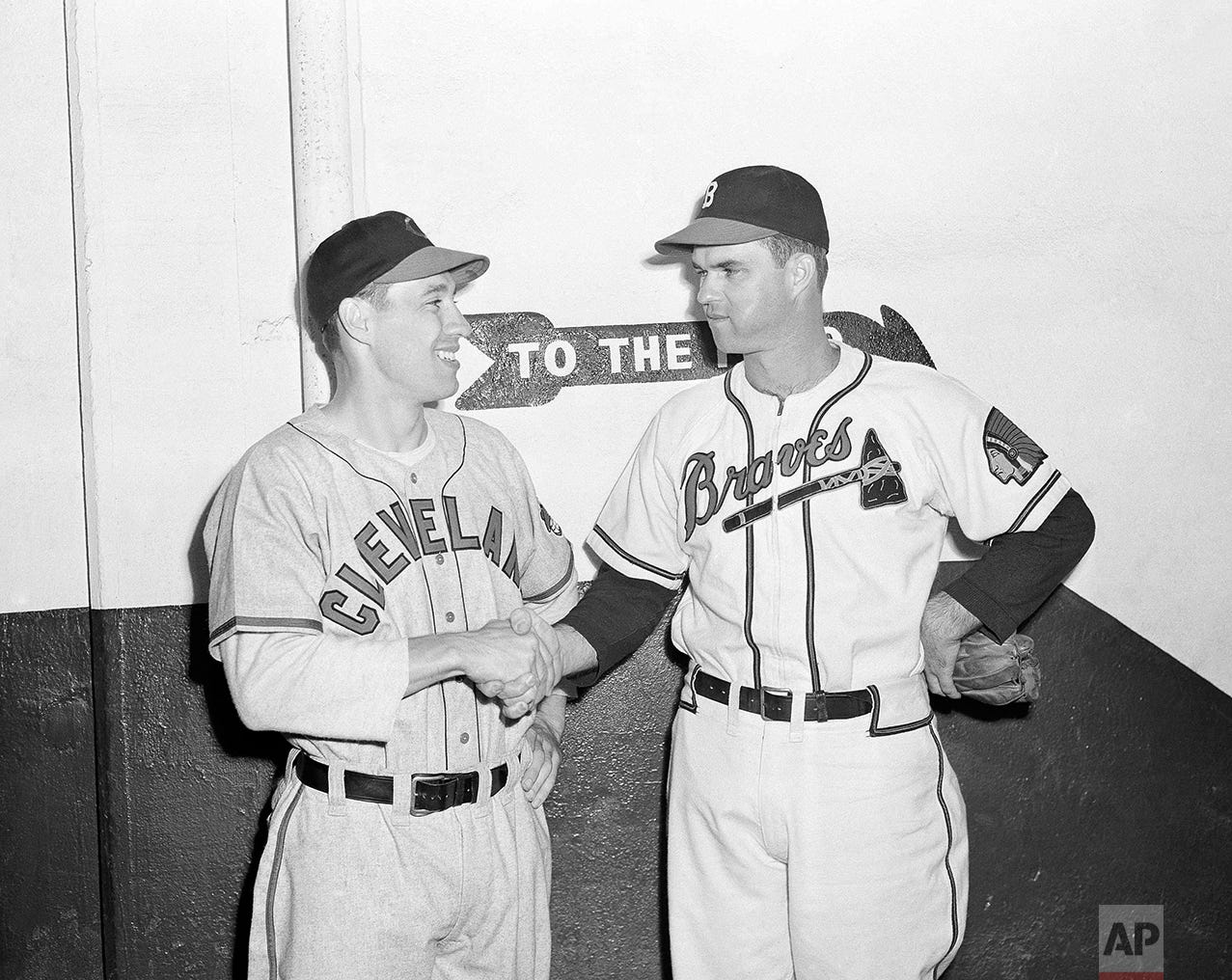
Feller had his worst season since returning from military service in 1945. His 3.56 ERA in 1948 (which is not terrible, by the way) was the second-highest ERA he'd had in his career thus far. Despite the lackluster year, Feller was still a star. During the Game 1 telecast, broadcaster Jim Britt heaped praises on Feller. "Feller is an artist," he said, "a baseball pitching artist, and the coordination with which he works is beautiful to watch. He's a magnificently conditioned athlete and he regards baseball as a highly successful profession."
On the other side, Sain pitched his best season in the majors. He threw 28 complete games, leading both the American and National Leagues. He pitched 314.2 innings, a mind-boggling number for any modern baseball fan, leading MLB. He was a workhorse. He and his teammate, Warren Spahn, were the backbone of the Braves' rotation heading into the Fall Classic. In fact, the rest of the rotation was in such a dreary state that the saying "Spahn and Sain and pray for rain" became popular in Boston. If the Braves were going to win the World Series then it was going to be via the arms of Sain and Spahn.
Both Sain and Feller were locked in from the get-go. Sain pitched a 1-2-3 opening frame, and Feller did the same. Neither pitcher faced much trouble, each mowing down opposing hitters with ease. The game was flying. By the time the eighth inning rolled around, less than two hours had passed.
The bottom of the eighth would be the undoing of the Indians' hopes of winning Game 1. Feller had thrown less than 70 pitches through seven innings of work and seemingly still had a lot left in the tank. Facing six-hole hitter Bill Salkeld to lead off the inning, Feller walked him on five pitches. Phil Masi, one of the best defensive catchers of his era, came on to pinch run for Salkeld. The next hitter, Mike McCormick, successfully laid down a sacrifice bunt, moving Masi to second base. With one out and a runner in scoring position, Feller intentionally walked Eddie Stanky in the hopes of getting the nine-hole hitter, Sain, to ground into an inning-ending double play. Sain didn't oblige in that request, instead lining out to deep right field. With two outs and two runners on, the stage was set for one of the most controversial moments in a World Series to date.
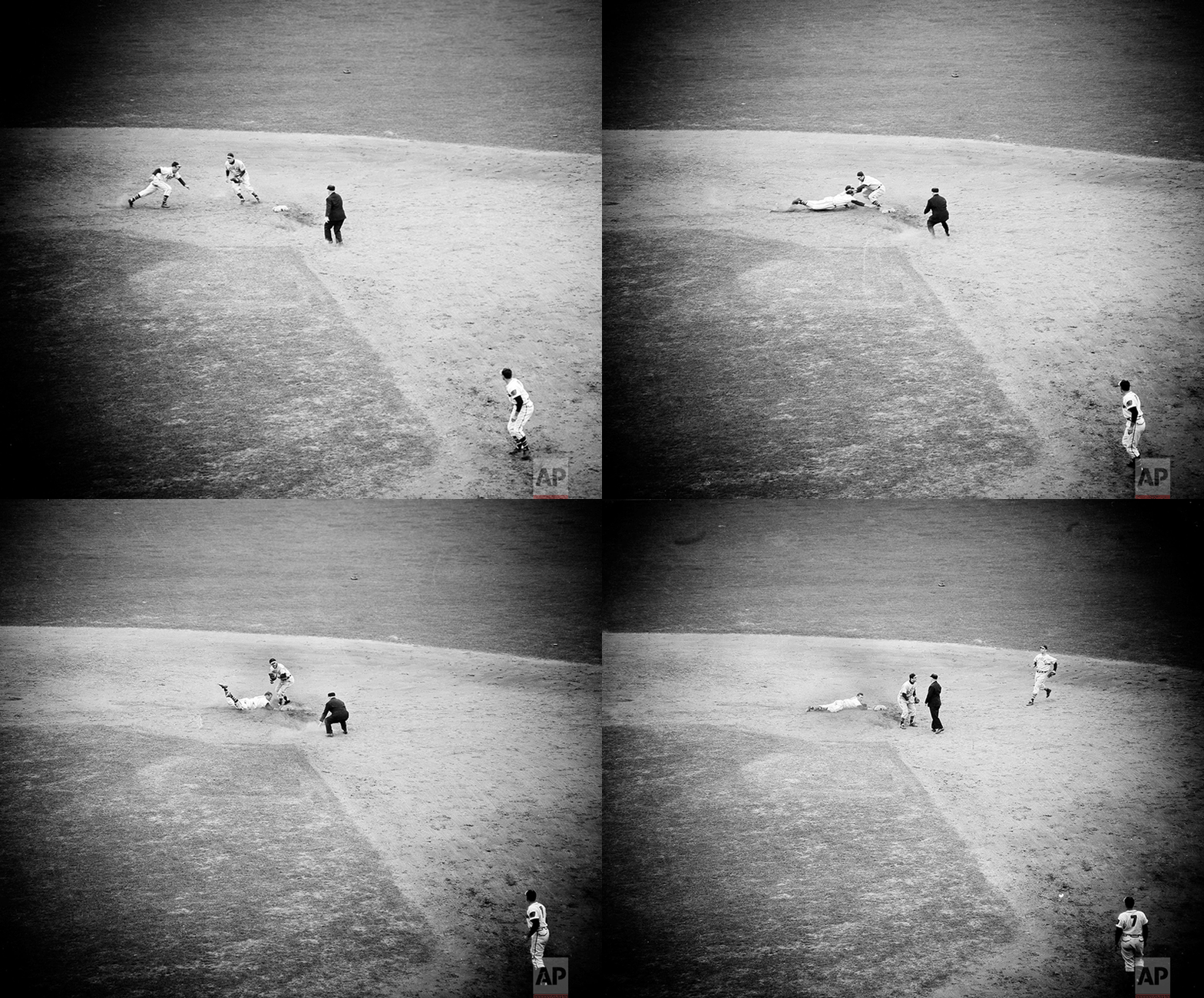
Braves leadoff hitter Tommy Holmes stepped up to the plate. Feller, who usually pitched fast, had slowed down the pace considerably. In the four minutes since Sain's lineout, Feller had attempted one pickoff at second base and thrown two pitches. That pickoff is where the controversy lies. Cleveland shortstop Lou Boudreau seemingly tagged Masi out, but umpire Bill Stewart disagreed and called him safe. Boudreau, who was also the manager of the Indians, and Feller vehemently argued their case with Stewart, who never wavered. "Boudreau tagged him up on the elbow," Stewart said. That was that.
Holmes then laced a single down the third-base line, scoring Masi and giving the Braves a 1-0 lead. The 40,135 attendees at Braves Field erupted. Feller got out of the inning, but the damage was done. With how Sain was pitching for Boston, there was little hope that the Indians were going to be able to mount a comeback in the ninth. And that's what happened. Boudreau lined out to center field. Joe Gordon popped out in foul territory. Ken Keltner reached on an error, extending the game and potential chances of a rally, but then Wally Judnich struck out on three pitches, and the Braves were the winners of Game 1.
The Boston win was immediately met with scrutiny from Cleveland fans and media members, especially after the Associated Press released images of the play which seemed to show that Boudreau and Feller were right – Masi was out. The storm surrounding the play didn't change the outcome. The damage was done. Boston had won Game 1 and was in a good spot heading into Game 2, where Spahn would take the hill looking to give the Braves a 2-0 series lead.
Going down 1-0 in a best-of-7 series is never ideal, but it's not the end of the world. There's no doubt that Boston, who was a heavy underdog, had inserted itself into the driver's seat heading into Game 2. If they were able to replicate the pitching performance that Sain produced, then the Braves were going to have a decent shot at winning their first World Series since 1914.
Tomorrow we'll go through Game 2, so stay posted for that. As you watch the Dodgers and Yankees tonight, I encourage everybody to not forget about the folks in Cleveland. I think it'll put things in perspective.
He played one more full year in Cleveland, where he had a 5.10 ERA, before being shipped off to the Washington Senators midway through the 1950 campaign. He pitched in his final MLB game in 1953 for the Chicago White Sox.