

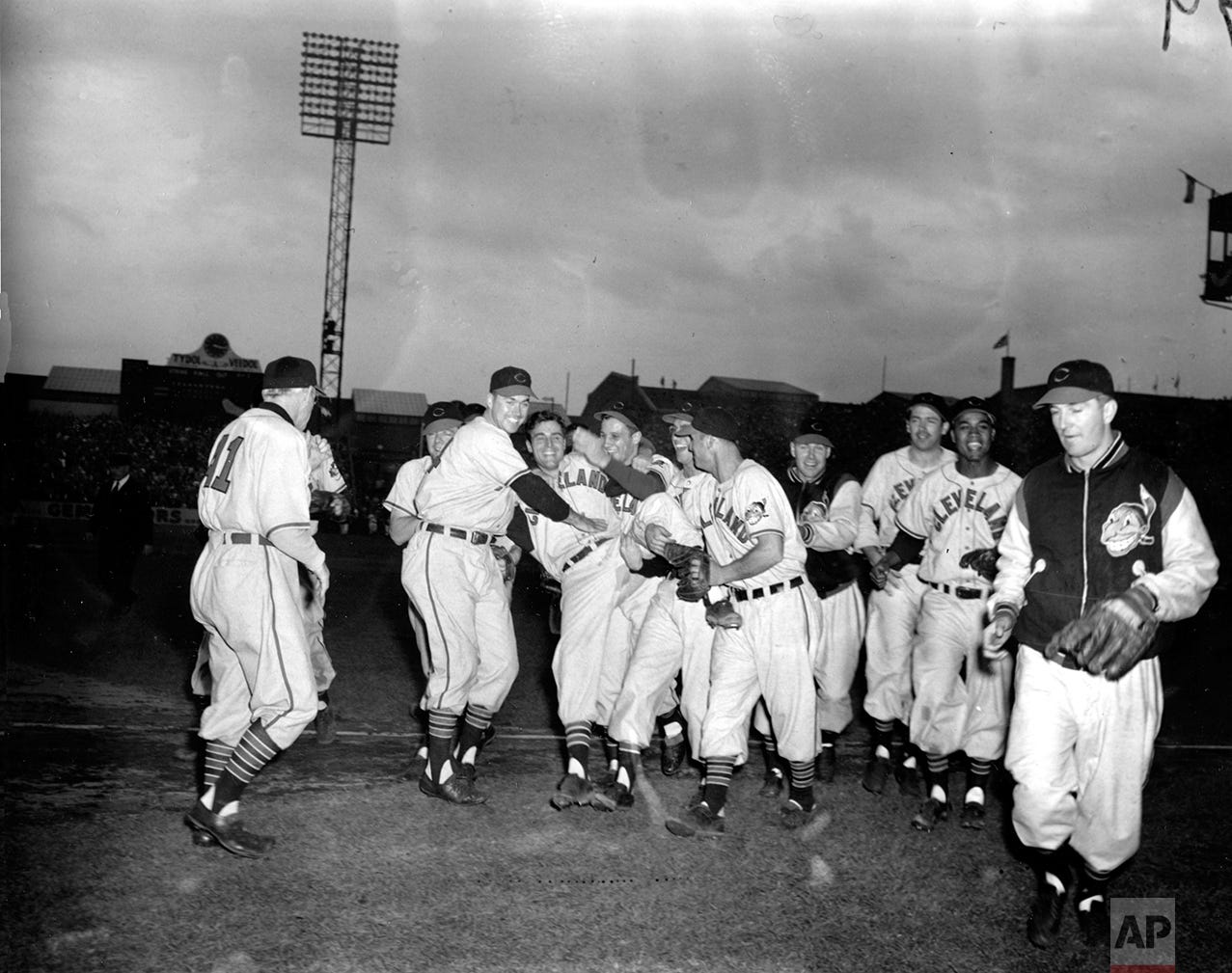
The Cleveland Guardians and the New York Mets, two teams with the longest World Series title droughts, were just eliminated from the postseason and will not have an opportunity to break their respective curses.
Cleveland hasn't won a championship since 1948, and the Mets haven't reached baseball's highest mountain since Bill Buckner let a ground ball go right through the wickets in 1986. It's been a long time.
As a fan of a team that didn't win its first World Series in franchise history until 2023, 51 years after the franchise had made its arrival in the Lone Star State, I know exactly what it feels like to crave the ultimate glory. Teams like the Yankees and the Cardinals are riddled with thrilling memories of championships gone by. Even if those moments of greatness happened over a generation ago, having hardware in the trophy case is still a luxury. The rest of us look on in envy, wondering what it's like to regularly soak in a champagne bath.
In hindsight, it was going to be difficult for either the Guardians or the Mets to triumph over the behemoths that the Yankees and Dodgers are. However, it was certainly still possible, which is what makes baseball great. But it didn't happen this time. The two passionate fan bases were left empty-handed once the final out of their seasons was recorded.
As the Dodgers and Yankees duke it out on the diamond this next week in what is certainly going to be a great World Series, I thought it would be entertaining to revisit the most recent championship for the team that's had to wait the longest to secure another piece of hardware once more. Many baseball fans, including me, might not be aware of how Cleveland won the 1948 World Series. That changes today. While I certainly can't capture the magic of anything written by a true fan of the Guardians or anything recorded about the series at the time, I can give you my perspective. Before each game of the 2024 World Series, I'll post a piece about that same game of the 1948 series.
Baseball's deep history resonates with so many. Baseball has been here forever. It's important to cherish all the memories we've had with it. I hope you'll walk with me as we learn about baseball’s storied history. It's going to be a lot of fun.
"The one constant through all the years, Ray, has been baseball. America has rolled by like an army of steamrollers. It's been erased like a blackboard, rebuilt, and erased again. But baseball has marked the time." - James Earl Jones, Field of Dreams
Yesterday we covered Game 1 of the 1948 World Series between the Cleveland Indians and the Boston Braves. It was a thrilling affair that had a somewhat controversial ending after a potential blown call by umpire Bill Stewart. Regardless, the Braves were up 1-0 in the series and had an opportunity to take firm control in Game 2.
To do so, the Braves sent out a legend: Warren Spahn.
Spahn is one of the best pitchers of all time, but his 1948 season was lackluster by his standards. Still young and just two years removed from serving in the army as a combat engineer, Spahn had put up a wonderful season in 1947 where he twirled 289.2 innings and had a 2.33 ERA, leading the National League in both statistics. It was a wonderful glimpse into what the rest of the future Hall of Famer's pitching career was going to look like. 1948 proved more difficult. He still possessed his dominating fastball and debilitating screwball, but for some reason, hitters were just more comfortable against him. He had a 3.71 ERA, the highest of his career so far, and pitched in 30 fewer innings than he did the year prior. However, Spahn still was capable of being a top arm, and there was no one else who the Braves were sending out to pitch in Game 2.
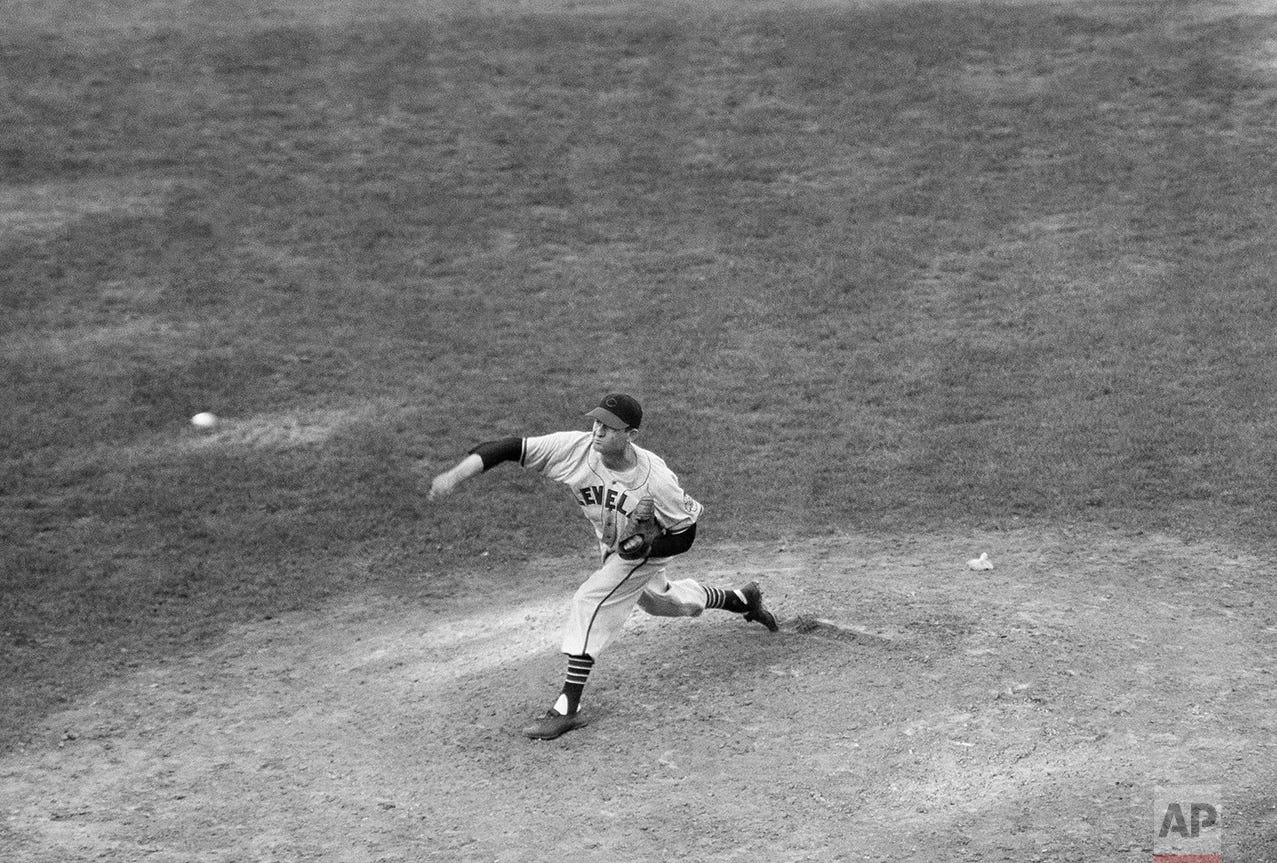
Spahn's pitching opponent was Bob Lemon, a 27-year-old righty from San Bernardino, California. Lemon signed with the Indians in 1941, pitching in one game in the minors before being shipped off to war. When he returned to baseball action in 1946, Lemon emerged as a valuable asset immediately. He was mainly a reliever that year, before gradually moving into the rotation in '47, starting 15 games. By the time the '48 campaign rolled around, Lemon was a full member of the Indians' rotation, starting 37 games and throwing 292.2 innings, leading the American League. He also led the league in complete games and shutouts. He was a star and a worthy opponent of Spahn.
After Spahn made quick work of Cleveland in the top of the first, the Braves struck first on an RBI single by third-basemen Bob Elliott to go up 1-0. Given how the previous contest went, Cleveland had a right to be concerned. Its offense could not get anything going, and Spahn looked sharp. Would this be a repeat of Game 1?
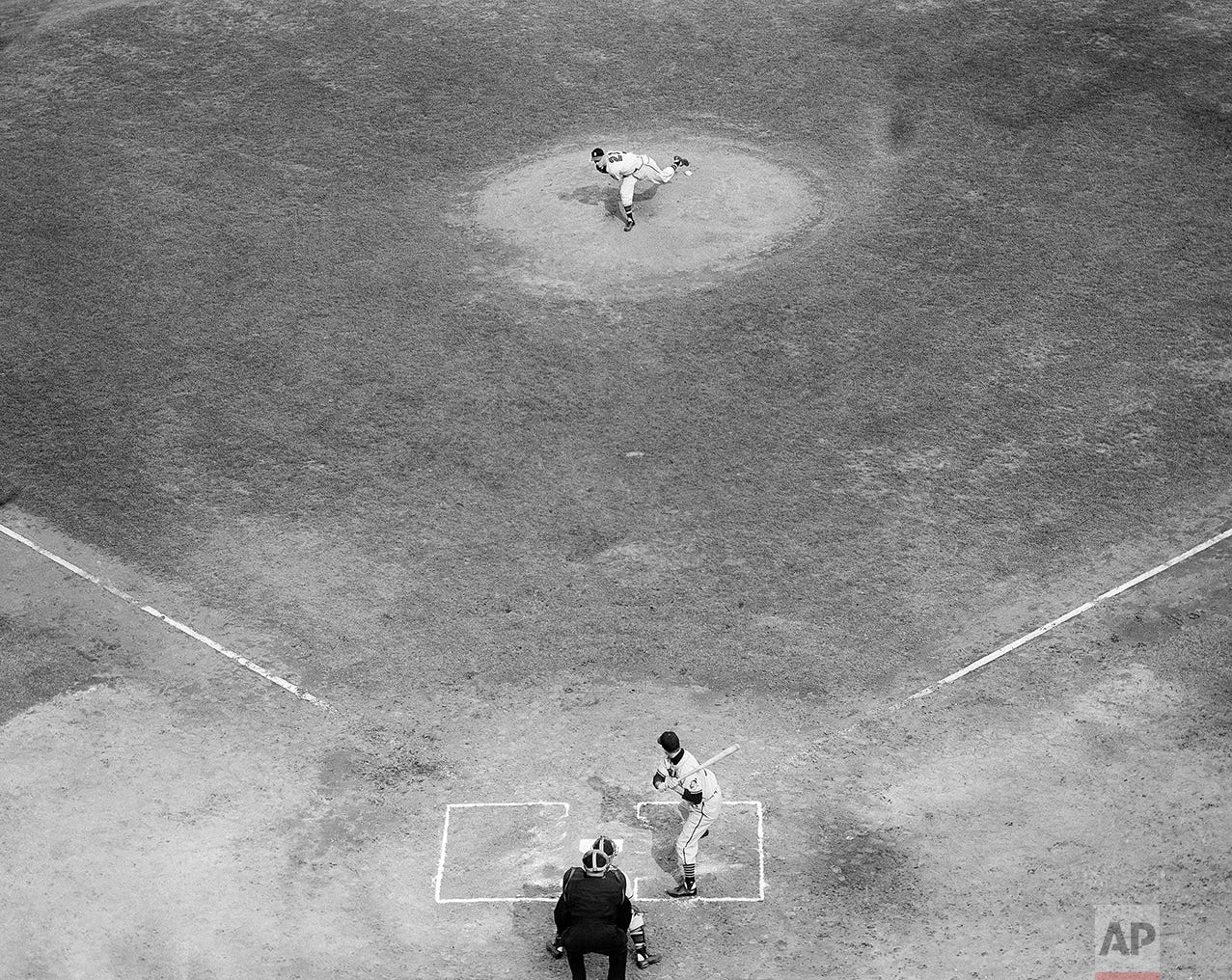
It would not. Spahn got through the second and third innings unscathed, but Cleveland pounced in the fourth. Boudreau led off the inning with a line-drive double to right field. Joe Gordon, who led the Indians in RBIs in 1948, scorched a single to left, scoring Boudreau and tying the game at one. Left fielder Marv Rickert attempted to throw Boudreau out at home, but his throw was well late. It also allowed Gordon to advance to second. The throw was so bad that columnist Red Smith noted it "came fluttering in like a wounded dove. It dropped to earth not far beyond third base, too spent to permit a decent cut-off play." It was then Keltner's turn to bat, but he popped up in foul territory for the first out, bringing Larry Doby to the plate.
Doby's significance in baseball's history often gets lost because he is overshadowed by Jackie Robinson. Just three months after Robinson made his debut with the Brooklyn Dodgers in 1947, breaking the color barrier in baseball and the National League, Doby was signed by the Indians and broke that same barrier in the American League. He was the first player to make the jump straight from the Negro Leagues to the majors (Robinson played one season with the Montreal Royals before joining the Dodgers in '47). 1948 was Doby's first full season in the majors, and he made the most of it. He slashed .301/.384/.490 (.873 OPS) and hit 14 home runs. His plate appearance in the top of the fourth against Spahn was the biggest of his career thus far.
The left-handed hitting Doby dug in against the southpaw Spahn. After four pitches, the count was 3-1. Doby then hit a ground ball through the hole on the right side of the infield, allowing Gordon to score and giving Cleveland a 2-1 lead. It was Cleveland's first lead of the game and the series.
From that point, it was all about adding more and holding on. Cleveland sent Spahn into the locker rooms for an early shower in the top of the fifth following a lead-off base hit by Dale Mitchell and an RBI single by Boudreau to put the away team up 3-1.
Braves manager Billy Southworth had seen enough. He made the call to the bullpen, pulling Spahn and inserting Red Barrett into the game. Barrett, a journeyman pitcher who was in his second-to-last season as a major league player, fared better than his teammate did; he didn't allow a run throughout his 2.2 innings of relief work. Cleveland did tack on one more run in the ninth off Nels Potter to provide more insurance, but it wasn't needed. Lemon had been fantastic for the Indians, weaving in and out of trouble. In the second and fourth innings, Lemon escaped jams with runners on second and third. He let the lead-off batter get on base in four of the nine innings he pitched, but besides the run he gave up in the first, nobody else came home to score. It was a masterclass on walking a tightrope. On his 123rd pitch of the game, Lemon got Ray Sanders to ground out, ending the game and knotting the series up at a game apiece
.Despite winning Game 1, the vibes in Boston heading into Game 3 were not great. Overall, the team had not played well and the press let them hear it. Harold Kaese, a sports writer for The Boston Globe, said that "except for hitting, pitching, fielding, and thinking, the Braves had everything in the clutch yesterday [in Game 2]."
Spahn, who'd struggled in his first-ever World Series start, was disappointed in his efforts but determined to come back and pitch better the next time. "I'll be back," he said after the game. "My change of pace was hanging too high. I couldn't get it down low, and that licked me." He'd get another shot in Game 5.
It was now onto Game 3 for both teams, which meant heading to Cleveland. To say that it was a big game would be understating things by quite a bit. I'll cover that game on Monday, so stay tuned. Spoiler alert: it's a good one.