

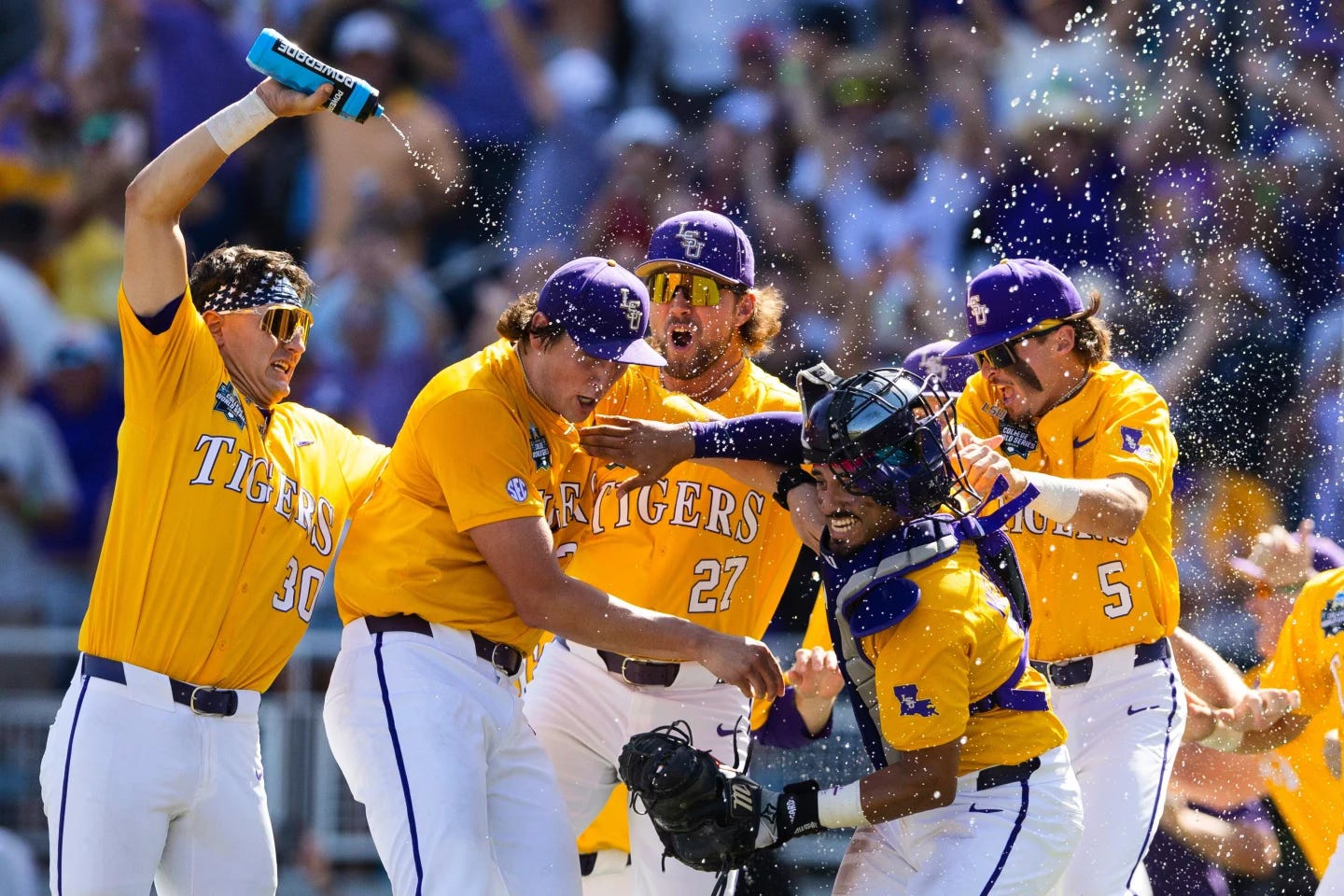
The College World Series concluded last weekend with LSU sweeping Coastal Carolina in the championship series. After such an enthralling tournament, it ending in just two games, the second of which featured some controversial umpiring that overshadowed the whole ordeal, was disappointing. Regardless of how I feel about it all, LSU is the national champion for the second time in the last three seasons. So, congratulations to them.
It was a tournament that was filled with highs, lows, and everything in between. We saw Cinderella stories rise and then fall. We saw phenomenal pitching performances from unlikely prospects, with Gage Wood’s masterpiece no-hitter in Omaha being the star. We saw the SEC, which had a whopping 13 schools in the tournament, crash and burn early only to end up winning it all in the end anyway. But what we saw the most was good baseball, and that’s all that really matters.
Today, it’s time to reminisce on the 2025 college baseball postseason. From the start of the regional round to the very end of the road, this piece chronicles everything that transpired throughout the best time on the college baseball calendar. What you’re about to read is every word I wrote regarding the tournament. That’s right. All 19,354 of them.
Some of the articles featured were once behind paywalls but are now free and unlocked for your entertainment right here. That’s pretty exciting if you ask me.
Overall, this year’s tournament was a blast, and I had a ton of fun covering it from start to finish. I hope that you all enjoyed the ride with me as much as I did.
The Greatest Show on Dirt is Here
Button up the jersey and lace up the spikes, because it’s time to start the trek to Omaha.

Remember March Madness? Do you recall the promised exhilaration that usually comes from crazy upsets and improbable buzzer-beaters? Do you also remember how this year’s iteration of March Madness failed to deliver on almost all of those promises? I do.
While it may be an overstatement to say it left us with an emptiness beyond reproach, the tournament undeniably underwhelmed. It was certainly a shame. Fortunately, there’s still a light at the end of the tunnel when it comes to postseason sports at the collegiate level because the NCAA Division I baseball tournament is officially here.
On Sunday, the remainder of the conference tournaments wrapped up, meaning that it was time for the selection committee to gather together and select the 64-team field. Sixteen of those schools will host regionals, while the remaining teams will travel across the country ready to duke it out with the goal of claiming the ultimate prize in Omaha.
Of all the postseasons in collegiate sports, the baseball tournament every May and June is undoubtedly underrated. Unlike the College Football Playoff and March Madness, the College World Series doesn’t have as much pizzazz or fanfare. But it almost certainly has as much, or maybe even more, heart.
I can’t wait for this year’s tournament, which is slated to start on Friday, May 30. Which school will carefully climb their way through the obstacle course that is the regional and super regional rounds to make it to Omaha, and then which team will be able to conquer the remaining field in order to reach the top of the metaphorical mountain?
As I am prone to say, only time will tell.
Thanks for reading SethStack! I really do appreciate it. If you would be so kind as to subscribe to the page, that would be so appreciated. I’m sure that the selection committee would look favorably on you if you were to subscribe!
Congratulations to every school that earned a berth in this year’s tournament. Making it into college baseball’s best bracket is incredibly hard work. No matter the route taken, the goal was reached, and that is an accomplishment in and of itself.
Let’s take a quick look at the bracket. Teams in italics won their respective conference’s automatic bid:
Nashville Regional
Vanderbilt (No. 1 Overall Seed)
Louisville
East Tennessee State
Wright State
Hattiesburg Regional
Southern Mississippi (No. 16 Overall Seed)
Alabama
Miami (FL)
Columbia
Corvallis Regional
Oregon State (No. 8 Overall Seed)
TCU
USC
Saint Mary’s
Tallahassee Regional
Florida State (No. 9 Overall Seed)
Northeastern
Mississippi State
Bethune-Cookman
Chapel Hill Regional
North Carolina (No. 5 Overall Seed)
Oklahoma
Nebraska
Holy Cross
Eugene Regional
Oregon (No. 12 Overall Seed)
Arizona
Cal Poly
Utah Valley
Auburn Regional
Auburn (No. 4 Overall Seed)
NC State
Stetson
Central Connecticut
Conway Regional
Coastal Carolina (No. 13 Overall Seed)
Florida
East Carolina
Fairfield
Austin Regional
Texas (No. 2 Overall Seed)
UTSA
Kansas State
Houston Christian
Los Angeles Regional
UCLA (No. 15 Overall Seed)
UC Irvine
Arizona State
Fresno State
Athens Regional
Georgia (No. 7 Overall Seed)
Duke
Oklahoma State
Binghamton
Oxford Regional
Ole Miss (No. 10 Overall Seed)
Georgia Tech
Western Kentucky
Murray State
Baton Rouge Regional
LSU (No. 6 Overall Seed)
Dallas Baptist
Rhode Island
Little Rock
Clemson Regional
Clemson (No. 11 Overall Seed)
West Virginia
Kentucky
USC Upstate
Fayetteville Regional
Arkansas (No. 3 Overall Seed)
Kansas
Creighton
North Dakota State
Knoxville Regional
Tennessee (No. 14 Overall Seed)
Wake Forest
Cincinnati
Miami (OH)
So, there’s the bracket. For a more succinct, and probably more palatable, view of the entire field, here’s a handy dandy picture that probably would’ve sufficed. Hey, I just wanted to type it all out because I thought it would be fun (it was).
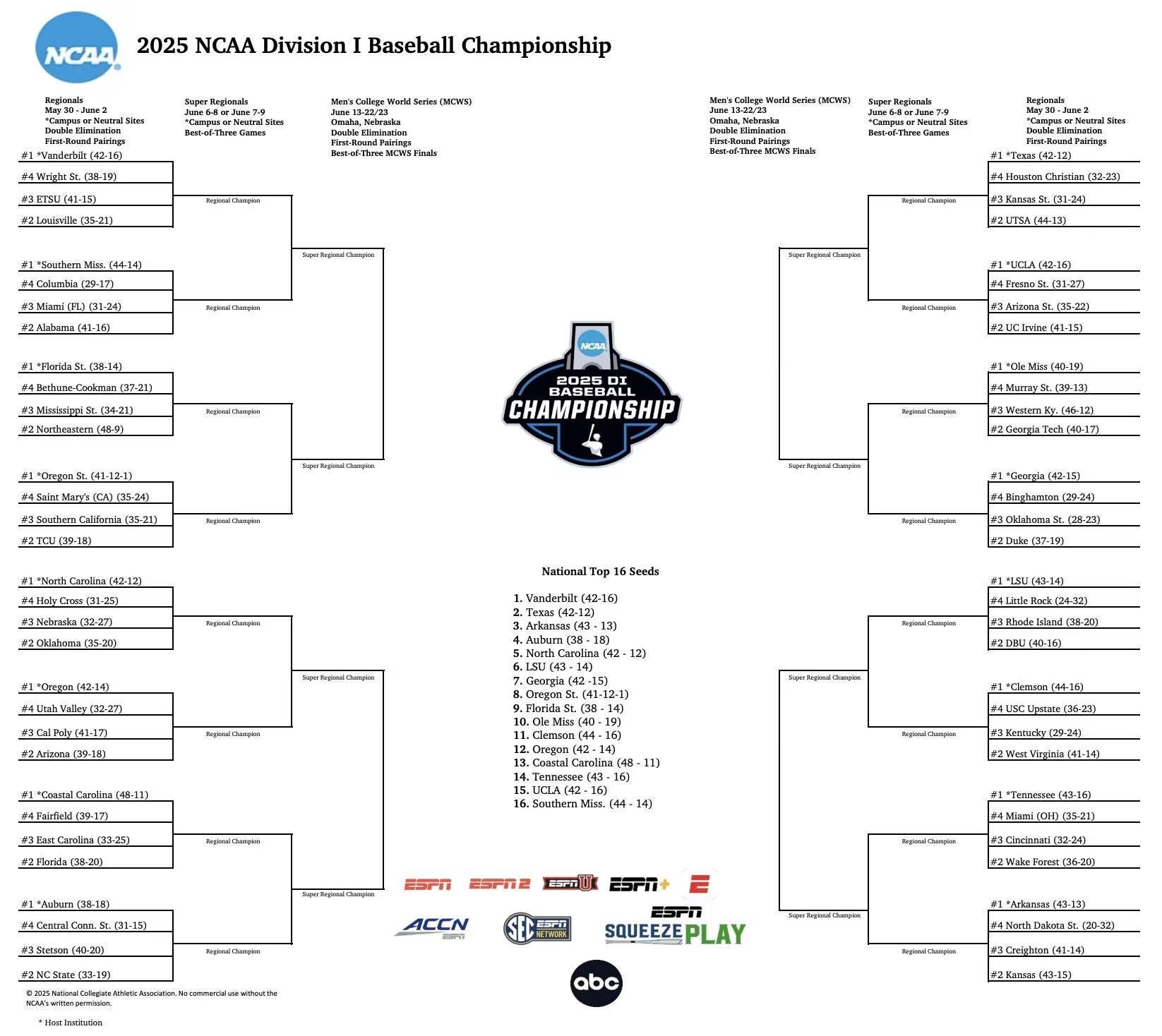
If you aren’t familiar with how it all works, each regional is a four-team, double-elimination bracket. The winner of each regional advances to the Super Regional round, where teams will face off in a best-of-three series. Whichever team triumphs there moves on to the eight-team College World Series in Omaha, which is a double-elimination bracket that ultimately culminates in a best-of-three final series between the last two teams standing. If that sounds complicated, I promise that it’s not. It’s actually a load of fun.
Every time that a bracket is released, whether it be during March Madness or the College Football Playoff, there’s always intense debate about what we, the people, believe the selection committee should’ve done instead. There’s definitely some of that that could be done here, but not that much. Sure, there are some teams, like TCU, who believe that they should probably be hosting a regional right now. In terms of resumé, they’re probably right. Should UConn have been in over a team like Kentucky? In my opinion, yes. But was it a slam dunk? Absolutely not. All the teams were incredibly close, and overall, this committee did a good job.
I’m still on the bandwagon calling for active school employees, like athletic directors, to not be on these selection committees, but it doesn’t look like that made much of a difference this year. Jay Artigues is the chair of the committee this year and he is also the AD of Southeastern Louisiana. Want to guess which school was the first team out of the tournament? Yep, it was Southeastern Louisiana. Perhaps these committees aren’t rigged after all.
Speaking of the first four and last four out, here are the teams that were on the right and wrong side of the bubble after everything was said and done:
Last Four In
Arizona State
Kansas State
Oklahoma State
USC
First Four Out
Southeastern Louisiana
Troy
UConn
Virginia
If you’d told me before the season started that Virginia, who was ranked No. 2 in the D1 Baseball preseason poll, wouldn’t make the tournament, I’d have been shocked. Then, if you’d added on that Texas A&M, the national runners-up from a year ago and the No. 1 ranked team in the preseason, would also not make it, I’d have been flabbergasted. Well, that’s what happened. Sports are crazy, folks.
Of the 25 teams ranked in the D1 Baseball preseason poll, only four didn’t make the field. Those schools are Texas A&M (No. 1), Virginia (No. 2), UC Santa Barbara (No. 22), and Troy (No. 25).
Final note on the bracket itself: 13 SEC schools made the field, with eight of them hosting. That’s bananas. What’s even more nuts — befuddling is a better word for it, actually — is that eight Big 12 teams are in the bracket, but none of them are hosting a regional. If a conference is good enough to have over half of its members in the bracket, then surely one of them should be good enough to host. Well, I’m not on the committee, so that certainly didn’t happen.
The national championship is the SEC’s to lose, with the ACC running a distant second. If another league can pull off the coup and claim the title this year, then the 2025 iteration of the College World Series is truly set up to be a classic.
There will be plenty of time for real analysis throughout the rest of this week leading up to the start of the tournament. For now, I believe that it’s appropriate to analyze this 64-team field the only way I know how: through pure vibes and pure vibes only.
Here’s what I believe is going to happen, based on a vibes mindset of course:
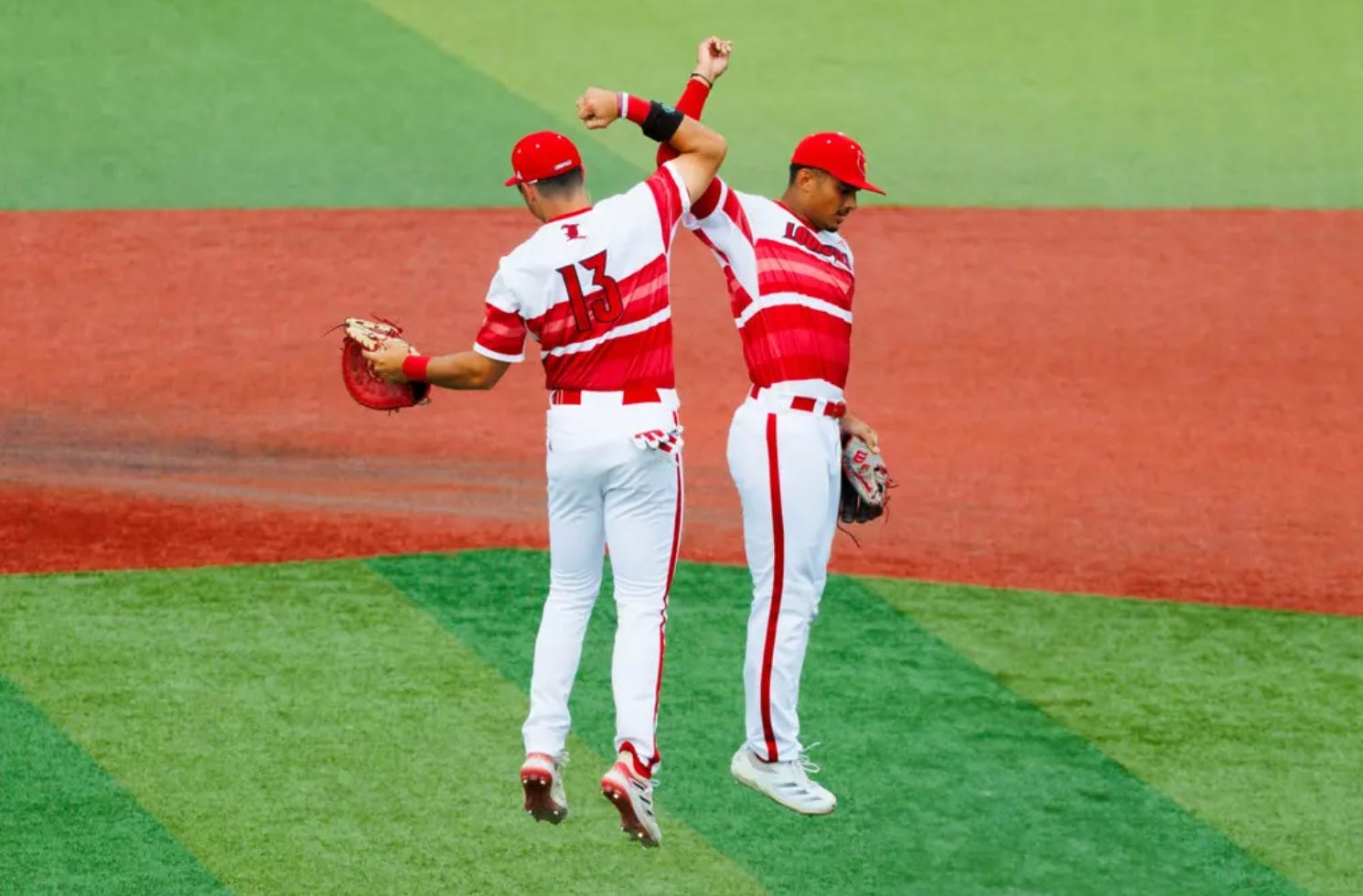
Nashville Regional: Louisville is going to shock the world, winning the Nashville Regional and sending the No. 1 overall seed Vanderbilt Commodores packing. Why? I don’t know. Maybe because Louisville is the literal home to the Louisville Slugger company? Yeah, that’s totally why.
Hattiesburg Regional: Southern Mississippi is a wagon. They’ll roll through the Hattiesburg Regional. Communicate to the masses that they are not to be trifled with and that they aren’t the only team from Mississippi that’s got a shot at a national title.
Tallahassee Regional: Northeastern has won 27 games in a row. That’s good enough for me to pick them to win the Tallahassee Regional. Fight on Huskies!
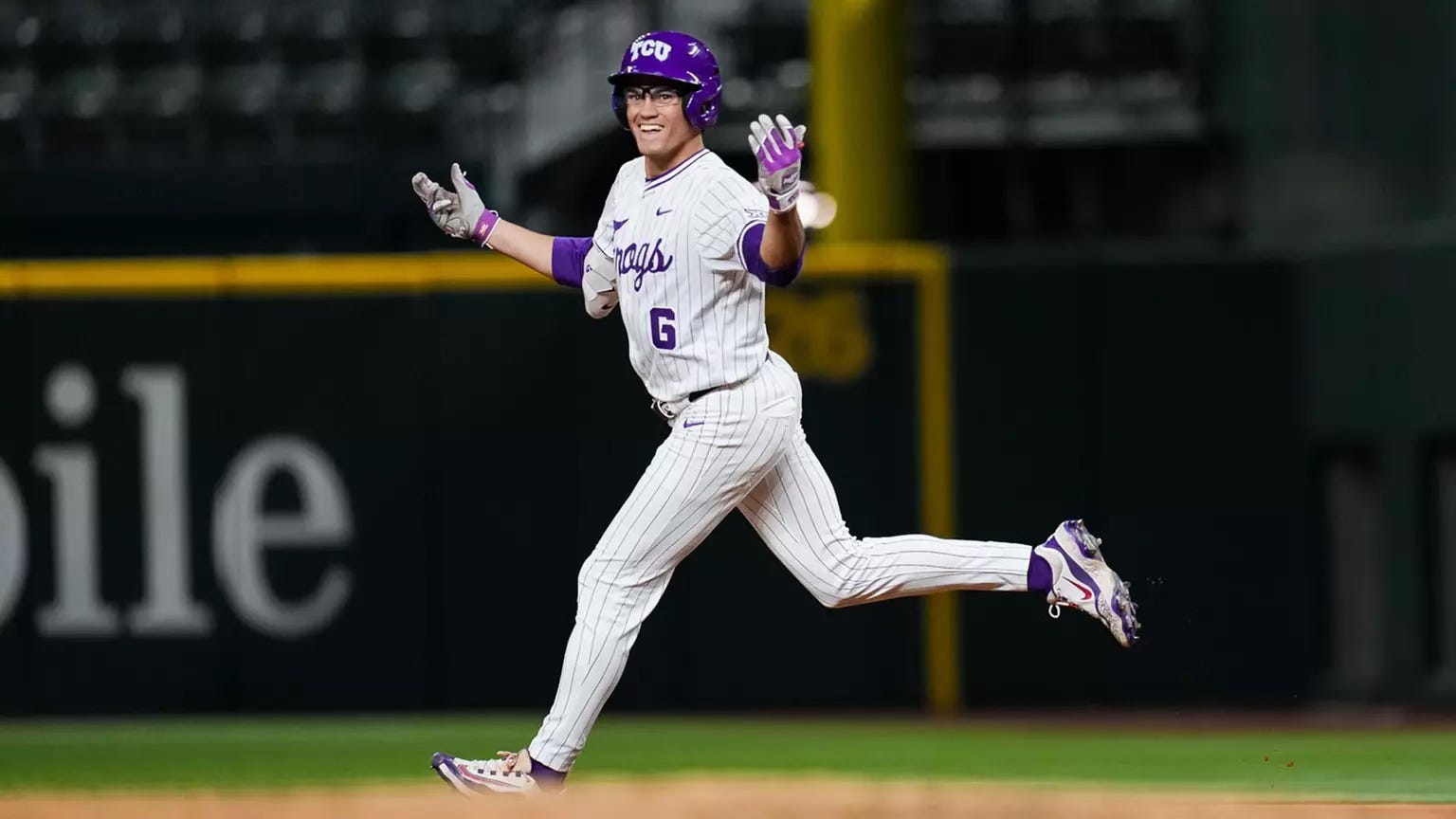
Corvallis Regional: Go Frogs. Oregon State, I’m sorry that TCU had to be sent to Corvallis angry and ready to show the world what they’re made of. The Horned Frogs move on to the supers.
Chapel Hill Regional: Oh, North Carolina. Carolina Blue is my favorite color, and I’d love to continue to see those beautiful jerseys on my television screen for as long as possible. Go win the Chapel Hill Regional for me!
Eugene Regional: As someone who just witnessed Arizona beat up the rest of the field in the Big 12 Tournament at Globe Life Field last week, I’d be a fool not to say that they at least have a fighting chance to pull off the upset and win the Eugene Regional. You know what? I’ll go ahead and say it. Arizona wins. Oregon, Utah Valley, and Cal Poly are going home.
Conway Regional: Remember in 2016 when Coastal Carolina won the national championship? Wasn’t that insane? While I don’t think we’re heading in that direction this season, the Chanticleers are very good, and as such, they’re my pick to win the Conway Regional.
Auburn Regional: Jacob deGrom just finished a pretty good outing for the Texas Rangers as I’m typing this, and he’s a Stetson alum. That’s a good enough reason for me to pick them to win the Auburn Regional. Other notable baseball players that went to Stetson include Logan Gilbert and Corey Kluber.
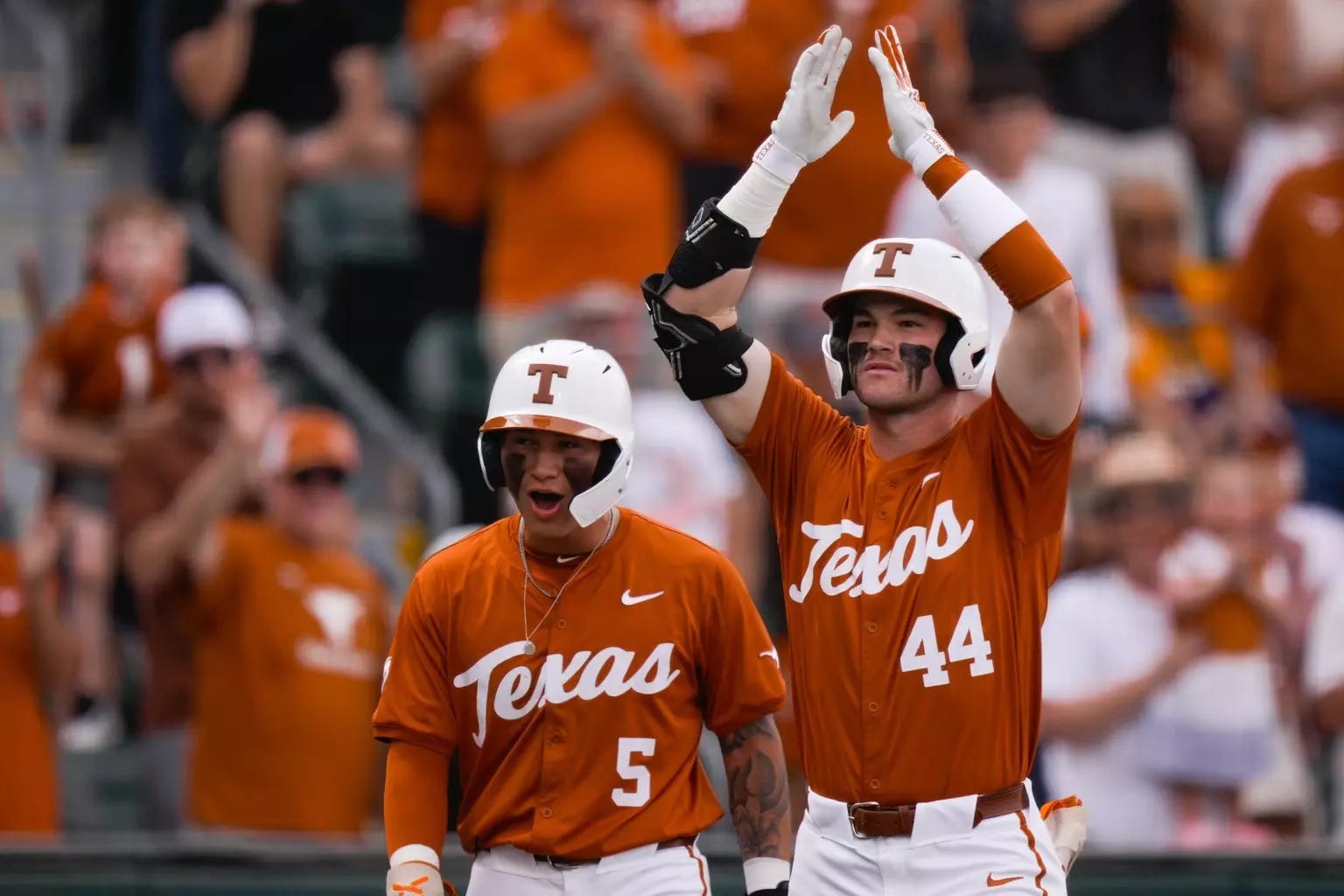
Austin Regional: Jim Schlossnagle jumped ship from Texas A&M, heading to Texas last offseason in what was a confusing move. It’s apparently paid off, as A&M is at home right now as Texas will be hosting the Austin Regional against Houston Baptist, UTSA, and Kansas State. The path is pretty clear for the Longhorns, and I think they cruise on through this regional.
Los Angeles Regional: UCLA shouldn’t be hosting in my opinion, and that’s good enough reason for me not to pick them. Instead, I’ll be going with the Anteaters of UC Irvine. First, that mascot is so awesome. Second, it’d be funny.
Oxford Regional: I used to live on a cul-de-sac when I was younger, and my brother and I would play touch football with our neighbors from down the street. We created a team called the Stingers, which was derived from us realizing that Georgia Tech’s mascot, the Yellowjackets, was cooler than all get out. As a grown adult, I still believe that Georgia Tech has an awesome mascot. Thus, the Yellowjackets are moving on!
Athens Regional: Georgia ripped my heart to shreds when they destroyed TCU in the national championship a couple years ago. Ever since that day, I made a pledge that I would never, and I mean never, root or cheer for the Georgia Bulldogs to be successful at anything. It’s uncertain to me whether Duke, Oklahoma State, or Binghamton has the chops to overtake Georgia in Athens this next weekend, but they must do it. They must avenge me.
Baton Rouge Regional: LSU is the clear pick here from a real analytical standpoint. Compared to the competition of Dallas Baptist, Rhode Island, and Little Rock, they stand way above the rest of the field. That won’t stop me from being tempted to go another direction, particularly with DBU. The Patriots have been so close to reaching Omaha over the past decade, and while I don’t think this will be the year, I’m certainly hoping for it.
Clemson Regional: A former work colleague of mine is a Clemson fan so I’ll pick them here. My heart really wants to go with West Virginia, however, so it’s a struggle. It’s still Clemson, though.
Knoxville Regional: Tennessee won a national championship a year ago, and Wake Forest was right there two seasons ago. It’s a heavyweight battle in Knoxville, and I think it’s the Volunteers that come out on top. Mostly because “Rocky Top” is such an electric song. It seriously bops.
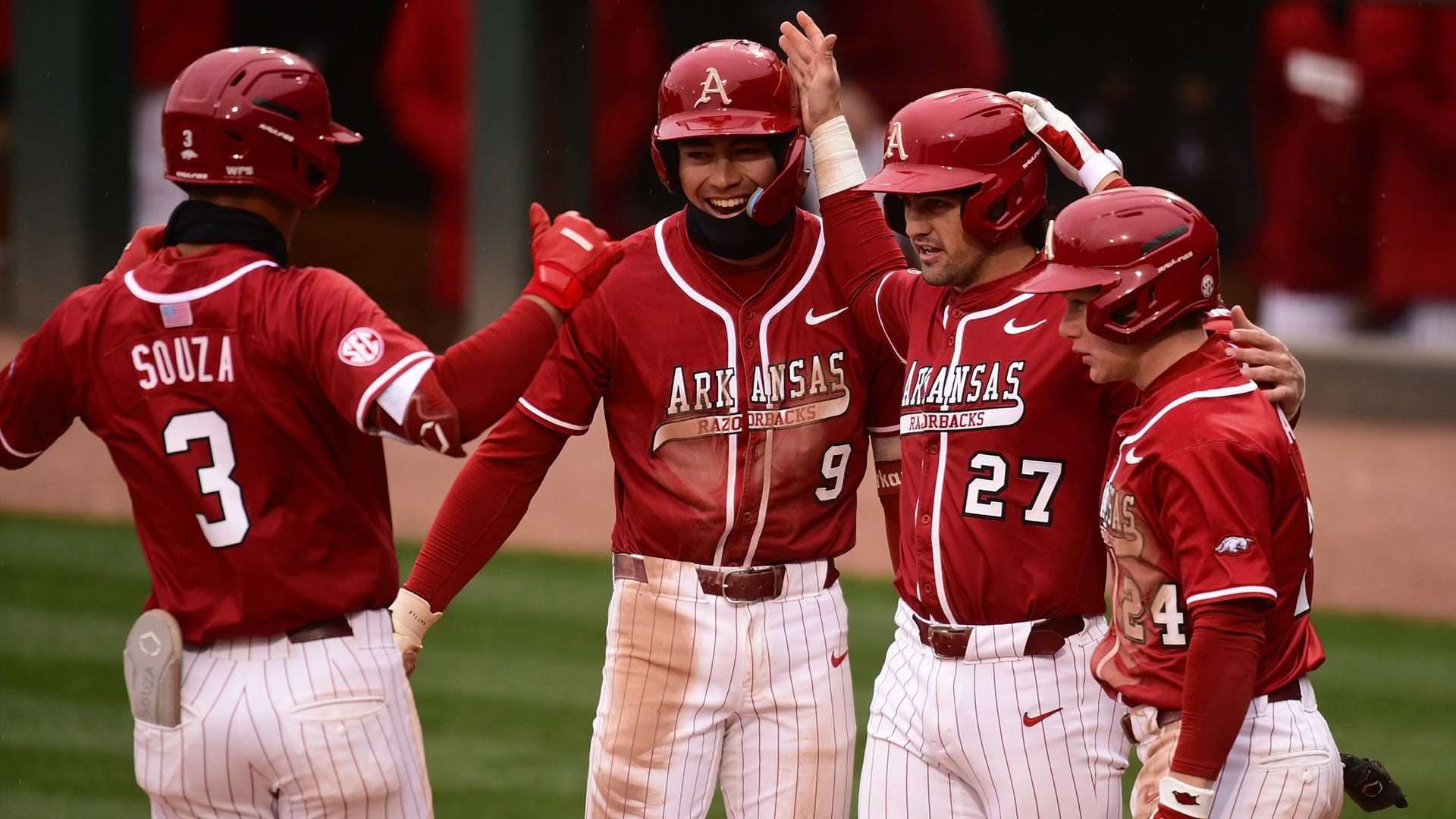
Fayetteville Regional: Woo Pig Sooie! Please, and I mean please, Arkansas, don’t fail me now. From being one out away from a national title in 2018, to continually dropping the ball (no pun intended) over and over again ever since, it’s been a barrage of heartbreak for Razorback fans. It’s time to change up the narrative and win the school’s first national championship in baseball.
Once Friday rolls around and all 64 teams are in action, duking it out, we’ll all have a much clearer picture on how everything is going to play out. For now, all we have are the vibes and feelings that have brought us this far.
Not to get all deep or anything, but isn’t that what sports is exactly about? The feelings we have and the vibes that are created after each game are what makes the college baseball season so special. It’s only fitting that all of that reaches its ultimate conclusion throughout the rest of May and into June.
Omaha, of course, is the goal for each and every one of the teams that find themselves in the bracket. Only eight schools get to make that trip every year. Who will it be in 2025? I can’t wait to find out.
Toad to Omaha Starts Now
TCU is back in the postseason, but faces an uphill battle to make it back to the College World Series.

After a brief one-year hiatus, the TCU baseball team is back in the postseason and is ready to attempt to make the long trek to Omaha.
It might be a stretch to call this season a great one so far for the Frogs — they didn’t win the Big 12 in the regular season or in the tournament — but it’s certainly been a good one. There’s no doubt that what TCU has done in 2025 has been an improvement over what 2024 was, with the most glaring evidence being that last year’s team failed to make the tournament while this year’s squad is in the field.
The Frogs were snubbed, though. When we all look back at the 2025 college baseball season, I believe that we’ll all collectively facepalm at the fact that TCU is not hosting a regional in Fort Worth. You’re telling me that eight Big 12 schools made the cut, but none of them are hosting? Not buying the logic behind that, señor.
In all seriousness, it’s truly baffling to me that the selection committee believed that the Big 12 was the third-best conference by awarding it eight bids, but couldn’t even hand over one little host spot to TCU, Arizona, Kansas, or West Virginia. It’s blasphemy!
Alas, all those schools will have to get past the snubbery (not a word, I know) and get ready to pull off an upset in their respective regionals. For TCU, that means making the long trek up to Corvallis where they’ve been grouped into a regional that consists of No. 8 overall seed Oregon State, as well as USC and Saint Mary’s.
Starting with TCU, let’s briefly analyze what’s going on for each squad.
TCU (39-18; RPI: 17)
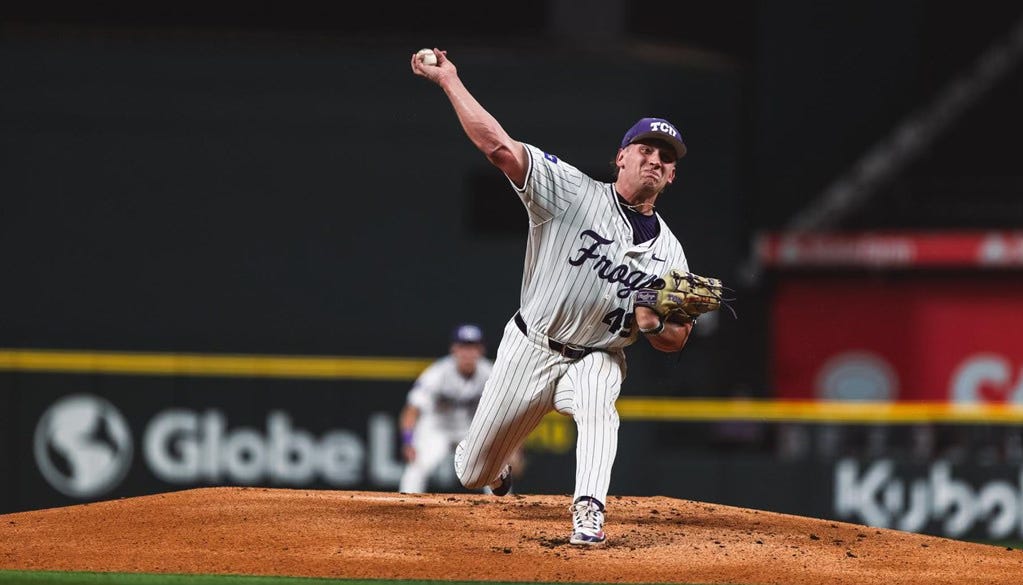
Whatever angst and anger that the Horned Frogs have towards the selection committee for not awarding them a host spot needs to be taken out on the field this weekend in Corvallis. If they do that, then surely they’ll be making a trip to the supers.
Just like in 2023, when TCU made it all the way to the final four of the College World Series, the Frogs possess some great veteran leadership on top of a fantastic freshman class. It’s been that great combination that’s enabled them to rise to the top of the pack in the Big 12.
Three freshmen in particular stand out, with Sawyer Strosnider (.354/.426/.646), Nolan Traeger (.329/.425/.477), and Noah Franco (.325/.409/.569) being some of the most prolific first-year players in the country.
On the veteran side of the coin, Karson Bowen (.333/.425/.516), Cole Cramer (.326/.439/.423), Chase Brunson (.323/.402/.562), and Anthony Silva (.278/.347/.424) have all brought excellent play to the table in 2025 that’s enabled the Frogs to be where they are today. It should be noted that Bowen suffered a rib injury during TCU’s last series of the season, so his availability for the postseason is up in the air.
What’s so astounding about the offense for TCU is the improvement from last season. With the return of Bill Mosiello to the coaching staff, the Horned Frogs offense returned to the state it was when Mosiello was with the team from 2014–22. Whatever magic he possesses clearly works.
The pitching, on the other hand, has been a bit more turbulent. That doesn’t mean that it hasn’t been all-around impressive — TCU’s team ERA of 4.24 ranks 19th in the country — but it’s been a little more difficult to find consistent arms in the rotation and the bullpen. Head coach Kirk Saarloos has fiddled around with it enough to this point, however, where it can be believed that the Frogs feel comfortable heading into a regional with what they have.
So, what arms are in their arsenal? Well, Tommy LaPour leads the way for the starting rotation, and will be starting against USC in game one of the regional. The transfer from Wichita State has been nothing short of amazing with a 2.89 ERA over 87 1/3 innings of work. He’s struck out 83 and walked 26, while holding hitters to a batting average of just .223.
The other pitchers that can give TCU some length are Masson Brassfield (3.56 ERA over 60 2/3 IP), Louis Rodriguez (2.76 ERA over 45 2/3 IP), Braeden Sloan (4.02 ERA over 53 2/3 IP), and Caedmon Parker (5.63 ERA over 48 IP). Rodriguez, Sloan, and Brassfield have all been utilized out of the bullpen more often than not, with Parker being a steady weekend starter. But with health being a potential issue for Parker, questions persist about who Saarloos will turn to throughout the Corvallis Regional.
Thanks for reading SethStack! Subscribe for free to receive new posts and support my work.
Oregon State (41-12-1; RPI: 7)
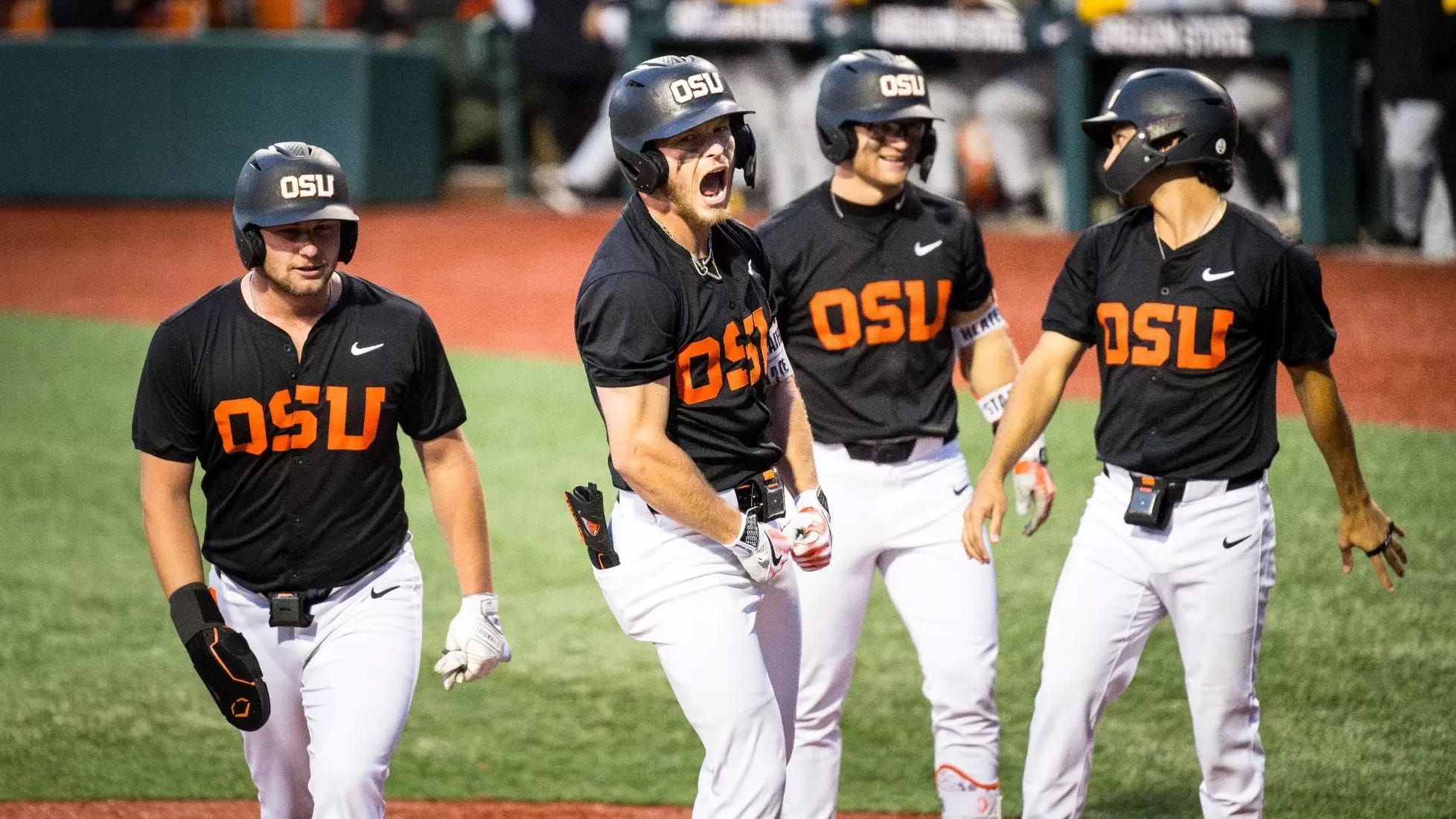
Oregon State battled a ton of adversity this year that was bestowed upon them by school administrators and conference commissioners. As one of two schools that were left in the dust after the Pac-12 crumbled, Oregon State was sent scrambling in every direction to try and find a schedule for their 2025 baseball season. Somehow, the Beavers created a slate of games that worked, with the unfortunate caveat that they’d only play 19 games at home throughout the year.
Fortunately for the Beavers, head coach Pat Casey and company always find a way, as Oregon State steamrolled through the competition en route to yet another successful campaign.
Of the many downsides presented to them because of their unique situation, the most glaring might be that the Beavers aren’t as battle-tested as some other regional hosts. Other than some pretty prestigious early season tournaments, Oregon State didn’t play as many top-end teams as a usual top-eight seed might. Yes, wins against UC Irvine and UCLA are massive, but four losses to in-state rival and fellow regional host Oregon might raise a few eyebrows about whether the Beavers are really up to snuff with the rest of the competition. Regardless of any of the doubts, Oregon State is quite formidable, and if history is any indicator, then everybody needs to watch out for the scruffy underdogs from Corvallis.
On the offensive side, the three-headed monster of Aiva Arquette (.348/.473/.676), Gavin Turley (.338/.470/.622), and Wilson Weber (.332/.415/.576) lead the way for the Beavers. Just a glance at those slash lines paint a wonderful picture at just how potent the Oregon State offense can be if it’s really clicking on all cylinders.
There are two starting pitchers to watch out for for Oregon State. Both Ethan Kleinschmit and Dax Whitney have started 14 games, and have been fantastic. Kleinschmit boasts a 3.84 ERA over 72 2/3 innings of work, with 89 strikeouts and 27 walks. Meanwhile, Whitney has been just as good, with a 3.86 ERA over 60 2/3 innings pitched. He also has struck out 89 hitters while walking 32.
USC (35-21; RPI: 44)
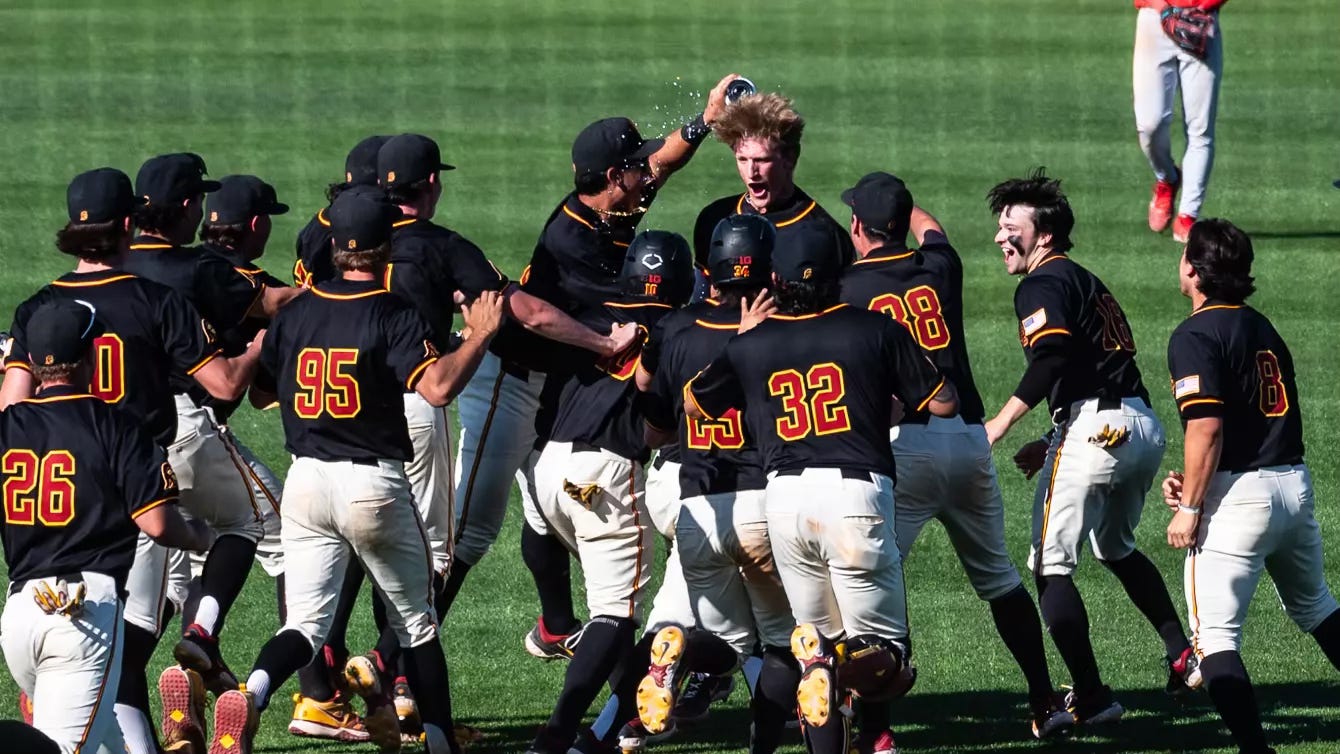
Much like Oregon State, the USC baseball program was faced with some adversity when it came to scheduling in 2025. For one, they’d be zigzagging all over the country in the new Big Ten, having to fly out to Michigan, Indiana, and Pennsylvania during their conference schedule. But when the Trojans were back home in Los Angeles, they didn’t have a home field due to ongoing renovations. As such, they bounced around the greater Los Angeles metropolitan area, playing at several different places throughout the course of the season.
It appears that that didn’t have any factor into how the Trojans performed, as for the first time since 2015, USC made the tournament.
USC was the last team in the field, and their reward is a battle with a TCU team that believes it should be hosting. It’s not the luckiest draw, that’s for certain, but could USC utilize some extra motivation of their own from earning their first bid in the tournament in a decade to go out and upset the Frogs? It’s certainly in the cards.
Ethan Hedges (.343/.459/.602), Adrian Lopez (.337/.409/.576), and Brayden Dowd (.322/.447/.533) are the best three hitters in the lineup. And don’t forget Jack Basseer, a former player at TCU who’s had quite the impressive season for the Trojans with a .280/.353/.523 slash line.
Look for Caden Aoki to get the nod on the bump for USC in game one of the regional against TCU. His 4.21 ERA over 87 2/3 leads all starters for the Trojans. He also leads the team in strikeouts with 81, compared to just 14 walks. Also keep an eye out for Hedges, who’s not only the best hitter for the Trojans but also one of their best arms out of the bullpen, to make a real difference on the mound as well. His 2.40 ERA over 15 innings in relief is quite impressive for the two-way star.
Saint Mary’s (35-24; RPI: 89)
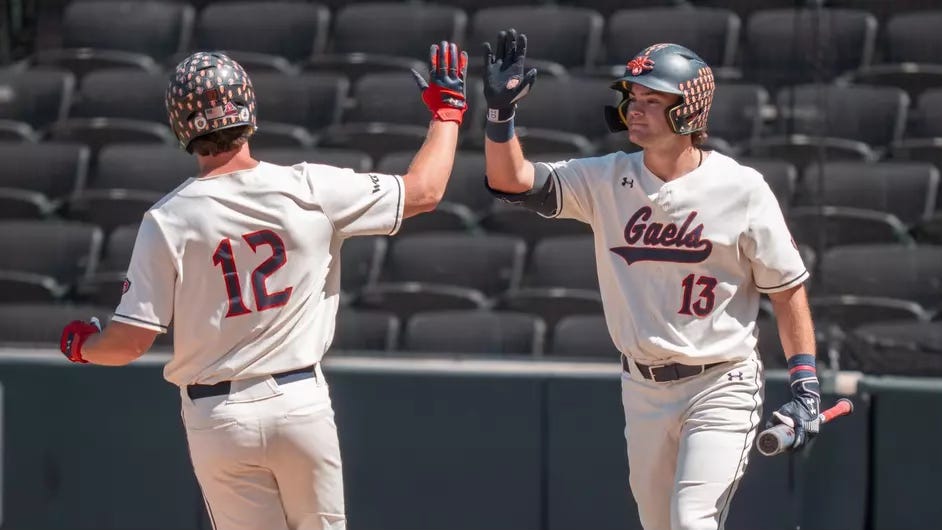
The Gaels won the West Coast Conference Tournament to make the field and are looking to wreak havoc as a four seed. Can they do it? Probably not, but I’m sure they’re going to give it the good old college try.
If any one player can uplift a team to a massive upset, it might be Eddie Madrigal for Saint Mary’s. Madrigal’s statistics are out of this world, as he’s slashing .372/.464/.719 with 21 home runs and a whopping 77 RBIs. Aiden Taurek (.336/.419/.578) is no slouch himself, and the two of them make a fantastic one-two punch at the top of the Gaels’ lineup.
The pitching is where Saint Mary’s is most likely to struggle. As a team, the Gaels have a 6.20 ERA, which if you’re not familiar with baseball, is not good at all. In fact, I’d go as far as saying that it’s one of the worst ERA figures a team could possibly have. Anyway, somebody is going to have to go out there and attempt to get some outs for Saint Mary’s, and that’s going to be Dylan Delvecchio, who has started 13 games for the team and has a 4.85 ERA over 65 innings of work.
My Predictions
As the top seed in the regional, Oregon State is the obvious pick to advance out of this foursome of teams. While it’s a tempting option to go with the Beavers, I just believe that TCU’s desire to prove the doubters wrong will overcome everybody else. That means that it’s goodbye to Oregon State, USC, and Saint Mary’s. Sorry.
As for the other three teams, I’ll say that the Beavers likely finish second here, with Saint Mary’s defying the odds and finishing third. USC brings up the rear in fourth.
So Long, Frogs
TCU baseball’s season is done. How?

TCU baseball’s season came to a sudden end yesterday afternoon in Corvallis following a horrific 7-2 defeat to Oregon State.
It’s hard to imagine a rougher end to a season. Following the Horned Frogs’ 11-1 win over Kansas in the semifinal round of the Big 12 Tournament, TCU then proceeded to lose three in a row, once to Arizona in the Big 12 championship game, and then twice in embarrassing fashion in the Corvallis Regional.
Thanks for reading SethStack! Subscribe for free to receive new posts and support my work.
Let’s start with Friday afternoon’s defeat to USC. The Trojans were the last team awarded a bid into the tournament, but they certainly didn’t look like it against the Frogs as they beat up on TCU’s pitching en route to a dominating 13-1 win.
Tommy LaPour, who’d been the best pitcher on TCU’s staff and one of the best arms in the country, failed to get out of the fourth inning. Command issues—he walked one and plunked two more—plagued him throughout his outing. To be honest, though, I don’t know if anybody would’ve done a good job against USC on Friday. Their approach was superb, and as each arm came out of the bullpen for TCU, the Trojans were ready to pounce.
After that disappointing outcome, TCU’s season hung in the balance in an elimination game against host Oregon State on Saturday. The Beavers, just like TCU, came up short in their inaugural game of the regional losing 6-4 to Saint Mary's. Everybody had pegged Oregon State and TCU to eventually meet up in Corvallis, but nobody had projected that it would be in game two of the regional with elimination on the line.
Alas, here we were. For one school, their season would live. For the other, it would go down in flames in the span of 24 hours. Unfortunately for everybody in Fort Worth, it was TCU that couldn’t answer the call.
From the very first pitch, it was clear that the Horned Frogs weren’t in it. Dax Whitney, the freshman star pitcher for Oregon State, struck out Jack Bell, Sawyer Strosnider, and Cole Cramer in order in the top of the first. That set up the Beavers’ offense to go to work on Frogs’ starter Mason Brassfield. Projected top-five pick Aiva Arquette doubled down the left field line, and Gavin Turley walked on five pitches, allowing Wilson Weber to crush a middle-middle fastball from Brassfield 420 feet off the batter’s eye in straight away center field. Bang. 3-0, Beavers.
It would never get better for TCU. As the crowd continued to come to life in Goss Stadium, the Beavers’ bats kept on slugging. Trent Caraway hit a solo shot to lead off the home half of the second to make it 4-0, and then A.J. Singer and Jacob Krieg hit solo and two-run homers in the bottom of the third, respectively. Before TCU had even recorded nine outs, they were down 7-0, and the sun was setting fast on their season.
Oregon State didn’t score another run for the rest of the game, with Braeden Sloan and Caedmon Parker shutting the Beavers down after the barrage of homers. It didn’t matter, though. TCU mustered just two measly runs, both via an Isaac Cadena two-run shot in the top of the fifth. For the rest of the supposedly potent Frogs offense, nothing was going.
Whitney was unbelievable for Oregon State. He tallied a career-high 12 strikeouts through his six innings of work, allowing just the two runs on four hits. The task was always going to be tough for TCU against any pitcher, let alone one that was on point for his entire outing.
After Nelson Keljo came out of the 'pen in relief of Whitney and continued to shut the Horned Frogs down, that was that. For the first time in TCU baseball history, the Horned Frogs had been eliminated in just two games in a regional.
In an attempt to explain the unexplainable, I’ll offer this point: the majority of production in TCU’s lineup, and in the pitching staff for that matter, came from freshmen. Sawyer Strosnider was the Big 12 Freshman of the Year, and Noah Franco and Nolan Traeger were also fantastic in their first season in college. While he wasn’t great yesterday, Mason Brassfield had proved a reliable arm for Kirk Saarloos’ squad throughout 2025. But then the lights got bright, and it seemed like the young bucks became a little unsure of themselves.
Obviously, the freshmen aren’t the only ones to blame. There is plenty of veteran leadership on the team that should’ve been able to ignite some sort of spark in the team. Even still, the veterans themselves weren't that experienced, at least when it came to playing in the postseason. Only two players on the active roster – Jack Bell when he was at Texas A&M and Anthony Silva on the 2023 team that made the College World Series – had been on rosters that had made it to a regional.
Of course, the flame never came, and the Horned Frogs now enter 2026 with a lot of questions.
The most glaring one comes in the dugout in the form of head coach Kirk Saarloos. The former big league pitcher with the Houston Astros and Oakland Athletics just finished his fourth season at the helm in Fort Worth. His TCU teams have made the tournament in three of those seasons, including one where they made it to the final four in Omaha. Yet despite that success, the Horned Frogs have yet to host a regional in Saarloos’ tenure, and the supposed marquee that Saarloos brings to a squad, the pitching staff, has consistently been the worst aspect of the team throughout his time in Tarrant County.
I don’t believe a coaching change is imminent. First-year TCU athletic director Mike Buddie has given zero indication that a coaching shakeup for baseball is high on the to-do list. Nevertheless, less shocking things have occurred in the history of Horned Frogs athletics, so it wouldn’t completely shock me if Buddie decided that a new voice was needed.
Still, I don’t think it’s necessary. TCU baseball has been at its best with Saarloos on the staff. Whether that’s as the head coach or as the pitching coach during Jim Schlossnagle’s tenure, the Frogs have been in the national conversation more often than not when he's around. At a school as small as TCU, where success is not guaranteed in any sport, let alone baseball, making a drastic change that isn’t necessary seems rash.
The 2025 baseball season for the Horned Frogs was an improvement in many regards. They returned to the postseason after a one-year absence and were competing for a Big 12 title late into the year. Yet, here we are, three days into the tournament, and their season is over. It’s disappointing, and frankly, not acceptable. The expectations are high for this baseball program — the success of the last decade has made it so—thus, winning, and winning soon, is paramount.
Back to Normal in Fayetteville
After a two-year hiatus, Arkansas is back to winning in the postseason.

Everybody can breathe a sigh of relief because, after two years of complete disappointment, the Arkansas baseball team is back to winning regionals.
Some thought that Arkansas' prominence on the national stage in baseball was over. Those fools were clearly incorrect.
The Razorbacks completed a clean sweep of the Fayetteville Regional on Sunday evening after defeating Creighton 8-3. Arkansas looked every bit as dominant as it was in the regular season, as the offense continued to hit out of its mind and the pitching staff did what every Razorbacks pitching staff seems to do year in and year out: shove.
There are many reasons to be excited about what this team can do throughout the rest of the postseason. For the first time in what feels like forever, the lineup is alive. A subpar offense is what has held the Razorbacks back in past postseasons and in a sport where offense often has to carry a team through the ups and downs of the tournament, having one that doesn't show up consistently is a doomed proposition.
Alas, that's not been the case in 2025, as the Hogs completely revamped the lineup and are now hitting home runs like nobody's business. A whopping 120 long balls have left the yard for Arkansas this season, which is a program record. If there's any statistic that illustrates why this team might be different from others in the past, that's it.
That offense was on full display over the weekend, especially in the two games against Creighton on Saturday and Sunday. After scraping by against a pesky North Dakota State team, the bats went berserk versus Creighton. The Hogs put up 13 hits against the Bluejays en route to a dominating 12-1 win over the Big East champions. And just like all season, it was the stars who shone brightly for Arkansas.
Wehiwa Aloy, the SEC Player of the Year and a projected first-round pick in this year's MLB Draft, recorded five RBIs via two home runs. Ryder Helfrick joined the party as well with two long balls of his own. Logan Maxwell, a transfer from TCU brought in to instill life into the lineup, had two hits and scored two runs. Cam Kozeal drove in a couple of runs too, while Reese Robinett walked three times. It was truly a team effort, and it was more than enough.
Add a great pitching outing from ace Zach Root, and a blowout victory was inevitable. Root, who's been the Razorbacks' most consistent starting arm this season, threw six innings of shutout baseball, striking out seven and walking just one. He was extremely efficient, throwing 94 pitches, 55 of which were strikes.
With a massive lead to buoy them, the trio of Ben Bybee, Steele Eaves, and Colin Fisher came out of the bullpen and shut down Creighton to end the night. When the dust settled, Arkansas was moving on to the regional final to await the winner of Creighton and North Dakota State.
Once Creighton defeated NDSU to advance to the final, Arkansas knew that all it had to do was beat a team it had crushed the previous night. Could they do it again? Yes.
Arkansas pounced early and often against the Bluejays, tallying two runs in the first, three in the second, and another in the third. Before Creighton could even catch its breath, Arkansas was up 6-0.
Other than a three-run frame from the Bluejays in the top of the fourth, it was smooth sailing for the home team. Gage Wood delivered a fantastic outing on the mound, going six innings and allowing just three runs. Oh, wait. What? He had 13 strikeouts and zero walks? Talk about dominance. Wow.
Time out. Gabe Gaeckle came out of the bullpen, threw three shutout innings, and struck out another seven Creighton hitters? Oh my gosh.
That's right. Arkansas struck out a whopping 20 hitters on Sunday night. Yes, this team is legit.
The 8-3 win was another team effort. As you can tell, the pitching was electric, and the offense was hitting homers all over the yard, with Justin Thomas Jr., Helfrick, and Maxwell all hitting long balls. Even with Aloy being kept relatively quiet, the lineup was still able to produce loads of runs.
That's what makes this group of players different from Arkansas teams of the past, and it's what gives me hope that this roster could be the one to finally break through.
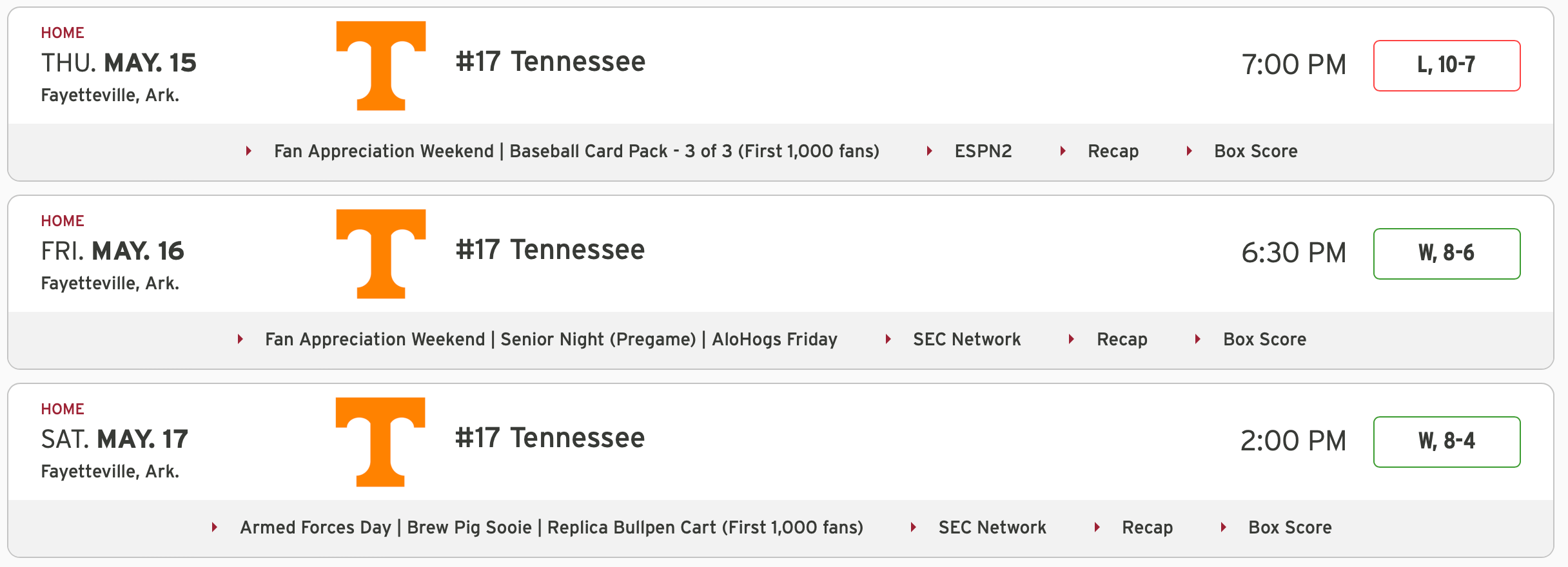
The job is not yet finished, however, to use an old cliché. The goal, of course, is a national championship, with the next step being to win the Super Regional against Tennessee this weekend. Still, that won't stop Razorback fans from looking toward what could be in the future.
Head coach Dave Van Horn has been in Fayetteville since 2003. In that time, Arkansas has been an extremely successful baseball program, consistently making the tournament and competing at a high level in the SEC. But despite making it to Omaha nine times, a national championship has always eluded him and the school. They've come so close — one out away, in fact — but at times, it has felt like the ultimate goal was so far away.
Let's reflect on just how close this program has come to a national title. If you recall, 2018 was the year of the Razorback. Well, not in everything. The football team went 4-8 during that athletic year and only managed to win one conference game. The basketball team fared better but was bounced in the first round of the NCAA Tournament by Butler. It was then the baseball team's turn to attempt to salvage an otherwise mediocre campaign for the "Big 3" sports, and they certainly did.
The Razorbacks were spectacular in the regular season, earning the right to host a regional where they quickly dispatched Oral Roberts, Southern Mississippi, and Dallas Baptist to advance to the Super Regional round, where they'd face South Carolina. Beating the Gamecocks was a bit more difficult, as the two teams split the first two games of the three-game series before Arkansas won 14-4 in the winner-take-all Game 3 to advance to the College World Series.
In Omaha, Arkansas made easy work of their side of the bracket, beating Texas, Texas Tech, and No. 1 overall seed Florida. It was then on to the championship series, where Oregon State and future first-round pick Adley Rutschman awaited.
Despite being outhit 9-5, the Razorbacks utilized a four-run fifth inning to beat the Beavers 4-1 in the opening game of the series. That set them up well, as all the Hogs had to do was win one more game. Do that, and they'd be national champions for the first time in school history.
As Game 2 progressed, it appeared that Arkansas was well on its way to doing just that. After Oregon State took a 2-1 lead heading into the bottom of the fifth, the Razorbacks struck for two runs in the frame to take a 3-2 advantage. If they could just hold that lead, the crown would be theirs.
That set the stage for one of the most dramatic finishes to any College World Series game ever. Oregon State had a runner on third with two outs. They were on the ropes. One more out, and Arkansas would be the national champion. But if Oregon State could manage just one hit, their season would live.
Countless words have been written about that top of the ninth inning, and I certainly don't believe I can do it justice. Here it is in its entirety (skip to around 13:42 to see the disaster that set up a whole other set of more devastating disasters):
Bang. From catching one foul pop-up away from being on top of the world to being down 5-3. Unbelievable. There's no other word to describe it. It was unbelievable.
Of course, Oregon State went on to win Game 3 5-0, as it was clear that Arkansas never truly recovered from the whiplash of the night before. In the span of 24 hours, the Razorbacks went from one out away from glory to being so far from it that they might as well have been on the moon.
Ask any Razorback fan about those two games in Omaha, and they'll likely shrivel up into a little ball. It's one of the most traumatizing sports moments I've ever witnessed, and it has probably taken years for many people in Fayetteville to recover, if they have at all.
All that shame and sadness could potentially go away this year. Arkansas isn't there yet, but if they can keep climbing the ladder, they'll eventually make it to the top. For the sake of everyone involved with Arkansas, I sure hope they can get it done.
A date with Tennessee now awaits in the Super Regional round starting this Saturday at 4 PM CDT at Baum-Walker Stadium in Fayetteville. Win two games before the other team does, and the Hogs will be racing to Omaha by this time next week.
Tennessee just finished a tumultuous and challenging regional test against Wake Forest, Cincinnati, and Miami (OH). Wake Forest took the Volunteers to the brink, but Rocky Top was up to the task and advanced.
The Volunteers are not the same team they were last year when they won the national title, but they are still extremely talented and formidable. Head coach Tony Vitello will have those players ready to play, and Arkansas is going to have to match that energy to succeed.
As long as the offense keeps hitting and the pitching continues to do what it's done all season, the Hogs should be in good shape. After all, Arkansas did win a series against these same Volunteers a couple of weeks ago in what was a fantastic three-game set. If that series is any indication of what we'll see this weekend, then be prepared for runs, runs, and a whole lot more runs.
In years past, that wouldn't have suited Arkansas' strengths. But in 2025, a shootout is exactly what this lineup is equipped to handle. It's a nice change of pace, and I believe it'll be enough to get the Razorbacks back to Omaha for the first time since 2022.
Regionals Recap: Part 1
Vanderbilt is done, Oregon State lives, and Coastal Carolina looks like a wrecking ball.
The college baseball season is underrated, and the tournament that follows it is the most under appreciated in all North American sports. As I discussed in my tournament preview last week, the College World Series and the rounds that precede it provide some of the most entertaining sports moments of the year.
This year’s tournament has been no different. Upsets have been common occurrences all around the bracket, with top team after top team falling. Let’s just look at the numbers:
Seven out of the 16 regional hosts failed to advance.
Of the 13 SEC teams that entered the field, only four won their regional (Arkansas, Auburn, LSU, and Tennessee).
The ACC, which produced nine tournament teams, has five schools going to the next round (North Carolina, Florida State, Duke, Louisville, Miami).
Two Big 12 schools, West Virginia and Arizona, advanced. TCU, Kansas, Kansas State, Oklahoma State, Cincinnati, and Arizona State couldn’t make their conference proud.
Five four-seeds (Wright State, Columbia, Saint Mary’s, Utah Valley, and Little Rock) won games against the top teams in their regional.
Those are just some of the figures that illustrate how dramatic this past weekend of baseball was. If you don’t believe me, take the internet’s word for it. All across the World Wide Web, people were discussing how this was one of, if not the best, regional rounds that we’ve seen in a long time.
So, let’s break it all down in Part 1 of my Regionals Recap.
Nashville Regional
Whoa.
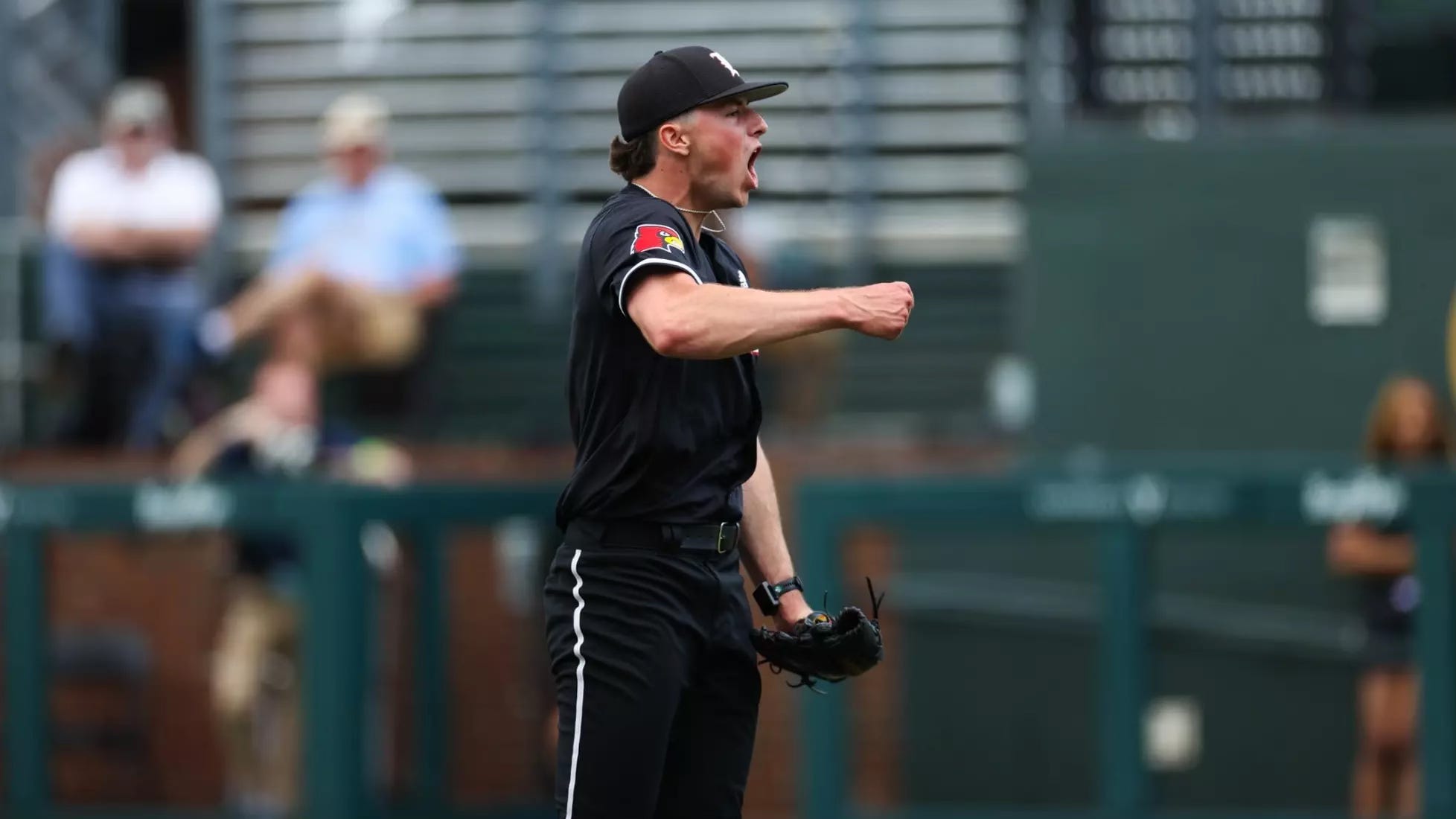
In my post last week projecting and predicting the outcomes of every regional, I said that Louisville was going to be the team to advance out of Nashville. That ended up being a correct read (one that I’ll admit was based on a totally bogus reason). The way the regional wound up getting to that point, however, was nothing short of shocking.
If you had told me that Vanderbilt, the number one overall seed in the tournament, would bow out before even reaching the regional final, I would’ve probably left the room laughing my face off. It was such a ridiculous proposition to even think about, but man, it happened, and it was weird.
Did Louisville’s path become much easier the second that Vanderbilt lost to Wright State on Sunday afternoon? Absolutely. Don’t forget, though, that Louisville still had to get through the barrier that was the Commodores, as their win over the hosts on Saturday was the sole reason that Vanderbilt found itself in the loser’s bracket.
Wright State deserves a lot of credit for its performance over the weekend. The Raiders were nine outs away from beating Vanderbilt on Friday evening, only to choke it away the second that head coach Alex Sogard decided to pull starting pitcher Cam Allen, who was throwing a no-hitter at the time of his exit. That gut punch of a game didn’t get them down, and they bounced back in their next two games, winning 7-5 against East Tennessee State, and then getting revenge on the Commodores the next day. They’re a great story, and it’s kind of a shame that they didn’t get a chance to extend their season to this weekend.
Alas, Louisville won the gauntlet and is two wins away from Omaha.
Hattiesburg Regional
Of all the regionals this weekend, this is the one that I probably got the least amount of eyes on. None of the teams in this part of the bracket particularly interested me, but even then, an entertaining weekend of baseball was played down in Hattiesburg.
Southern Mississippi is a top-tier mid-major program. Year in and year out, they find themselves near the top of the college baseball pantheon. So, when they lost their opening game to Columbia of all schools, the alarm bells started going off.
Combine that shocking loss with Alabama’s defeat to Miami (FL) on the same day and you got yourself a major crisis. If you were paying attention to the ACC Tournament, then you’ll remember that Miami got run-ruled by California to end their run in that bracket. That loss left the Hurricanes’ hopes in the hands of the selection committee, who then graciously awarded them a bid in the Hattiesburg Regional.
Miami would take full advantage of that opportunity. After beating Alabama, the Hurricanes cruised against Columbia, beating them 14-1. That then set up a matchup with Southern Mississippi, who had rallied back after their opening loss to make it back to the regional final. And when the Golden Eagles killed Miami 17-6 to force a win-or-go-home game on Monday, it appeared the Hurricanes’ hopes of making a Cinderella run were down in the dumps.
It wasn’t. Miami slayed the host team in the finale, winning 5-4 to advance to face Louisville in a Super Regional matchup that nobody saw coming.
SethStack is a reader-supported publication. To receive new posts and support my work, consider becoming a free or paid subscriber.
Corvallis Regional
I wrote a lot about the Corvallis Regional from a TCU perspective on Sunday morning, so go check that out before reading the rest of this piece.

In terms of every other team in the regional, man, was it competitive. USC put up a heck of a fight for a team that barely made the field, and Saint Mary’s certainly has a lot to be proud of. But putting up a fight and being proud doesn’t necessarily equate to wins, and in the case of the Trojans and Gaels, they both fell victim to the mighty beast that is Oregon State.
The Beavers lost their opening game of the regional to Saint Mary’s, and honestly, it was looking like they were going to be just one of many hosts this past weekend that couldn’t find a way to advance. Against all odds, though, Oregon State fought its way out of the loser’s bracket, beating TCU, Saint Mary’s, and then USC twice to move on to the next round.
According to PEAR Analytics, the Beavers’ journey through the Corvallis Regional was the second most difficult of the 16 teams that advanced to the supers. Only Murray State, who I’ll talk about later, had a more difficult trek.
Oregon State’s entire athletic department is one of the most underrated stories in all of collegiate sports. The university was left for dead when the Pac-12 decided to not exist anymore, and it has consistently had to find ways to survive over the past year and a half. In baseball, it had to make a schedule from scratch, a task that I have to imagine was extremely difficult. Prior to the regional this past weekend, the Beavers had only played 19 games in Corvallis all season. Luckily for the team and its fans, there will be at least two more games at Goss Stadium before this season is said and done.
Tallahassee Regional
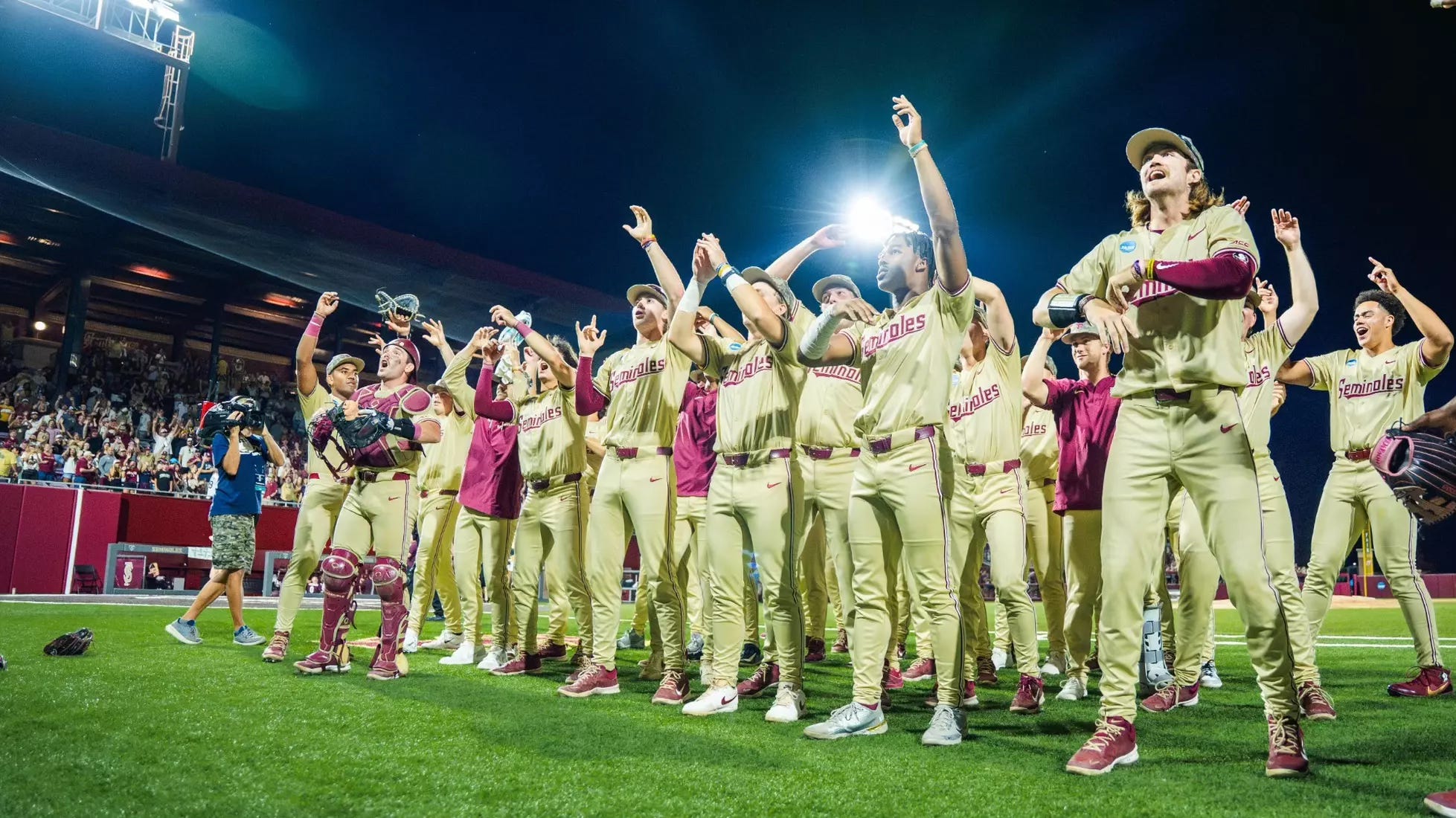
Can I be frank real quick? I’m really upset that Northeastern didn’t find a way to come out of Tallahassee unscathed.
Coming into the postseason, the Northeastern Huskies had won 27 games in a row. 27! In my regional preview, I picked the Huskies for this exact reason. How could I discount such a large sample size of winning?
Maybe I should’ve. The moment that the lights got bright and the Huskies had to face a team with a bunch of good players, in this case Mississippi State, they crumbled. Mississippi State won 11-2, and it was on to the loser’s bracket.
But Northeastern isn’t the story of the Tallahassee Regional. How could it be when it was Florida State, the host, that easily swept its way through its own regional. The Seminoles beat Bethune-Cookman on Friday, made a statement against Mississippi State on Saturday, and then took care of business against the Bulldogs again on Sunday. Bing, boom, pow. Three games, three wins. Easy peasy.
Shoutout to Northeastern, though. Wish it could’ve been done. Oh well.
Chapel Hill Regional
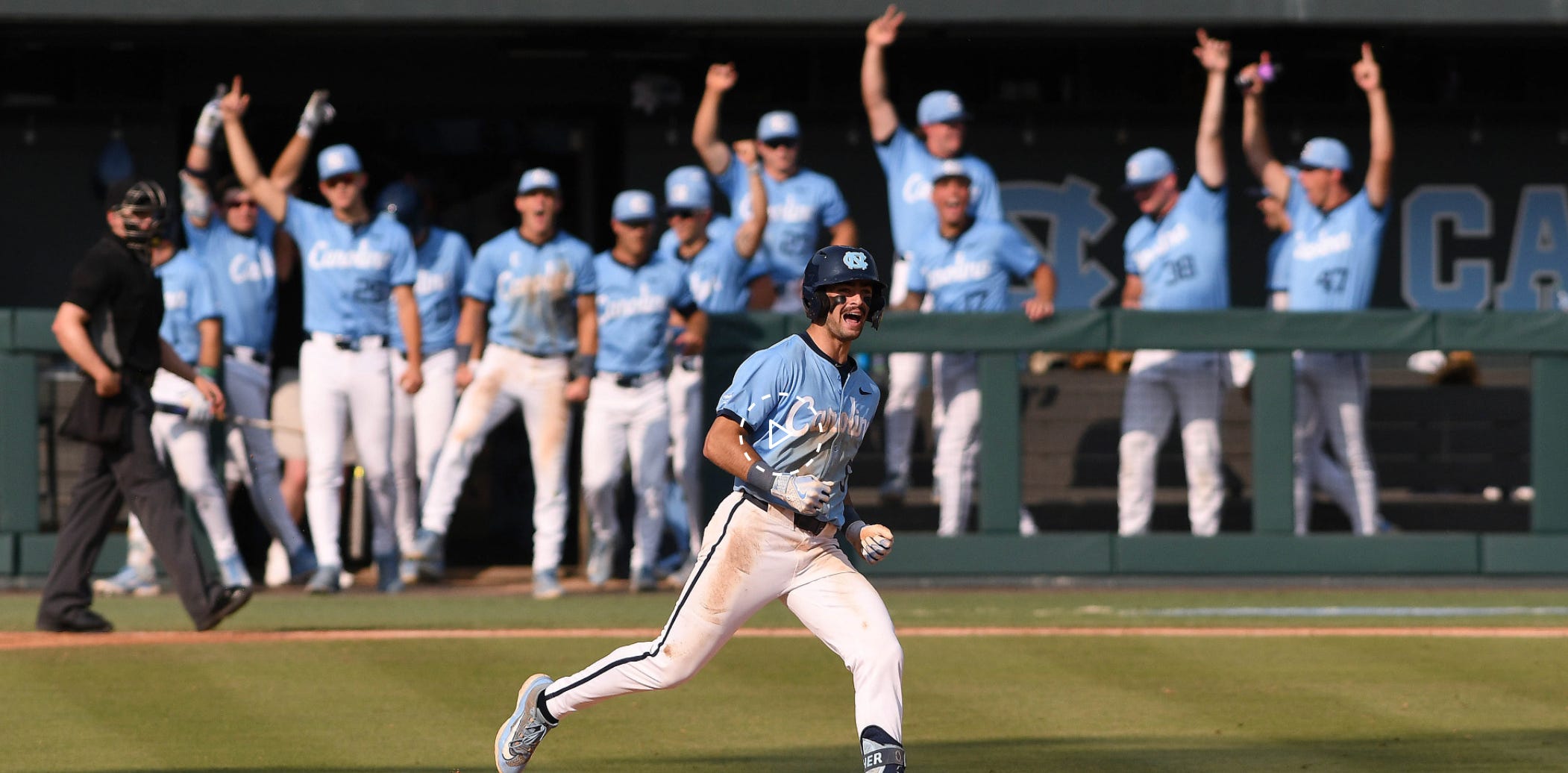
Carolina Blue will forever and always be the best color on the planet. Perhaps that’s why North Carolina won the Chapel Hill Regional? I certainly think so.
The Tar Heels utilized fantastic pitching by ACC Pitcher of the Year Jake Knapp and Jason DeCaro through their first two games of the regional, before having to fight hard against Oklahoma in the regional final. The Sooners, whom Carolina had beaten on Saturday, came out of the loser’s bracket and defeated the Tar Heels 9-5 to force a finale on Monday afternoon.
Doubts could’ve set in within the North Carolina dugout that maybe a choke was imminent. If any worries did end up surfacing following the loss, then it all vanished pretty quickly once the game on Monday commenced.
North Carolina scored three in the first, four in the third, and another in the fourth. Three more in the eighth, with another trio of runs coming across in the ninth, completed a 14-4 blowout of the Sooners where the Tar Heels recorded 17 hits. Sometimes when the lights get bright, the bats can tend to shrivel up. That was definitely not the case in Chapel Hill, and the Tar Heels are better off for it.
Eugene Regional
There were several surprising outcomes during the weekend, but Arizona’s “upset” advancement in the Eugene Regional was not one of them for me.
Yes, Arizona was not the host. Oregon was. But if you just look at the results, then that doesn’t make any sense at all.
The Ducks were out after just two games, losing to Utah Valley (who?) and Cal Poly (excuse me?) to end their season. Meanwhile, Arizona was rocking and rolling its way toward a sweep. Cal Poly? Nah, that’s light work. Utah Valley? Even easier! Cal Poly again? How about a 14-0 shutout win? Yeah, that sounds right.
Sure, I picked this result and thought it was going to happen, but I didn’t think that Arizona would be able to get through this regional without even having to face the host. It’s mind-boggling to me that Oregon managed to biff this so badly. Huh, I wonder what it’s like for your favorite school’s season to end after just two games in a regional? Never happened to me before.
Arizona’s going to be a real tough out for North Carolina this weekend. If the Tar Heels even think for just a little bit that Arizona will be an easy beat, then they better prepare themselves for a beating.
Auburn Regional
I’ll breeze through these next two regionals because, honestly, there’s not much to say.
Auburn was far and away the best team among NC State, Stetson, and Central Connecticut. The fact that anybody would even consider not picking them to advance out of that foursome is ludicrous to me. I mean, who would even do such a thing? (Ignore anything that I wrote about Auburn last week.)
Of all the teams here, it was Central Connecticut, the four-seed, that gave the Tigers the biggest fight. The first two innings of that game on Friday were a bloodbath. Pitchers couldn’t find the strike zone to save their lives, and hitters were teeing off on anything and everything. But Central Connecticut just couldn’t find that next level, which allowed Auburn to do its thing en route to a 9-5 win.
Stetson was next, and the Hatters put up pretty much zero resistance. Actually, no. At least they put up a little bit of a fight, which I can’t say was the case for NC State. The Wildcats have been a tournament darling for several years now, and I saw some people picking them to make a little bit of a run this season. It was not to be. Auburn put on a clinic in the regional final, winning 14-1.
Not much else to say. Auburn’s got itself a pretty good baseball team, along with some fairly sick uniforms.
Conway Regional
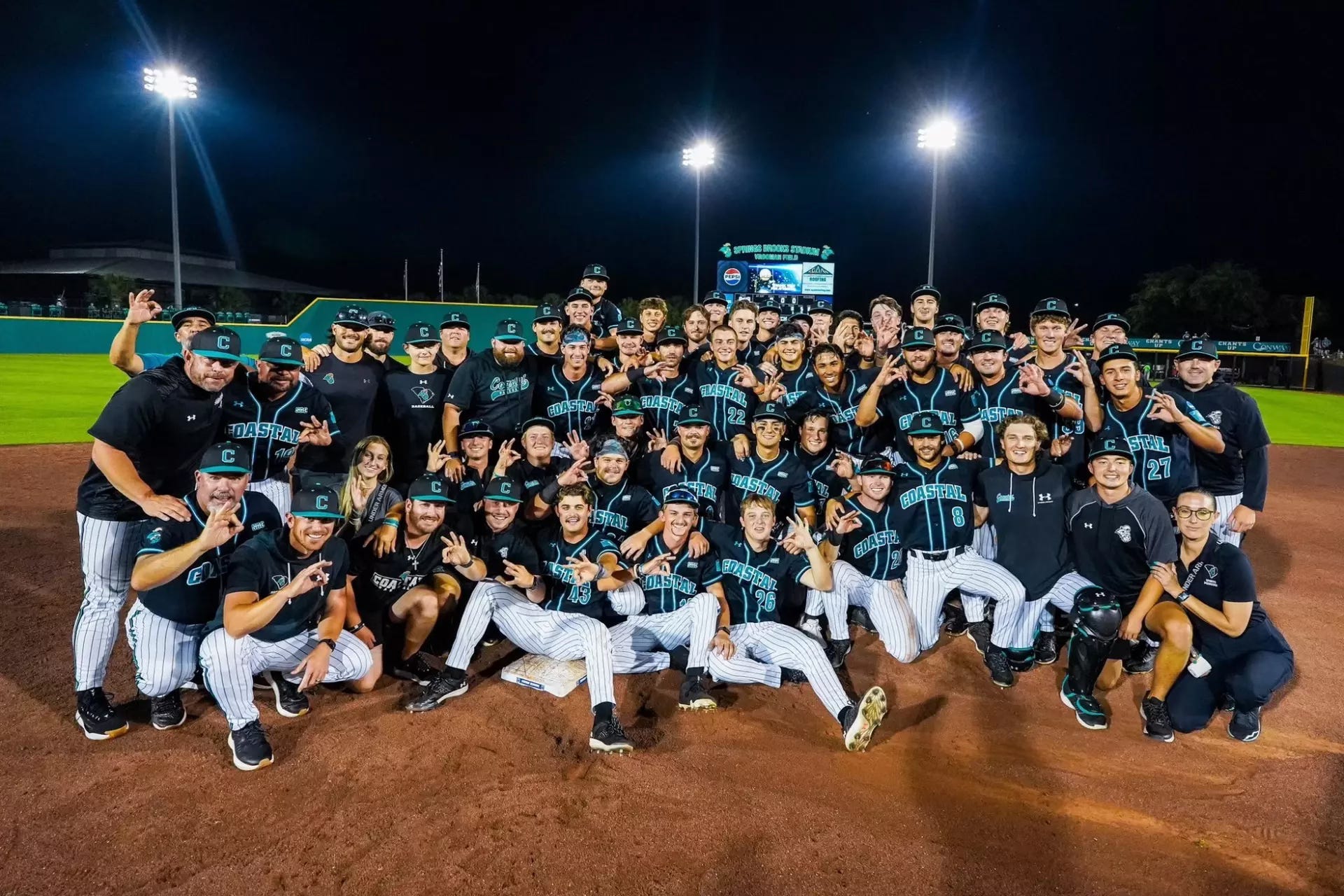
Coastal Carolina might have a thing or two to say about who has the best uniforms in the land. Teal is just such a majestic color to put on a baseball jersey.
The Conway Regional was named the “Group of Death” by many. Florida, East Carolina, and Fairfield were all formidable opponents for Coastal. There were no doubts that it wasn’t going to be a cakewalk, but it also wasn’t that hard either.
The Chanticleers, which is a fun and unique mascot that doesn’t necessarily inspire fear in opponents but still gives off a somewhat menacing vibe, beat Fairfield 10-2 on Friday, defeated East Carolina in an 18-7 rout on Saturday, and then won a 1-0 pitcher’s duel on Sunday to advance. The “Group of Death” was dispatched in three games. I think Coastal Carolina head coach Kevin Schnall has to be proud of that.
By the way, he runs a really good program down there. People forget that Coastal Carolina won a national championship in 2016 and has been a contender pretty much every season since. It takes a lot of hard work to build up a mid-major program to the levels that Coastal is at right now, and I think that accomplishment should be commended more often than it is.
Auburn and Coastal Carolina is a juicy matchup this weekend. I’ll be watching, and you should too.
Regionals Recap: Part 2
UTSA plays spoiler, Murray State shocks the world, and LSU escapes.
The college baseball season is underrated, and the tournament that follows it is the most under appreciated in all North American sports. As I discussed in my tournament preview last week, the College World Series and the rounds that precede it provide some of the most entertaining sports moments of the year.
This year’s tournament has been no different. Upsets have been common occurrences all around the bracket, with top team after top team falling. Let’s look at the numbers:
Seven out of the 16 regional hosts failed to advance.
Of the 13 SEC teams that entered the field, only four won their regional (Arkansas, Auburn, LSU, and Tennessee).
The ACC, which produced nine tournament teams, has five schools going to the next round (North Carolina, Florida State, Duke, Louisville, and Miami).
Two Big 12 schools, West Virginia and Arizona, advanced. TCU, Kansas, Kansas State, Oklahoma State, Cincinnati, and Arizona State couldn’t make their conference proud.
Five four-seeds (Wright State, Columbia, Saint Mary’s, Utah Valley, and Little Rock) won games against the top teams in their regional.
Those are just some of the figures that illustrate how dramatic this past weekend of baseball was. If you don’t believe me, take the internet’s word for it. All across the World Wide Web, people were discussing how this was one of, if not the best, regional rounds we’ve seen in a long time.
So, let’s break it all down in Part 2 of my Regionals Recap.
Austin Regional
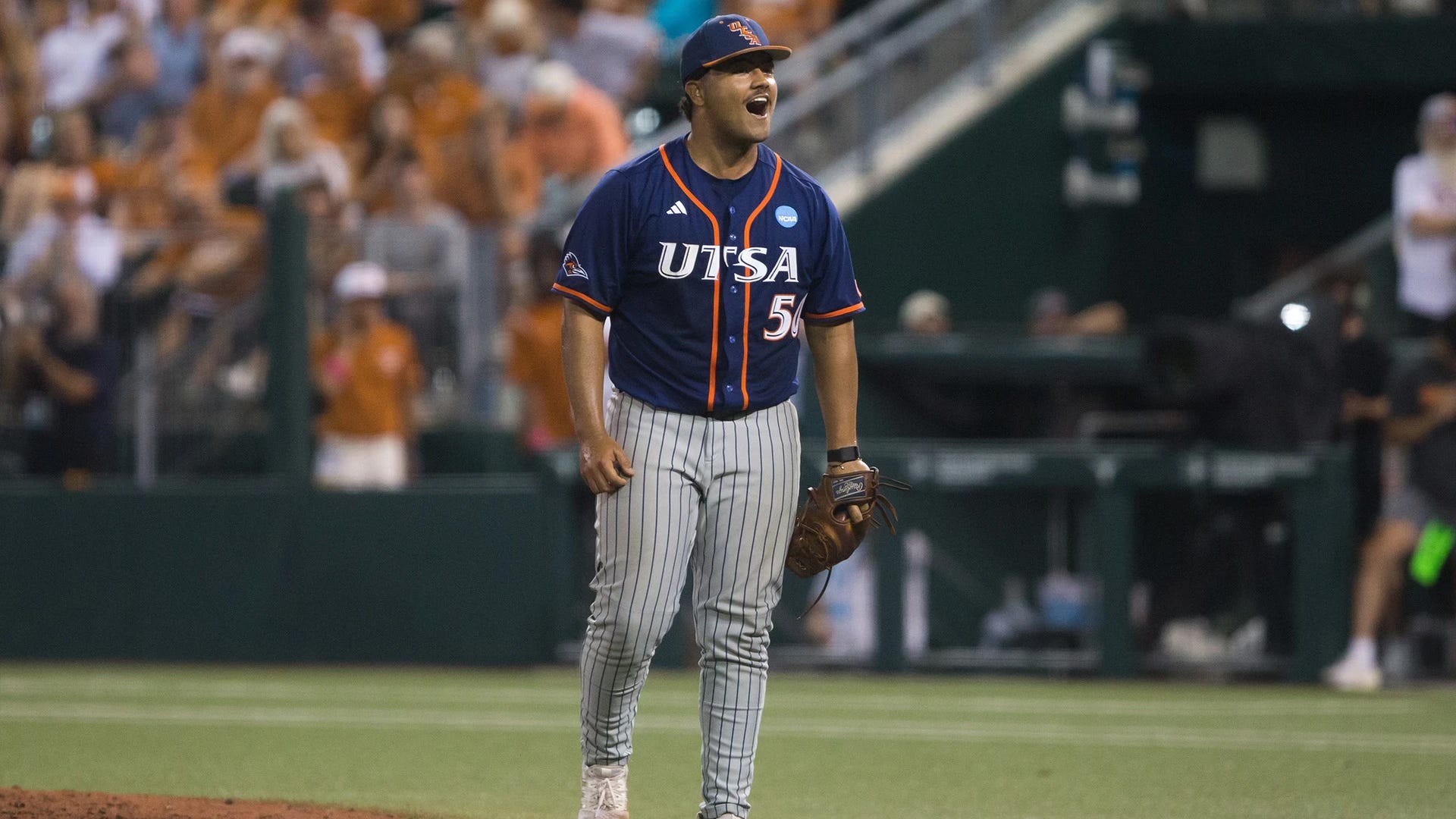
If the results of the Nashville Regional were surprising, then what happened in Austin last weekend was flat-out flabbergasting.
For pretty much the entire back half of the regular season, Texas found itself at the top of the polls. It was only toward the end of the campaign that the Longhorns slipped to number two once Vanderbilt picked it up a notch. At the end of the day, both schools failed to make it out of their own regional.
In Nashville, it was Louisville, an ACC program that’s historically been a successful baseball school, that beat the host. In Austin, on the other hand, it was UTSA that upset the apple cart, a mid-major program that’s defying the odds with each and every victory in the postseason.
Don’t get it twisted: UTSA’s success in Austin was not a fluke. Beating Texas twice in two days was something that the collective college baseball world didn’t see coming, yes, but it was also a feat that makes a lot of sense once you look back at the body of work for the Roadrunners in 2025.
If you don’t want to take my word for it, take Longhorns’ head coach Jim Schlossnagle’s, who called UTSA “an Omaha-caliber team.” Now, could you possibly take that with a grain of salt since he said it after the Roadrunners had beaten him twice and he might’ve been trying to save face? Possibly. But the work done by UTSA speaks for itself.
Los Angeles Regional
Of all the regional hosts that I believed would falter, UCLA might’ve been at the top of the list. The other teams in the regional — UC Irvine, Arizona State, and Fresno State — all had reasons why they could be the school to dethrone UCLA in Los Angeles.
Alas, it was not to be.
There was never a moment this past weekend when UCLA looked uncomfortable. The Bruins scored runs upon runs, starting with a 19-4 trouncing of Mountain West champion Fresno State. A bout with Arizona State, one of the new darlings of the Big 12, was just as easy. It was then on to the regional final, where UC Irvine, another California powerhouse, awaited. That game, while close at times, was never in doubt, as UCLA won 8-5 to conquer the regional.
SethStack is a reader-supported publication. To receive new posts and support my work, consider becoming a free or paid subscriber.
Athens Regional
It was an active war zone in Georgia over the weekend, as bombs were flying everywhere. Oh, look, a home run! Wait, there’s another one! Oh my gosh, you wouldn’t believe what just happened in Athens. A home run!
Every time I looked at the television, a ball was leaving the yard at Foley Field. A whopping 37 home runs were hit among Georgia, Duke, Oklahoma State, and Binghamton during the Athens Regional last weekend. Wow.
The two most impactful long balls occurred during the penultimate game of the regional between Georgia and Oklahoma State. It was an elimination contest, with the winner moving on to the regional final to face Duke and the loser packing their bags and heading home. Neither side wanted to fit into the latter category, and they fought tooth and nail to avoid it.
Down 9-7 heading into the bottom of the ninth, it appeared that Oklahoma State’s hopes of staying alive were gone. Not so! After Nolan Schubart walked to start the frame, Kollin Ritchie hit a moon shot to right field to tie the game. That prompted a Georgia pitching change, which ultimately didn’t help much, as four batters later, Brock Thompson hit a wall-scraping home run to left field to walk it off. The hosts were eliminated, and Oklahoma State lived.
Ultimately, however, that game didn’t end up mattering. Duke dispatched Oklahoma State later that day to win the regional.
Everybody is going to remember that ninth inning between Georgia and Oklahoma State, though. For years to come, when people ask me about the Athens Regional in 2025, I’ll point to Ritchie and Thompson’s home runs as my favorite moments.
Oxford Regional
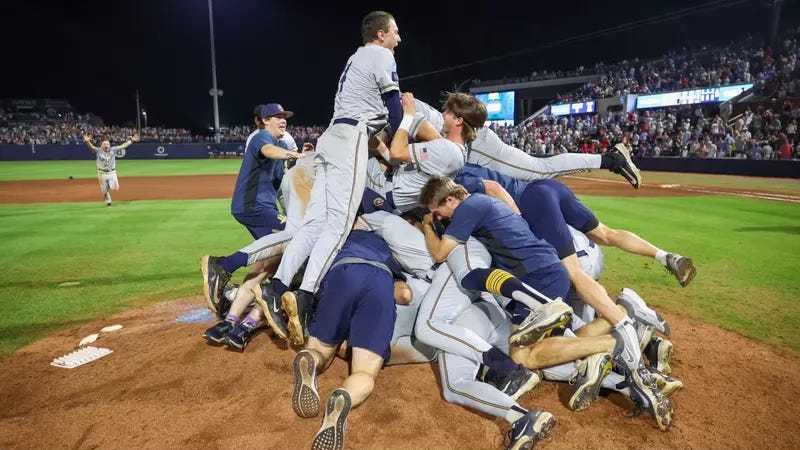
The SEC apocalypse continued in Mississippi.
Ole Miss earned the right to host this regional, but it didn’t earn the right to live another day due to Murray State barging in and making everything about them instead.
Murray State, a small school in the Missouri Valley Conference that managed to win the league by a wide margin this season, put itself on the map in Oxford this past weekend via several gritty victories against top-tier teams.
The first came on Friday evening, when the Racers (what a cool mascot, by the way) battled hard to defeat Ole Miss 9-6, sending the host Rebels to the loser’s bracket right off the bat.
A hitter’s paradise ensued the next day against ACC regular-season champion Georgia Tech, where both teams couldn’t stop hitting en route to a 13-11 win for Murray State.
Those two wins sent Murray State to the regional final, where Ole Miss, which had scratched and clawed its way out of the loser’s bracket, wanted revenge. And payback is what the Rebels delivered, at least on Sunday night, when Murray State fell 19-8 to set up a win-or-go-home matchup the next evening.
Now, this is where the fun begins. Right out of the gate, Murray State was on a mission. Two runs in the second, followed by three in the third, set up the Racers with a nice, cushy 5-1 lead. Ole Miss cut into that a bit in the fourth, but Murray State responded with four more in the fifth, another tally in the sixth, and two more in the seventh to take a 12-3 lead heading into the seventh-inning stretch.
In the pros, an eight-run advantage might be enough to make the leading team feel comfortable. In college, though, where bullpens are fickle and oftentimes unreliable, everything is still fair game.
Ole Miss erupted for five runs in the bottom of the seventh to cut into the lead big time, making it 12-8. Once Murray State failed to respond in the top of the eighth, that set up the Rebels to continue to chip away. Three more runs crossed the plate in the home half of the eighth, and all of a sudden, Murray State’s once-massive lead had dwindled to just one.
But all of that resurgence from Ole Miss still wasn’t enough. Murray State pitcher Graham Kelham shut down the Rebels in the bottom of the ninth, and the celebration ensued. Murray State, the four-seed in the Oxford regional, had done it.
Baton Rouge Regional
On paper, LSU’s path to a super regional was as easy as could be. It played two games against Little Rock, which finished the season with a 27-34 record, and another against a Dallas Baptist team that looked dead on arrival the second it landed in Baton Rouge. Despite that allegedly painless path, the Tigers certainly didn’t do themselves any favors.
After cruising in the first two games against Little Rock (7-0) and Dallas Baptist (12-0), LSU went into the regional final with its head held high. It’d be facing Little Rock again, a team it had crushed just two days prior. Little Rock would be on basically no rest, too. Man, this was going to be a cakewalk!
Except it wasn’t. Little Rock came to play on Sunday, beating LSU 10-4 to force a regional-deciding game the next night. But come on! It’s Little Rock, for crying out loud. It’s going to be easy, right? Right?
Not particularly. While LSU did end up coming out on top, the road to victory was paved with shattered glass. Through two innings of play, LSU was down 5-1 to a Little Rock team that hadn’t won 30 games. Things were bleak, and the folks at Alex Box Stadium were getting antsy.
“Have no fear,” LSU said, “we’ll fix it!”
And fix it, the Tigers did.
Three runs in the fourth, courtesy of a three-RBI double by Ethan Frey, completely changed the game, as LSU would end up mounting a comeback. Later, in the sixth, Luis Hernandez launched a solo home run to tie the game at five. The next inning, Steven Milam hit an RBI groundout to give the Tigers the lead. Then in the eighth, Hernandez hit what at the time was considered the dagger, a solo homer, his second of the night, to left field to make it 7-5. Finally, in the ninth, the real dagger to the heart of Little Rock’s hopes landed, when Jared Jones hit a moon shot to left-center field and Hernandez drove in yet another run, this time on a single. Just like that, it was 10-6, and the LSU Tigers were moving on.
Clemson Regional
Country roads, take me home
To the place I belong
West Virginia, mountain mama
Take me home, country roads
Was that corny? Probably. Just wanted an excuse to shoehorn that song in. West Virginia won the Clemson Regional, if you hadn’t guessed that already.
Yet again, another regional host, this time the Clemson Tigers, fell victim to a lower-seeded team. It was truly an epidemic this past weekend. I’m fine with it.
West Virginia was the best team in the Big 12 during the regular season, and it was, frankly, disrespected by the selection committee when it came time to pick the bracket. By the way the Mountaineers performed in Clemson this past weekend, it was clear that they deserved to host. Alas, they weren’t awarded that honor, and it didn’t even matter.
It wasn’t smooth sailing, however. West Virginia played two really good teams — Kentucky and Clemson — en route to this regional championship. Both games against Kentucky, in particular, came down to the wire, with the second contest between the two being a classic that West Virginia baseball fans will remember for a long time.
Down by five runs in the bottom of the eighth, West Virginia mounted a comeback for the ages. Six runs scored in the frame, erasing the 12-7 deficit and turning it into a 13-12 lead. That eighth inning really was death by a thousand cuts for Kentucky. Just take a look at the play-by-play of the frame:
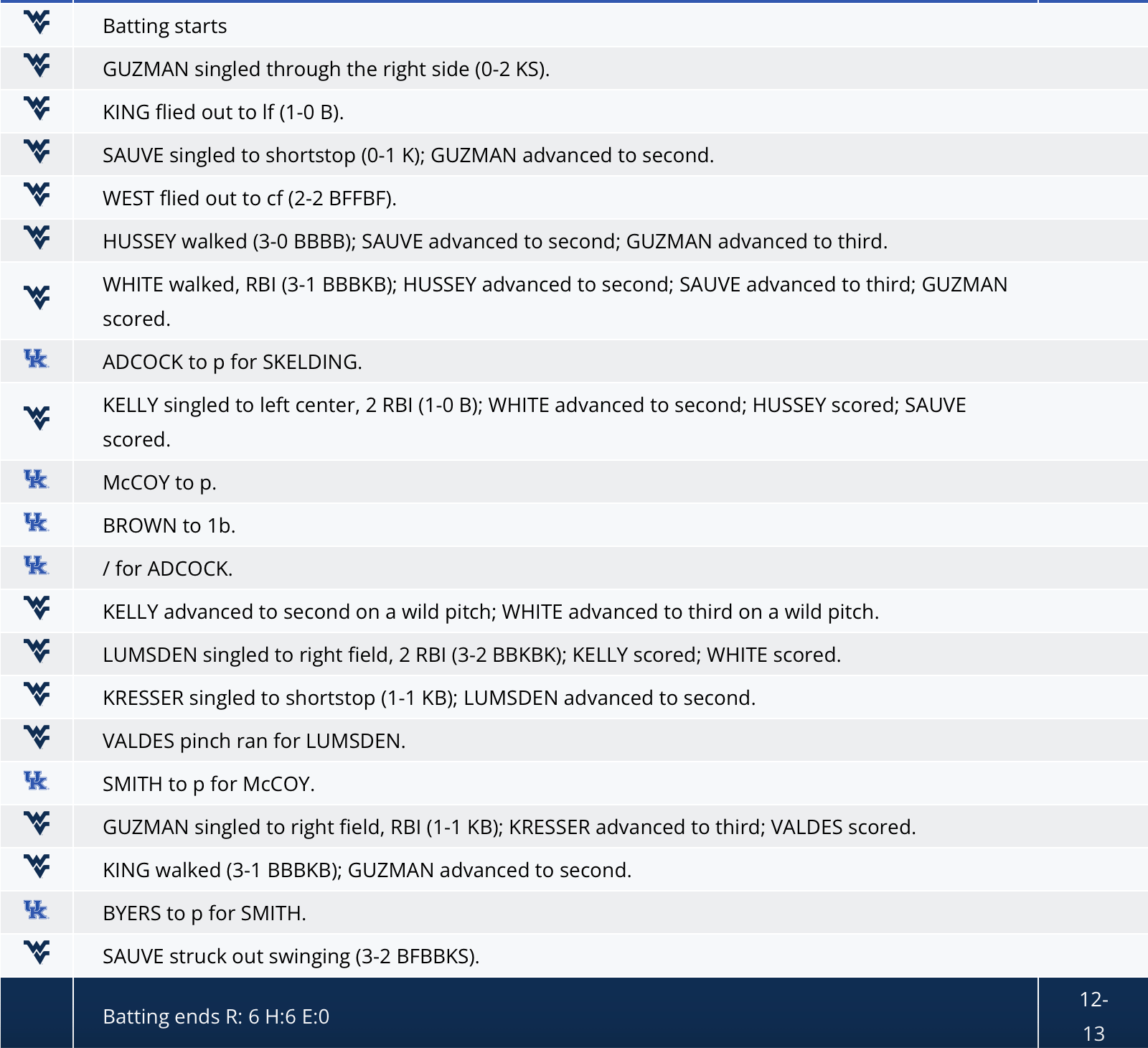
Watch out for the Mountaineers. That’s a really good baseball program up there in Morgantown, and they’re just itching to prove it.
Fayetteville Regional
I won’t dwell on this regional too much due to the fact that I wrote all about Arkansas’ triumph in Fayetteville yesterday morning, so if you haven’t read that yet, click the link below and check it out.
Back to Normal in Fayetteville

Everybody can breathe a sigh of relief because, after two years of complete disappointment, the Arkansas baseball team is back to winning regionals.
This Arkansas team is different; I can just feel it in my bones. The doubters will say that no matter what they do, the Razorbacks will always be fool’s gold. Not in my eyes. This is a squad that’s capable of not only reaching the College World Series but winning it outright.
Now, doing that is, of course, easier said than done. But why not just do it, right? Like, come on, Hogs! Throw us all a bone for once.
Knoxville Regional
Knoxville seems like a lovely place to live. The Smoky Mountains elicit such charm and spectacle that I believe I could dwell there and be happy all my days. Maybe that’s why Tennessee’s baseball program is so successful; they’re just so enamored with the scenery that it causes them to be excellent ballplayers.
Probably not. But we all need some sort of explanation as to why this school is so good at baseball. While there’s probably a complicated reason to be found somewhere, the actual answer might be that Tony Vitello is the best head coach in the nation.
Vitello led Tennessee to a national title last year, and while the Volunteers aren’t as good as they were a year ago, they’re certainly not to be trifled with. Catch them on a good day, and your favorite team is bound to give up buckets of runs. Heck, catch them on a bad day, and there’s still a pretty decent chance that things will go poorly.
Tennessee’s offense was electric in Knoxville this past weekend, where it put up nine runs on Friday against Miami (OH), 10 on Saturday versus Cincinnati, and then six and 11, respectively, in the two games it played against Wake Forest. Not once did that unit look inept over the four games it played during the Knoxville Regional.
Arkansas will certainly have its hands full against the Volunteers, and that matchup should be juicy, juicy, juicy.
It’s Time to Be Super
One more stop before Omaha.

The super regionals are officially here. Sixty-four teams started this journey a week ago, and now a special 16 of them get to continue their quest for a national title.
While the regionals are definitely the more, let’s say, chaotic bunch of games, the supers provide a different type of entertainment. It’s the first to win two games in the best-of-three series. If your team can do that, then a trip to Omaha is on the horizon. If not, then it’s time to start the offseason.
There are several different ways I could go about previewing these matchups. Real analysis that’s filled with statistics and facts is attractive, sure, but vibes are really where it’s at. And to be honest, aren’t vibes and feelings what this world is built on anyway? Or is that too New Age? Doesn’t matter. Vibes are where I’ll dwell, at least today.
This exercise won’t be too complicated. If you’re at all worried, go check out my regional preview from last week where I previewed that round with a similar process. Trust me, it’s not scary.
Before jumping into the crazy predictions that I might have, it’s probably important to lay out who all is playing this weekend. Here are the super regional matchups that are in store:
Louisville Super Regional: Louisville (38-21, 15-15) vs. Miami (34-25, 15-14)
Corvallis Super Regional: No. 8 Oregon State (45-13-1) vs. No. 9 Florida State (41-14, 17-10)
Chapel Hill Super Regional: No. 5 North Carolina (45-13, 18-11) vs. Arizona (42-18, 18-12)
Auburn Super Regional: No. 4 Auburn (41-18, 17-13) vs. No. 13 Coastal Carolina (51-11, 26-4)
Los Angeles Super Regional: No. 15 UCLA (45-16, 22-8) vs. UTSA (47-13, 23-4)
Durham Super Regional: Duke (40-19, 17-13) vs. Murray State (42-14, 17-8)
Baton Rouge Super Regional: No. 6 LSU (46-15, 19-11) vs. West Virginia (44-14, 19-9)
Fayetteville Super Regional: No. 3 Arkansas (46-13, 20-10) vs. No. 14 Tennessee (46-17, 16-14)
That’s a pretty spicy slate of matchups, if I do say so myself. The shocking lack of national seeds truly widens the possibilities for what could occur this weekend. Anything and everything is on the table.
SethStack is a reader-supported publication. To receive new posts and support my work, consider becoming a free or paid subscriber.
So, what could happen? Lots of things, probably, but in my eyes, there are really only a couple of possibilities. Here is what I believe will transpire, and who I think will be making the trip to Omaha this time next week:
Louisville Super Regional: Despite overwhelming odds, Louisville winds up getting an opportunity to host a super. Who among us could’ve seen that coming? I don’t know, how about me? That’s right, I picked the Cardinals to be here, and I fully expect them to come out on top over Miami. Why? Because of the Louisville Slugger bat factory, obviously. The wonders that that place can bring are truly immeasurable.
Corvallis Super Regional: Perhaps the most challenging super regional to pick is this one between Oregon State and Florida State. Both schools carry a sense of prominence when it comes to college baseball, but I think that the Seminoles will get the best of the Beavers this time around. Contrary to popular belief, Florida State’s baseball program has never won a national championship. Their quest to achieve that should continue here in 2025.
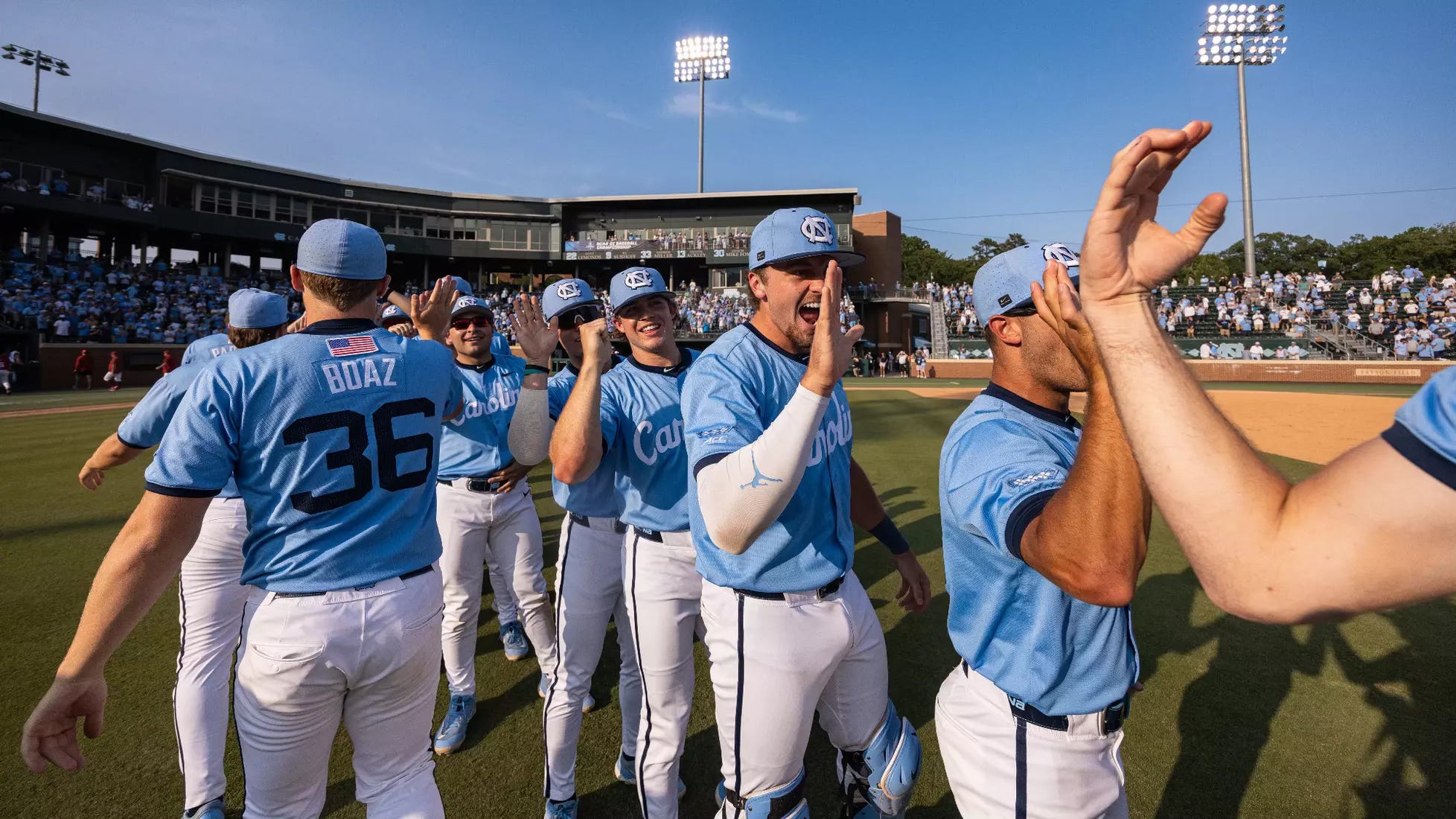
Chapel Hill Super Regional: Remember what I said: Carolina Blue will forever and always be the best color on this earth. That color will single-handedly carry the Tar Heels on to Omaha. And some pretty good pitching headlined by Jack Knapp and Jason DeCaro, will help as well. It’s mostly the Carolina Blue, though.
Auburn Super Regional: The “experts” will tell you that the SEC team is the favorite here, but what do they know? Coastal Carolina’s the school that’s won a national championship most recently — in 2016 — and knows better than most of the teams in the field what is required to reach that level of play. So, give me Coastal. The fightin’ Chanticleers will live another day!
Los Angeles Super Regional: It’s UTSA. I’m sorry, UCLA, but I’m the vibes guy, and that means that I am legally obligated to pick the Roadrunners. UTSA’s run through the Austin Regional was nothing short of spectacular, and to see that story continue to Omaha would be a dream. Getting to see amazing stories play out is what sports are all about for me, so go Roadrunners, and I’m so sorry, Bruins.
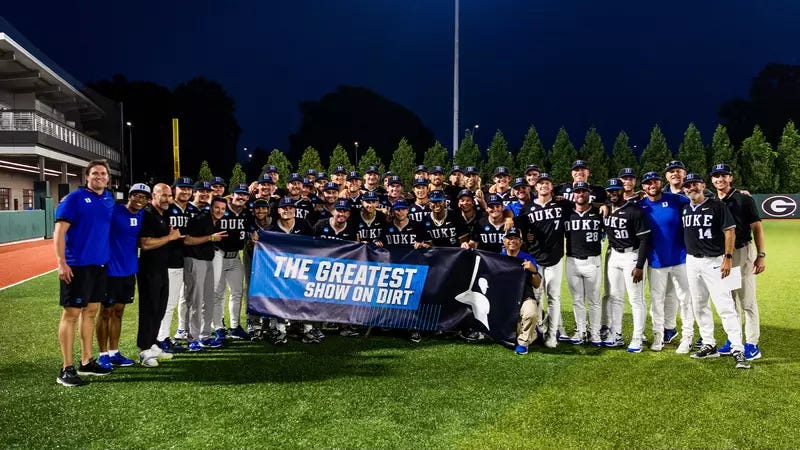
Durham Super Regional: The same logic that I applied to Los Angeles could apply here. After all, Murray State is the darling four-seed that nobody gave a chance to. Still, my head is pulling me in Duke’s direction, and it’s hard to resist. I wish I could go with Murray State, and I’m sure I’ll be putting my foot in my mouth by the end of the weekend when they inevitably find a way to win, but Duke it is.
Baton Rouge Super Regional: LSU barely got by Little Rock, while West Virginia played exceptionally well against some high-level opponents during the Clemson Regional. As a certified Big 12 homer, the Mountaineers present me with an easy choice. I’m going to take it. Bank on West Virginia getting to Omaha for the first time in school history.
Fayetteville Super Regional: The most enticing matchup of the weekend is the easiest decision for me, personally. Arkansas will beat Tennessee, and if the Razorbacks somehow don’t, then I’ll be catastrophically upset. Wehiwa Aloy, Logan Maxwell, Zach Root, Ryder Helfrick, and Cam Kozeal, please don’t fail me now! Let’s get the Hogs back to the College World Series.
Only two wins separate these squads from reaching Omaha. Reaching the College World Series is the goal for every college baseball program in America, and 16 schools are so close to reaching the promised land.
If your school is lucky enough to still be in the hunt, don’t take it for granted. It takes a special group of players to reach this point in the season, and with how unpredictable baseball can be, the quest for a championship can end just as quickly as it got started.
See, I told you that wouldn’t be scary.
The OmaHogs are Back
For the first time since 2022, Arkansas is headed to the College World Series.

Winning is hard. Not just in sports, but in anything.
Achieving that ultimate goal in sports presents a certain form of euphoria that is hard to match anywhere else. For some reason, when the clock hits zero or the final out is made, and it’s your team that’s standing alone in victory, the emotions hit an all-time high. And for the people who are actually involved in the winning, the players and the coaches, those feelings of joy are probably overwhelming.
When I watched the Arkansas baseball team yesterday advance to the College World Series after an 11-4 romp of rival Tennessee, I didn’t see that overwhelming joy from the players on the field. Sure, the fans in the stands were riding on cloud nine, but every Arkansas player on the field was extremely measured. Why? Because the job isn’t finished yet. There’s still work to be done and another goal that needs to be accomplished before the true celebration can begin.
Heading into the super regionals weekend, the matchup between Arkansas and Tennessee was billed as the main event. It’s easy to see why. Two top-16 seeds that play in the same conference and despise each other going at it, with the prize being a trip to Omaha. Compound that with the fact that Volunteers’ head coach Tony Vitello was a longtime assistant at Arkansas prior to taking the job in Knoxville, and that he just led that same Tennessee program to its first-ever national championship in baseball, and boy oh boy, you’ve got yourself some bad blood.
But hate and passion are only part of what made the stakes of this three-game series massive. These same two schools played one another back in mid-May, and while that series had some weight, it certainly didn’t possess the pressure that this one did this past weekend. Why? Well, Omaha was on the line, and Omaha is everything in college baseball.
Arkansas hadn’t been to the College World Series since 2022, where it had flamed out right before the end to eventual champion Ole Miss. Prior to that defeat, the Razorbacks had come so close to winning the program’s first national title, but infamously fell to Oregon State in the championship series in 2018. On the other hand, there were the Volunteers, who had just come off a national title and were hungry for more.
Those stakes, alongside the rivalry between the two schools, created an atmosphere that was buzzing with electricity. Heading into game one on Saturday afternoon, everybody knew that this series had the potential to be one for the history books if everything broke right. There was also the possibility that one team could dominate all weekend and would be able to hang that embarrassment over the other school’s head for years to come.
As Saturday’s game started, it was clear that there was no love lost between the Razorbacks and the Volunteers. Constant chirping between players permeated throughout game one, with the most notable example being Arkansas starter Zach Root’s overwhelming hatred for Tennessee star Andrew Fischer.
The first incident came in the top of the fourth, with Fischer at the plate and Root on the mound. Root had been dominant up to that point. Through three innings of work, he’d yet to allow a baserunner. It was par for the course for the transfer from East Carolina, who’d been Arkansas’ best pitcher all season and had consistently risen to the occasion when the lights were brightest.
Here, in the top of the fourth, he certainly wasn’t going to let anybody step on that moment. With his team up 1-0 after Cam Kozeal scored on a wild pitch in the second inning, Root got ready to pitch against Fischer. Andrew Fischer is a name that baseball fans around America will know (if they don’t already) soon enough. He’s a hitting machine — he ended the year with a .341/.497/.760 (1.257 OPS) slash line — and is projected to be a first-round pick in this year’s MLB Draft.
But he’s also been known to, let’s say, aggravate opposing teams, and against the Hogs on Saturday, his antics were in full force, much to Root’s and the Fayetteville faithful’s disdain.
At one point during this particular at-bat, Fischer “spat on home plate and nodded at the Arkansas crowd.” Root, as he’s prone to do, didn’t take kindly to this and, after striking Fischer out moments later, proceeded to yell at him.
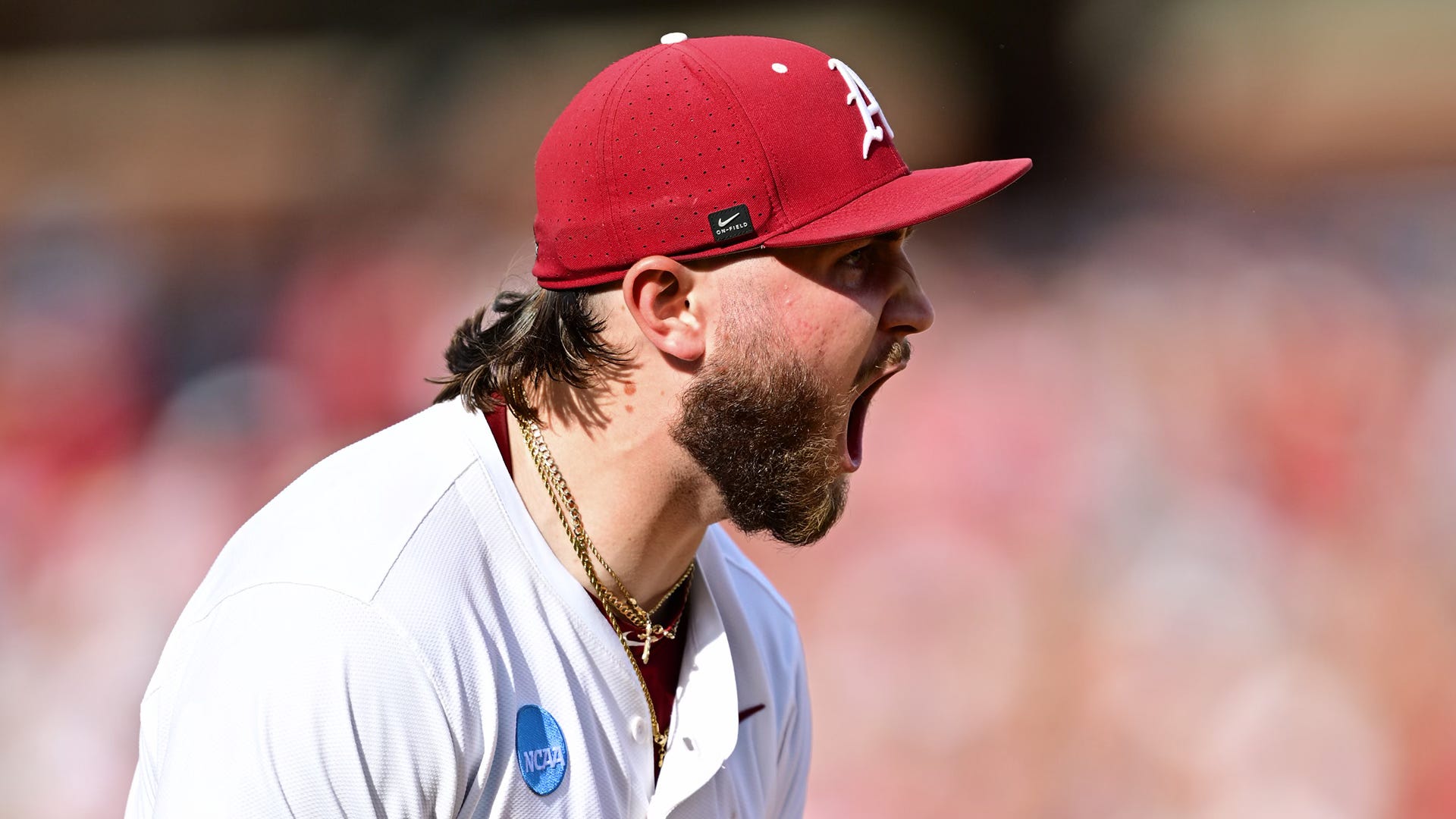
That’s just act one of this three-act drama. In the bottom of that same inning, Fischer, who plays first base for Tennessee, threw a ball into the stands, which an Arkansas fan promptly hurled right back at him. Tensions were, well, high.
The day hit its climax in the top of the sixth inning. Arkansas was up 3-2 after Ryder Helfrick had hit a two-run home run in the bottom of the fifth to regain the Hogs’ advantage. With the top of the Tennessee order coming to bat, and with Root finally looking a bit human after giving up the lead just an inning prior, perhaps this could be the moment that the Volunteers decided to land another counterpunch.
After Root got Manny Marin to fly out, he walked Gavin Kilen to bring up Fischer as the go-ahead run. It was a massive moment, and everybody in the crowd, in the dugout, and on the field knew it. If Fischer got into one, then this game would be flipped upside down. But if Root could get him to roll over and force an inning-ending double play, then Baum-Walker Stadium would erupt at the seams.
Indeed, it was the latter that ended up transpiring. Fischer went up in the count 3-0 before swinging at a strike and fouling one off. He rolled over the sixth pitch of the at-bat, hitting a grounder to second that was promptly turned into a 4-6-3 inning-ending double play. As for what happened next, I’ll just let Root do the talking:
Perhaps controversially, Root was not ejected from the premises. I’ve certainly seen less egregious acts be punished. Regardless, the umpires gave both dugouts a warning, and play resumed, but the statement had been made.
When asked after the game what he said, Root claimed that he blacked out and didn’t remember. Usually, I’d be suspicious of a claim like that, but in this case, I think I believe it.
That Fischer double play was crucial, not just because of that moment, but because of the moment that it set up. In the bottom of the sixth, Arkansas, in need of some extra insurance, plated another run on a Charles Davalan single to left field, scoring Australian Brent Iredale. It was now 4-2, Hogs.
Flash forward to the ninth. Gabe Gaeckle had come on to pitch in the eighth, relieving Root, who was spectacular on the afternoon. As well as his frequent ranting, Root put up a solid seven innings of work and only allowed two runs. He struck out six and walked just two. Of the 92 pitches he threw, 60 landed for strikes.
Back to Gaeckle and the ninth. Gaeckle had pitched a 1-2-3 eighth but was due to face the top of the Tennessee lineup in the ninth, meaning that Fischer was going to get one more crack at the Arkansas pitching staff before the day was through. With one out and, crucially, nobody on base, Fischer finally made his mark, hitting a solo home run to right field to cut the Arkansas lead in half. And while it didn’t end up mattering because Gaeckle was able to get through the rest of the inning unscathed to cement the victory, it certainly was a confidence booster for Fischer, which, if you’re an Arkansas fan, is never a good thing.
It was now on to the series’ second game on Sunday. If Arkansas could pull it out, then it would be playing in Omaha this time next week. If Tennessee won, though, then a decisive win-or-go-home third game would be played on Monday. Since nobody likes playing on Mondays, an Arkansas win was paramount.
It was a massacre. 11-4 was the final score, but it felt like it was 30-0 throughout the entirety of the contest.
Facing Tennessee ace and projected second overall pick Liam Doyle, Arkansas’ offense, as it had done all season, came alive with a fury. In the top of the third, Davalan continued to make hay while the sun shone with a two-run home run to kick off the scoring. And while the Vols got one back in the home half of that frame, it would be the fourth inning that would be the downfall for the folks from Knoxville.
Kozeal started it off with a single. After Iredale flew out, Reese Robinett hit another single to put two on with one away. Justin Thomas Jr. then struck out swinging for out number two. Everything’s going to be OK for Tennessee, right?
Wrong.
A wild pitch advanced Kozeal and Robinett another 90 feet, which prompted Vitello to intentionally walk the leadoff hitter Davalan. That brought up SEC Player of the Year and Golden Spikes Award finalist Wehiwa Aloy with the bases loaded. This was going to be a juicy at-bat, with two projected first-round picks going at it. Except, not, because Vitello came walking out of the dugout and pulled Doyle out of the game.
What?
There’s no doubt that Doyle did not look like his normal self. But pulling your ace in this spot just didn’t feel right. It felt like it was tempting fate. If it didn’t work out, then there’d be hell to raise.
The new pitcher for Tennessee, Brayden Krenzel, immediately appeared off. His fourth pitch of the day got away from the catcher, allowing Kozeal to score and the other two baserunners to advance a station. He then hit Aloy on the next pitch to load the bases once again. Vitello had seen enough, and he went back to his bullpen for AJ Russell to face three-hole hitter Logan Maxwell. All Tennessee needed was just one out, and this nightmare would be over. Sure, it’d be 3-1, but that’s just a two-run deficit and would’ve been manageable.
Russell couldn’t get it. Maxwell hit a fly ball to left field that had just an 89.4 MPH exit velocity. Somehow, someway, however, it landed over the fence for a grand slam. Boom. Just like that, it was 7-1, Razorbacks, and that was pretty much all she wrote for the Tennessee season.
From there, Arkansas cruised en route to an 11-4 win that sent the Hogs back to Omaha. When the final out was recorded, the Razorbacks didn’t race out of the dugout and create a dogpile (or a hog pile). Instead, they did what they always do after a win and entered a handshake line. There are bigger and better things to celebrate on the horizon.
Now, it’s on to Omaha. Arkansas has previously been there 11 times, with seven of those being with head coach Dave Van Horn at the helm. It’s now his mission to achieve something he and the Razorbacks have yet to do: win a College World Series.
Omaha
It’s here. The College World Series is here.

Very few cities evoke such emotion as Omaha does for college baseball fans. Every year, people flock to the middle of America to the otherwise nondescript city of Omaha, Nebraska. For two weeks, this town erupts with a thirst for glory and triumph like no other. There’s truly nothing like it anywhere in collegiate athletics.
The eight schools that earned the right to play in the College World Series know that it’s a privilege. I’m sure they’re also aware of just how amazing an opportunity it is. In front of every single one of them is the chance for greatness. If they can grab hold of it, then they’ll be remembered forever.
The College World Series starts tomorrow afternoon when Arizona and Coastal Carolina kick off the final stage of this monstrous baseball tournament we’ve been engulfed in for over two weeks. From there, who knows what will happen? Will the titans of the sport continue to prove their worth, or will the little guys rise to the top and slay the giants? Will the SEC continue to have a stranglehold on national titles? And, most importantly, which school’s fanbase will win the Jell-O shot challenge?
It truly feels as if everything is in the air leading up to tomorrow’s games. In my opinion, that’s a fantastic place to be.
As always, my predictions for these things rely on vibes and solely vibes. The time for expert analysis with statistics can come closer to game time. For now, how do these teams make me feel? The answers to that question will determine which school I believe can win this whole darn thing.
Oh, I almost forgot, here’s the bracket just in case you’re unaware and haven’t been initiated into the college baseball zeitgeist.
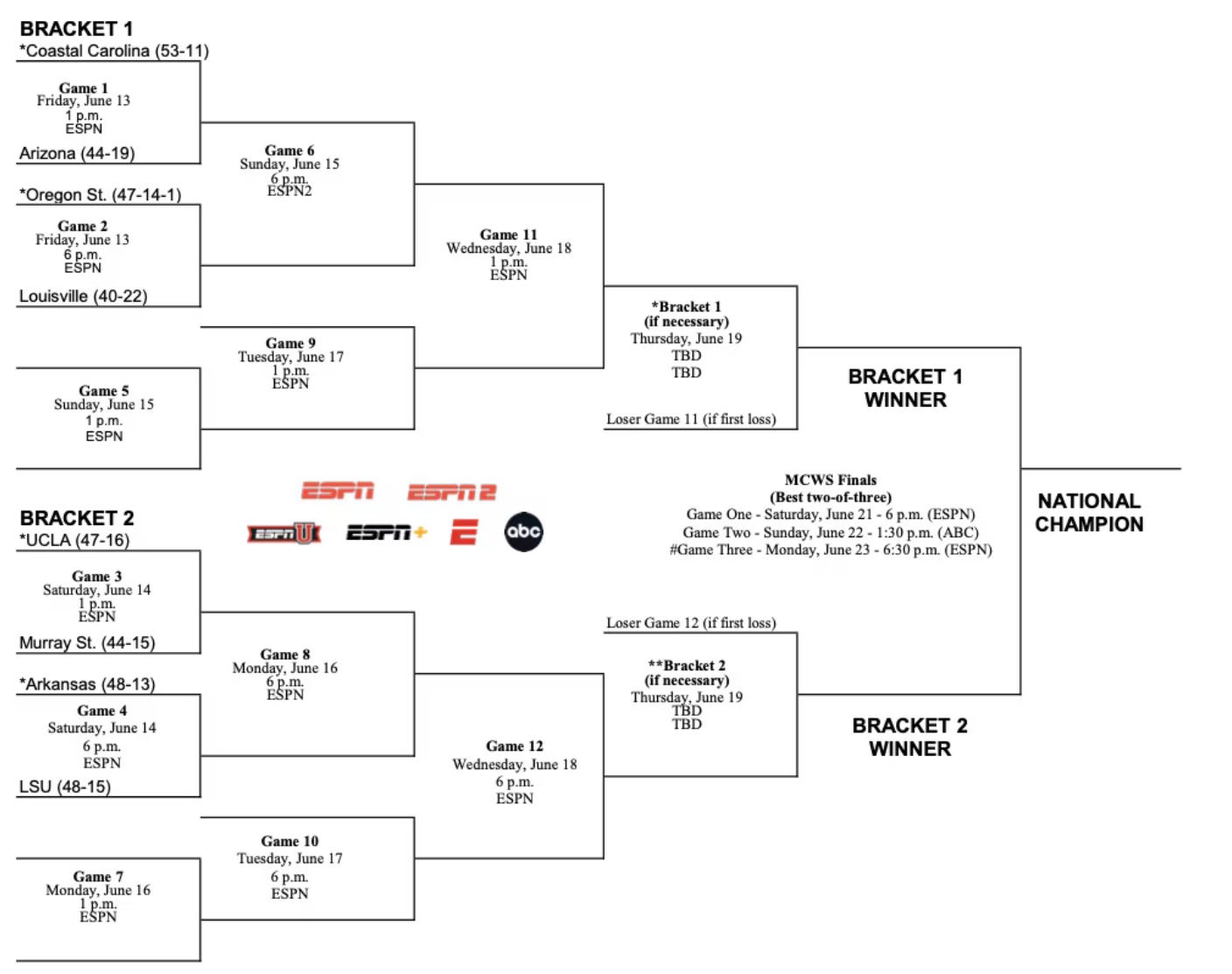
No. 13 Coastal Carolina vs. Arizona: A rematch of the final series in 2016 in which Coastal Carolina won its first national title in school history, this game presents a lot of different storylines. Arizona got off the mat in the Chapel Hill Super Regional after getting killed in the series’ first game, and now finds itself here in Omaha. Meanwhile, Coastal Carolina steamrolled through the Conway Regional and beat up on an Auburn team that looked unprepared for the moment. While my Big 12 brain is telling me that Arizona is the way to go, my Sun Belt heart is pulling me toward Coastal Carolina. And the heart always gets what it wants.
No. 8 Oregon State vs. Louisville: Remember when Oregon State lost the first game of its regional against Saint Mary’s and appeared as if their storybook season was flaming out in an instant? Yeah, that seems like forever ago. Oh, do you also recall when Louisville took down No. 1 overall seed Vanderbilt en route to winning the Nashville Regional? Yeah, that also seems like it was eons ago. Regardless of the weird concept that time and space are, these two teams converge in Omaha in what’s shaping up to be a battle of titans. These two programs, historically, have been quite successful on the diamond, with Oregon State winning three national titles this century and Louisville being a consistent power player nationally. Despite the story that Louisville is this season, Oregon State’s ability to fight through adversity gives them the edge.
No. 15 UCLA vs. Murray State: This is a no-brainer. Murray State is the ultimate vibes team. The Racers went into Oxford and won that regional over Ole Miss. All-time stuff right there. Then, they traveled up to Durham and laid down an offensive masterclass against Duke. Now, they’re here in the College World Series for the first time in program history. I’m sorry, UCLA, but Murray State is the story of the college baseball season right now, and it’s going to take a miracle for any casual fan to root for the Bruins over the Racers in this one.
No. 3 Arkansas vs. No. 6 LSU: There’s a reason this game is the nightcap on Saturday. The only two SEC schools remaining shoulder a load to capture another national title for the conference, and they’ve received the tough task of playing each other from the jump. LSU had a relatively easy path to Omaha, while Arkansas had to get through Tennessee in the super regionals to advance. Still, both schools are battle-tested and absolutely have what it takes to win it all. For me, it’s the Hogs all the way. LSU had its chance in the sun back in 2023 when Paul Skenes, Dylan Crews, and Tommy White took over the world. It’s Arkansas’ opportunity now.
That’s how I believe the opening games shake out. But what about the rest of the tournament? After all, winning the first game is no guarantee that it’s a cakewalk to the title.
SethStack is a reader-supported publication. To receive new posts and support my work, consider becoming a free or paid subscriber.
In the top bracket that consists of Coastal Carolina, Arizona, Oregon State, and Louisville, I believe that it’ll be Coastal and Oregon State battling it out in the end, with the Beavers ultimately winning and advancing to the finals. On the other side of the bracket, Arkansas and LSU will start it, and I think they’ll also end it, with the Razorbacks advancing.
That’d set up a rematch of the 2018 College World Series Finals between Oregon State and Arkansas. If you don’t remember how that one played out, just read my story from a week ago. Trust me, it was dramatic.
It should be a great week of baseball in Omaha. Even if the games don’t turn out to be classics like we all hope they will, the experience of witnessing the atmosphere of the College World Series is a gift nonetheless.
It Was Never Going to be Easy
Now it’s just a little harder.

Well, that wasn’t ideal.
Arkansas’ inaugural game in the College World Series was a pitcher’s duel that did not go its way. While the arms were solid overall for the Hogs, the bats that had been alive for the entirety of the season fell silent at the absolute worst moment. As such, the Razorbacks will now have to trek their way through the loser’s bracket if they want to win their first national title in school history.
We all knew that this wasn’t going to be easy. The Arkansas baseball program has seemingly been snakebitten for its entire existence, so getting over the hump and achieving the ultimate goal was always going to take an otherworldly effort. It’s safe to say that that didn’t happen last night in Omaha.
Here are my thoughts from LSU 4, Arkansas 1.
The Root Cause
Zach Root just didn’t have his best stuff yesterday evening. While his first inning was a breeze as he got through the top of the LSU order without any damage, it was the second frame that ultimately was his demise.
It started off innocently enough with a dominant strikeout of the Tigers’ cleanup hitter Steven Milam. A walk to Luis Hernandez on four pitches then opened the door for disaster, with another free pass to Derek Curiel, which came after he started the at-bat with two consecutive strikes, further complicating the situation. Not everything was lost at that point, but when Daniel Dickinson laid down a perfect bunt down the third base side for a single to load the bases, it was officially time to be alarmed.
The next three batters all drove in runs for LSU. Chris Stanfield laced a single to left field to score the Tigers’ first run. Michael Braswell III was hit on his back foot with the bases loaded to make it 2-0, and then Josh Pearson beat out a potential double play ball to keep the inning alive and also plate another run. The score was 3-0, and Arkansas head coach Dave Van Horn had seen enough. Root had only thrown 38 pitches, but he was done, as Van Horn turned to the bullpen to try and get out of the jam.
To say that Root’s performance was disappointing would be an understatement. There were a lot of superlatives thrown around describing this game in the last week, with the pitching matchup between Root and LSU ace and potential number one overall pick Kade Anderson being the top among them. Only half of that equation lived up to their potential, with Anderson throwing seven innings of one-run baseball against an Arkansas lineup that led all power conferences in runs per game.
While Root didn’t need to be perfect, he definitely needed to be on his A-game. The second Van Horn realized he wasn’t, he called an audible, which, admittedly, ended up being the correct call due to what his replacement ended up accomplishing.
Magnificent Gaeckle
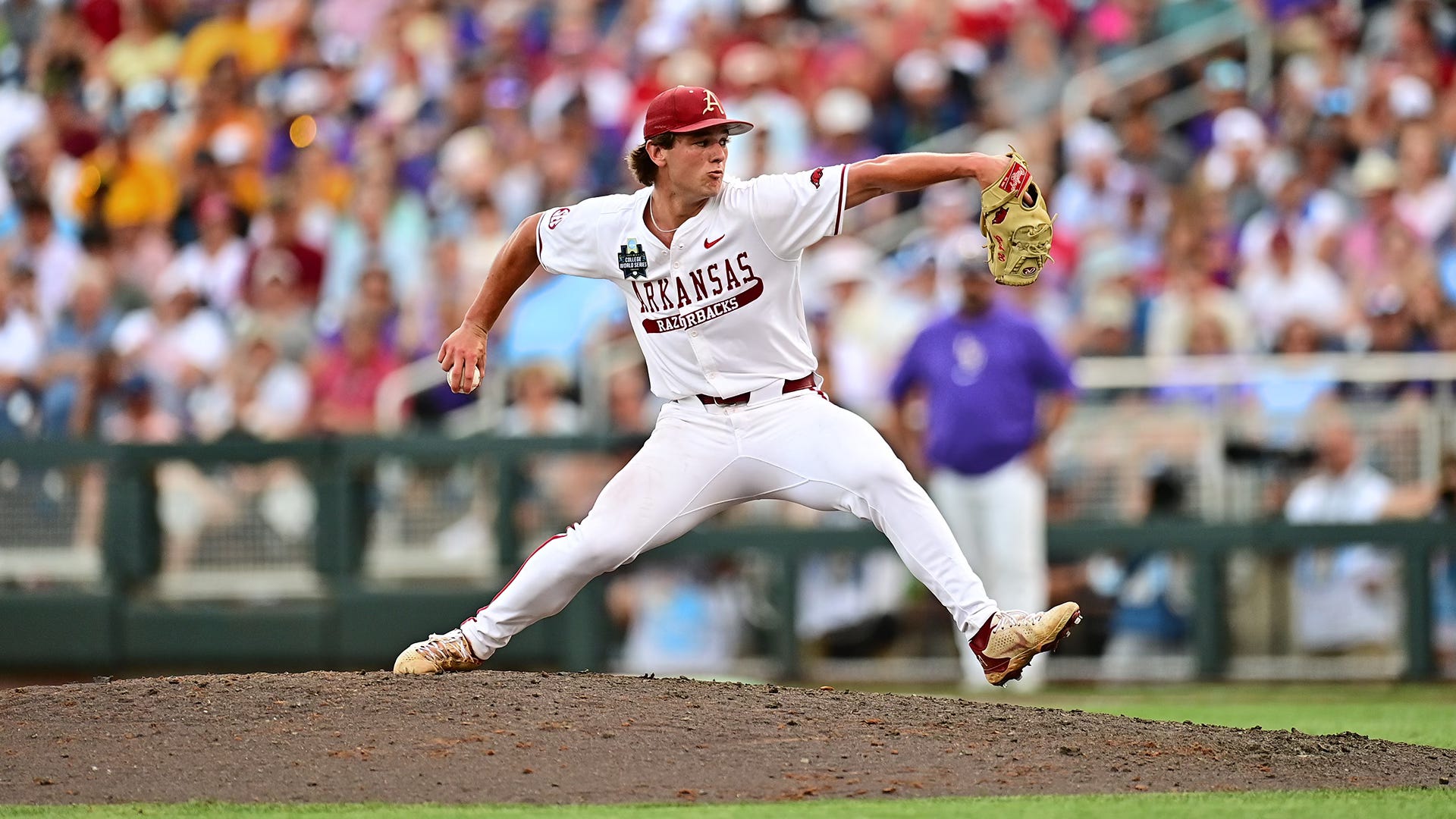
If there’s any silver lining to last night’s effort, it’s Gabe Gaeckle. After Root exited, Gaeckle got out of the trouble he was thrown into and proceeded to provide the Hogs with six innings of excellent pitching out of the ‘pen. He struck out 10 — at one point he fanned five Tigers hitters in a row — and landed 60 of his 90 pitches for strikes. Only one run crossed the plate while he was on the hill as he did an excellent job of keeping Arkansas in the game.
Gaeckle’s journey this season has truly been tumultuous. From starting the year in the weekend rotation to being bumped out of it after several disappointing performances in April, he’s overcome a ton of adversity. Ever since that transition to the bullpen, which occurred after a start against Georgia on April 12 that saw him give up five runs through just two innings, Gaeckle’s been fantastic. Including last night against LSU, he’s only allowed six runs since that fateful game in April. Outstanding stuff.
It’s a shame that his efforts couldn’t be rewarded with a comeback victory. It’s the least that the rest of the team could’ve done.
Offensive Malpractice
Of all the times for the Arkansas bats to fall silent, last night might’ve been the absolute worst moment.
The Razorbacks recorded just four hits against LSU pitching, with Charles Davalan, Wehiwa Aloy, Cam Kozeal, and Reese Robinett all delivering one base knock apiece. Robinett’s lone hit of the night resulted in Arkansas’ lone run of the evening, when he smashed a solo home run to right field in the bottom of the sixth inning.
Other than that, there was nothing. The pitching trio of Anderson, Chase Shores, and Casan Evans had Arkansas off balance and uncomfortable all night. Any adjustments that the hitters attempted to make fell flat over and over again as the Tigers continued to pour quality strikes into the zone. To see a potent offense completely fall on its face for three hours was certainly not a pleasant sight for any Arkansas fan.
Last night’s lackluster effort at the plate continued a trend for the Razorbacks’ bats in Omaha. Dating back to 2022, the most recent instance that the team made it to the College World Series, the Hogs have scored just four runs over their last 27 innings at Charles Schwab Stadium. In the words of Josh Teeter on X, “That’s rough.”
Six of the hitters in Arkansas’ lineup last night have a batting average of at least .300, with three of those players having one that’s .345 or higher. If last night’s game was the first Arkansas baseball game you’ve watched all season, then you’d have no idea that that was the case and that this offense was as awesome as it actually is. And frankly, that’s a real shame.
Backs Against the Wall
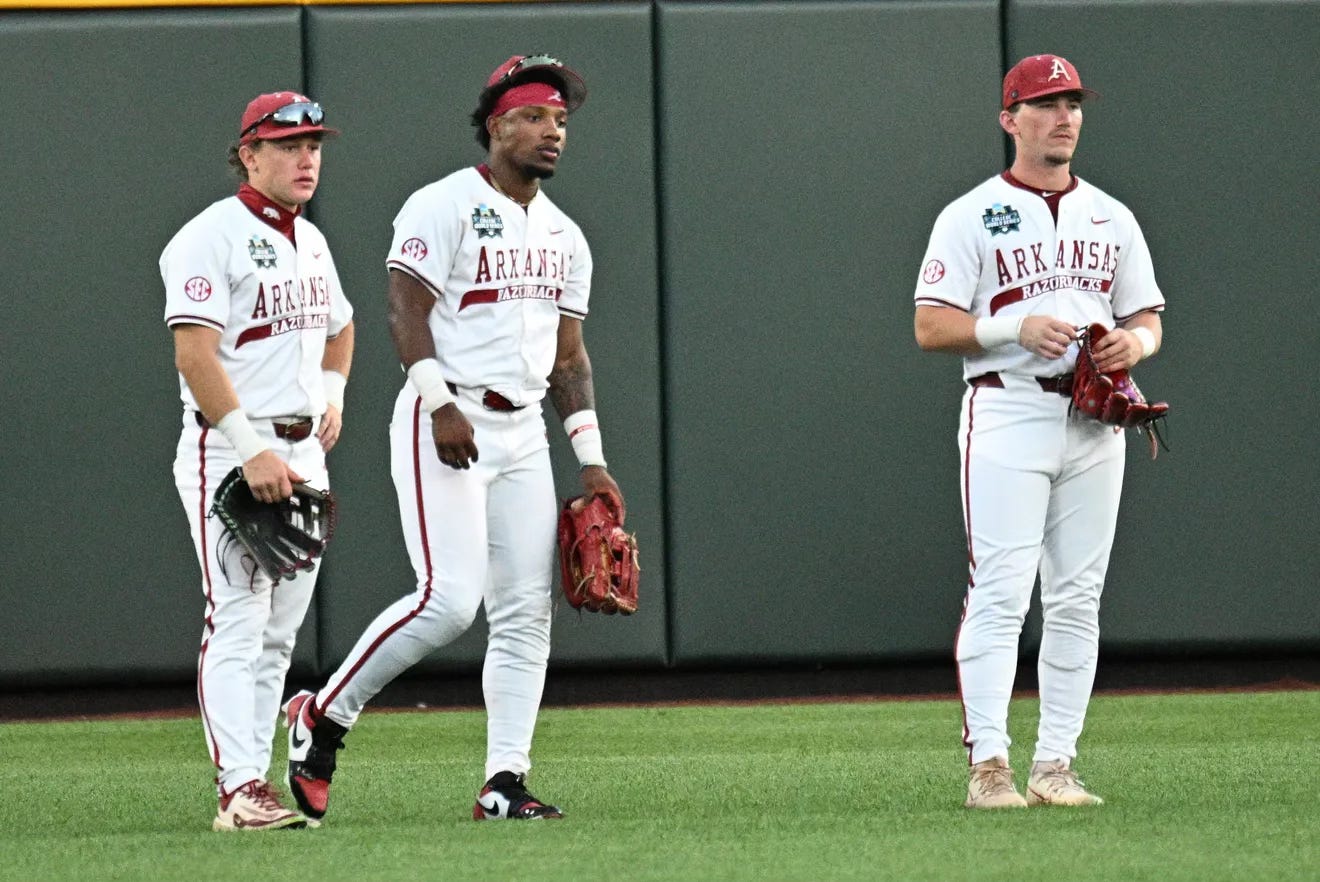
Only 12 teams have ever gone on to win the College World Series after losing their first game in Omaha, with one of those schools being the Oregon State squad that beat the Razorbacks in the CWS Final in 2018. There’s no doubt that the odds are against them, but that’s how it’s always been for Arkansas baseball. Now would be as good a time as ever to buck the trends and come out on the other side victorious.
A date with Murray State, the Cinderella of this year’s tournament, awaits on Monday afternoon. Win that, and Arkansas lives another day to face LSU or UCLA. Lose, and the questions about whether this program can actually win it all will persist at least another year.
Getting out of the loser’s bracket shouldn’t be that difficult of a task, all things considered. Murray State’s a great story, sure, but Arkansas is far and away the more complete team. From there, my confidence in the Hogs either beating UCLA or getting revenge over LSU is honestly fairly high. This offense can’t be kept quiet for the entirety of their stay in Omaha. There’s just no way. Right?
Getting to the College World Series Final is an entirely different story. Triumphing over whoever comes out of the winner’s bracket twice will be tough and is improbable. But that’s what happens when you start off arguably the biggest College World Series in your school’s history on the back foot.
"Greatness from Gage"
Gage Wood saved Arkansas' season with the third no-hitter in MCWS history.

It is hard to get 27 outs in a baseball game, especially at the highest levels of collegiate and professional ball. Hitters are just too skilled and composed to make it easy. So, when one pitcher gets all 27 outs on his own, that’s a big deal. It becomes an even bigger moment when that pitcher accomplishes the incredible feat of getting all those outs without allowing a single hit. That, my friends, is what we call special in the baseball world.
That special circumstance came to fruition yesterday afternoon in Omaha, when Arkansas’ Gage Wood did what few have ever done: throw a no-hitter in the College World Series.
Nine innings, 119 pitches, 19 strikeouts, no runs, and no hits.
A no-hitter in an elimination game in the College World Series? That’s right. Arkansas’ season continues because of what Wood did yesterday afternoon. Here are my thoughts on Arkansas’ 3–0 victory over Murray State.
“Greatness from Gage! A no-hitter!” - Mike Monaco of ESPN after the final out.
The Game
If not for a hit-by-pitch in the eighth inning, Wood would have thrown a perfect game.
Everything was working for the right-hander. His fastball, which he throws about 60% of the time, was electric. Murray State hitters consistently swung underneath it, as the late rising action caught them by surprise over and over. Here are some statistics that show just how fantastic that pitch was for him last night, courtesy of Mike Monaco:
58 of 71 fastballs landed for strikes (82%)
The fastball generated 25 whiffs on 45 swings (56%)
Of the 27 outs he recorded, 18 came via the fastball
13 of his 19 strikeouts were generated by the fastball
He was throwing that pitch out of his mind yesterday. Nobody — absolutely nobody — was going to hit Gage Wood’s fastball. With the way it was dancing, not even the best in the big leagues could have made a dent (only somewhat hyperbolic).
His fastball-first mentality allowed him to mix in his off speed pitches effectively, particularly his curveball, which left several batters completely confused. While not many will remember Wood’s performance for the curveball, it was just as crucial in getting the job done.
Wood set down the first 21 hitters he faced, making it appear effortless. At one point during that stretch, he struck out seven batters in a row, all while reportedly battling an emerging blister.
Let’s dive into the details. As he went through the Murray State batting order for the first time, he struck out five of the nine hitters. The second time through was just as breezy, with Wood striking out all three hitters at the top of the order — Jonathan Hogart, Dustin Mercer, and Carson Garner — in the bottom of the fourth. In the fifth, he recorded two more strikeouts, both looking, with a groundout ending the streak of seven consecutive strikeouts.
The perfect game continued until the eighth, when Dominic Decker, the first hitter of the inning, was hit in the foot by Wood’s first poor breaking pitch of the day. With that, the perfect game was gone, but the no-hitter remained intact. Wood didn’t let it faze him, however, as he secured three more outs in the inning, the final two via swinging strikeouts.
Now, it was on to the ninth. The situation became dicey when Wood hit the leadoff hitter, Nico Bermeo, in the elbow with two strikes. The Razorbacks argued that Bermeo leaned into thepitch, meaning it should have been called a strike and Bermeo should have been out. To most, including ESPN’s broadcasters, there didn’t seem to be enough evidence to overturn the call. Fortunately for the Hogs, the replay command center in Pittsburgh saw it differently and ruled that Bermeo had stuck his elbow out. One down.
That brought Conner Cunningham, Wood’s longtime friend and high school teammate from Batesville, Arkansas, to the plate. Wood and Cunningham train together in the offseason, and their bond is strong, which made the ensuing strikeout all the more cathartic. Two down.
The final batter was perhaps the best hitter in Murray State’s lineup: Jonathan Hogart. The fifth-year senior had been the leader for the Racers all season and was a tough out. Wood missed with the first pitch but got Hogart to foul off the second, evening the count at one ball and one strike. The third pitch was a beauty — a fastball at the bottom of the zone for strike two. With the crowd on its feet and America in awe, Wood delivered his 119th pitch of the afternoon, a 97 MPH fastball at the top of the strike zone that Hogart had no chance of hitting. He swung, he missed, and Charles Schwab Field erupted.
Gage Wood had thrown a no-hitter — with 19 strikeouts (!) — and Arkansas was still alive.
“I shouldn’t have hit that guy.” - Gage Wood after his no-hitter.
The History
The last time someone threw a no-hitter in the College World Series was in 1960, when Oklahoma State’s Jim Wixson accomplished the feat. Before that, only one other pitcher, Texas’ Jim Ehlers, did it in 1950. That’s it — just those three special men.
Wood also broke the record for the most strikeouts in a game by an Arkansas pitcher with his 19 punchouts, surpassing Razorback legends Hagan Smith (2024) and Jess Todd (2007), who each struck out 17. When you’re one strikeout shy of tying the Major League record of 20, you’ve done something truly special.
Only 10 other Razorback pitchers have thrown a solo no-hitter in the program’s history. Without further research, I’m confident that Wood’s was by far the most dominant and impressive. There’s no doubt it was the most important, as without it, Arkansas would be packing its bags and heading back to Fayetteville.
The Significance
Arkansas will play tonight against UCLA, who just lost to LSU in a game that lasted until this morning due to inclement weather in the Omaha area.
The extra life the Razorbacks have been granted is solely due to Wood’s performance. The offense, which had been one of the nation’s best before arriving in Nebraska, has vanished over the past two games. Murray State’s zero runs against Wood allowed the offense to coast. Anything more than zero would have sufficed, and that’s a massive credit to the pitcher on the mound for the Hogs. For that alone, the entire lineup owes Wood a beer.
Hopefully, the offense figures it out soon, and the pitching staff won’t need otherworldly efforts to carry the team to victory. It sounds ludicrous, but after Wood’s no-hitter, I couldn’t help but wish the lineup had produced its usual output against LSU, potentially sending Arkansas to the bracket final instead. Alas, that’s not the case, and Arkansas still needs three more wins to reach the College World Series Final.
Commentary abounds about Arkansas’ struggle to win a national baseball title. For a program as successful as it has been over the last 25 years under Dave Van Horn, the failure to claim a championship remains baffling. Year after year, the talent in Fayetteville has been there, but it hasn’t happened. While the journey is far from over, Gage Wood did all he could to keep the dream alive for another day.
There’s no certainty about how much longer Arkansas will stay alive in this College World Series. A loss to UCLA tonight could end it, leaving us empty despite Wood’s historic performance. Or maybe the Hogs continue to plow through the competition on their way toward a championship. Nothing is out of the question, but one thing is indisputable: Arkansas must keep winning.
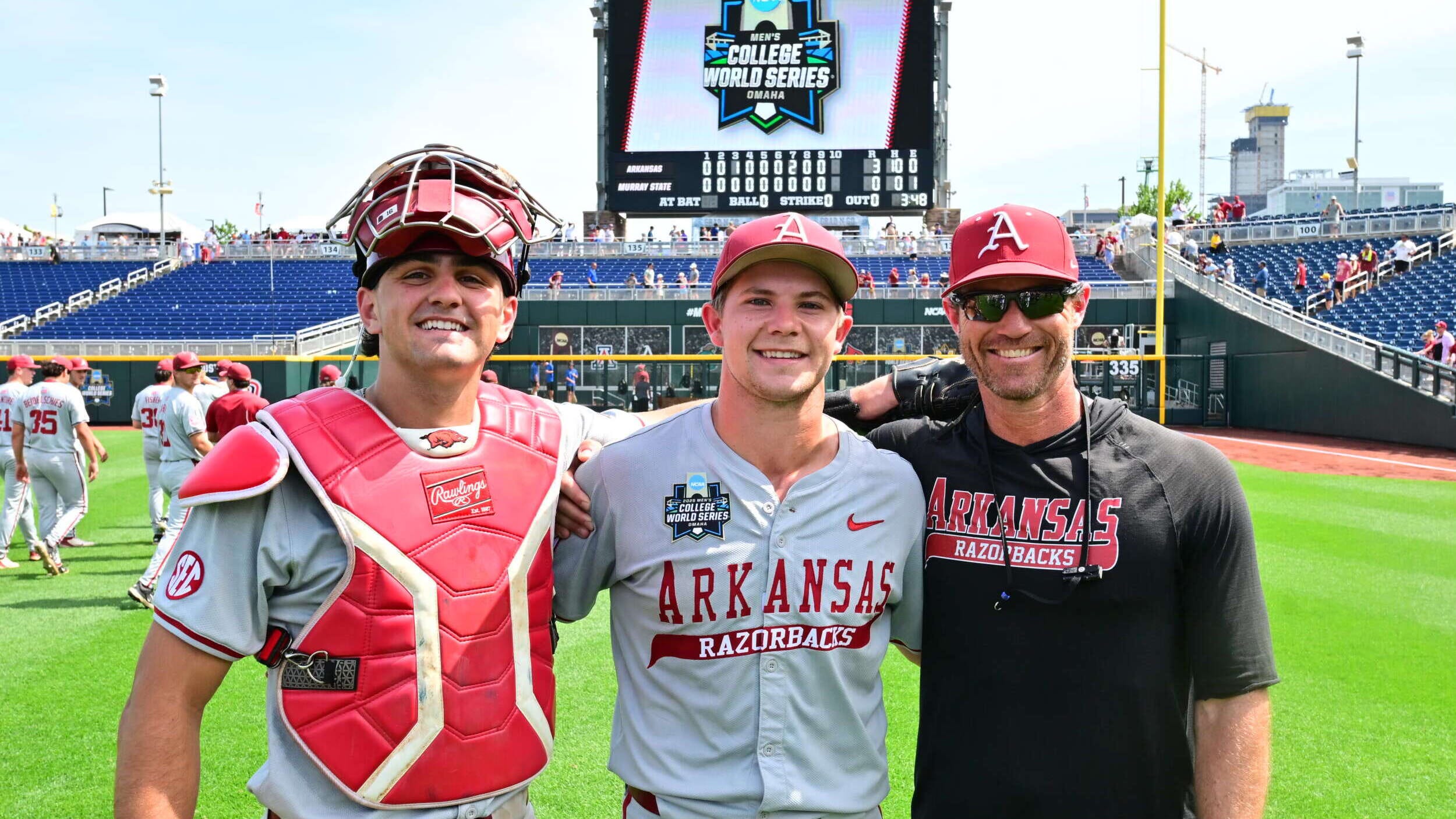
The Curse Lives
Yet again, Arkansas baseball failed on the biggest stage.

Up 5-3 with one out in the ninth over LSU, all Arkansas needed was two more outs, and its season would live another day. Just two more outs, and the dream of winning the first national championship in program history would survive.
With runners on first and second, freshman lefty Cole Gibler got the ground ball he desired. Steven Milam punched it straight into the dirt and right at Razorbacks shortstop and SEC Player of the Year Wehiwa Aloy. The tailor-made 6-4-3 double play was on the platter; all Aloy had to do was snatch it up and eat it.
Instead, he decided to throw to third to get the force out at that base, thinking he didn’t have enough time to turn two. Replay proved him wrong, however. The ESPN broadcast repeatedly showed that Aloy had plenty of time—almost eons—to toss the ball to second baseman Cam Kozeal, who then would have had even more time to relay the baseball to first. If that scenario had played out, the game would have been over, and Arkansas would be game-planning for a winner-take-all rematch with the Tigers on Thursday.
It was a foolish mistake, frankly. With Arkansas up by two, the run represented at third if Aloy had just thrown to second wouldn’t have mattered. Sigh. It didn’t happen that way, but the Hogs were still leading and just needed one more out. Only one. How hard could that possibly be?
According to Arkansas left fielder Charles Davalan, incredibly hard. LSU’s cleanup hitter Luis Hernandez, who had come up big in multiple moments for the Tigers throughout the postseason, hit a sinking liner to left, which Davalan misread off the bat. He initially took a couple of steps back, but when he realized the ball had topspin, he frantically attempted to regather himself. It was too late. As he clumsily dove toward the baseball, the ball clanked off his right shoulder and ricocheted toward the foul line. Both runners scored, and Hernandez scampered to second base. Brutal.
As catastrophic as that was, the game was still not over. Yes, the game had been knotted up in devastating fashion, and the air had been sucked out of the Arkansas dugout, but the contest was just tied. If the Hogs could just get—say it with me—one more out, then they’d be heading to extra innings with a chance to redeem themselves.
Head coach Dave Van Horn made the move to the bullpen at this point, pulling Gibler and replacing him with Aiden Jimenez, one of the most trusted relievers Arkansas employs. It would be up to him to retire arguably LSU’s best hitter, Jared Jones, and send the game to extras.
The game plan against Jones seemed clear from the very first pitch: only throw sliders, but don’t give him one that’s too juicy. Jones spat on the first one that was low and took a hack at the second that probably caught a little too much of the plate for Jimenez’s liking. The third missed, setting up a 2-1 pitch that was crucial. Everybody knew it. Land this one for a quality strike, and the two teams were most likely headed to the 10th. Throw it for a ball, and Jones most likely heads to first with a walk, setting up freshman Josh Pearson as the man deciding the fate of the game. But throw it for a less-than-quality strike, and Jones probably smashes it and ends it.
It was the latter scenario that transpired.
Jones hammered a slider that caught too much of the zone right up the middle. Arkansas second baseman and Omaha native Cam Kozeal leaped with all his might to try to grab it, but the ball tipped off the very end of his glove and trickled into center field. Hernandez scampered around third and scored, and LSU was moving on. Arkansas was done, and the curse lived.
Boy, there’s a lot that can be said.
First, Arkansas should have won that game. Aloy should have thrown to second for the double play, and Davalan should have caught the ball in left. If just one of those two things happens, I’m not writing this article right now.
Second, the baseball program in Fayetteville is cursed. Long soliloquies have been written about the collapse in 2018, when that team was just one out away from a national title but failed to catch a foul pop-up and wound up losing instead. That’s just one chapter in the many failures in Omaha, as the Hogs under Van Horn have reached the College World Series eight times since 2004 and have won zero national championships.
Does a team that’s not cursed throw away a perfect opportunity for a game-ending double play? Does a team that hasn’t been bewitched by some ancient coven have a left fielder slip and miss an easy fly ball? Does a team that’s not jinxed continue to falter over and over in the biggest spot in all of college baseball? I don’t think so.
The talent has been there. Arguably the best coach in the sport has been there. The fanbase has been there. Yet, nothing. For all the winning that has happened in Fayetteville over the past two decades, not a single piece of hardware from Omaha is in the trophy case. That hurts. It hurts a ton.
That bottom of the ninth inning will forever taint what was one of the most special groups Arkansas baseball has ever seen. From the top of the order with Davalan to the bottom with Justin Thomas Jr., who put the Hogs ahead in the top half of the ninth with a clutch single, the pieces were there. The pitching was electric, with arms like Zach Root and Gage Wood headlining a staff that certainly had what it took to win it all.
But when everything was said and done, the skeletons in the closet that have haunted the Razorbacks for years emerged once again. When the lights got as bright as they possibly could, Arkansas failed to rise to the occasion. Sloppy, silly mistakes that even a middle school baseball team knows not to make emerged out of nowhere, and before anybody knew it, the season was done, and everybody was sad.
That’s the final word that beckons to me regarding this loss: sadness. Nobody deserves anything, least of all in sports. But Dave Van Horn deserves a title. He’s done everything short of climbing to the top of the college baseball mountain, and I believe there was a large contingent of people who thought that maybe 2025 would be the season that crescendoed an amazing career. And while the roster was amazing and the coaching staff was fantastic, the ending remained the same.
For the 127th year in a row, Arkansas will not win a national championship. And that, my friends, is a real shame.