

Welcome back to The Football Notebook, where we’ve reached the point in the football season when the people running these organizations are starting to do some very strange, yet reasonable, things. Florida State has decided that paying Mike Norvell approximately $50 million to stop coaching its football team is a better investment than allowing him to continue, while the Dallas Cowboys have managed to lose another game that appeared impossible to lose. I’m not sure which is the more troubling indictment of modern football management, although one organization has at least acknowledged that something needs to change.
There are only two topics in today’s notebook, but they are both doozies, so prepare yourselves accordingly. Without further ado, let’s open the notebook.
Florida State, Mike Norvell and College Football’s Buyout Problem
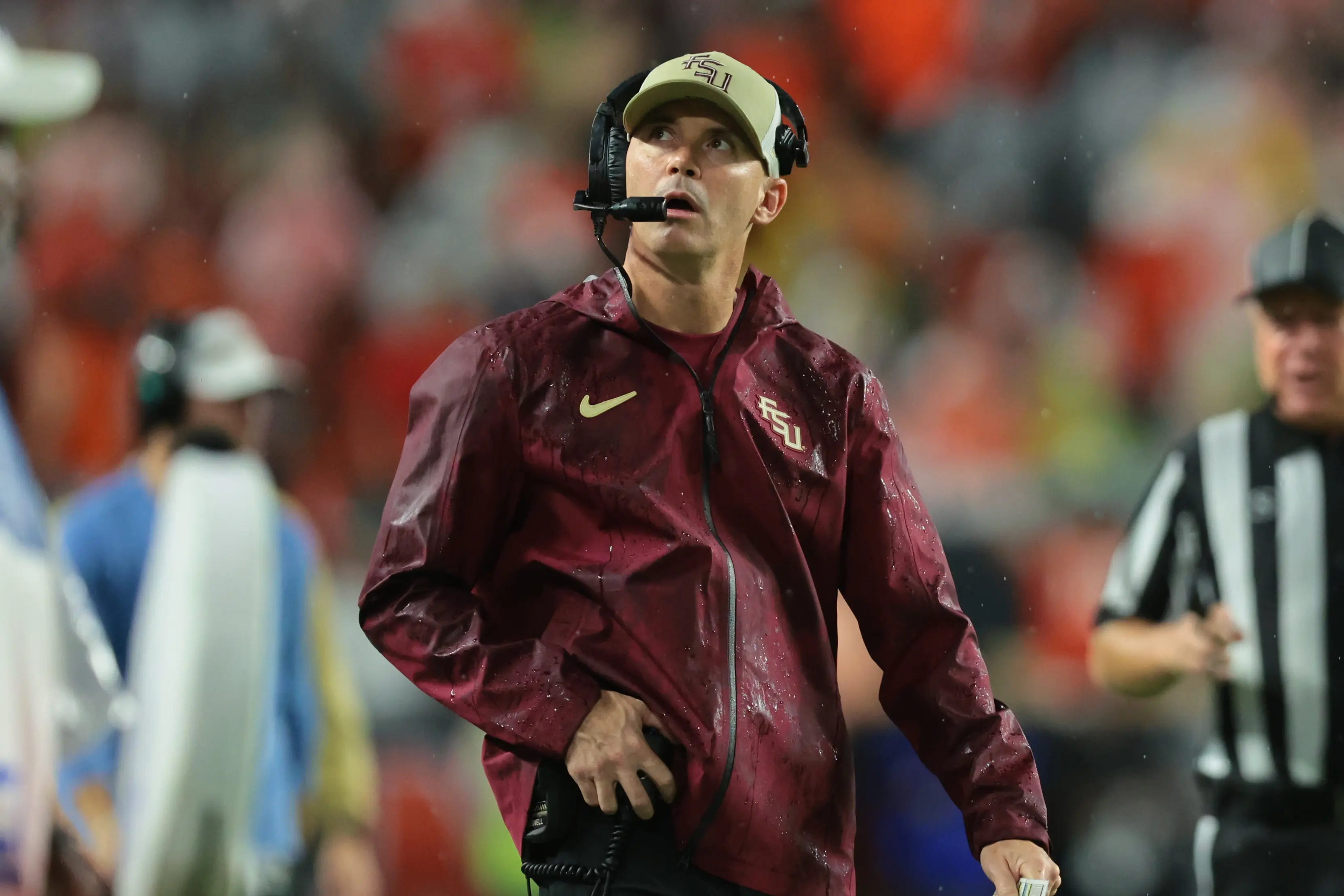
There is a fairly simple argument for firing Mike Norvell, and it doesn’t require much beyond looking at Florida State’s record over the past three seasons. The Seminoles went 2-10 in 2024, followed that with a 5-7 campaign in 2025 and have started this season 3-5, with Saturday’s 36-24 loss to Clemson proving to be the final straw. That’s 10 victories in 32 games for a program that entered the 2024 season believing it had one of the best coaches in college football. If Florida State had finished 8-4 in each of those seasons, we’d be having a very different conversation. But it didn’t, and there is only so long an administration can continue insisting that a successful turnaround is right around the corner before everybody stops believing it.
So Norvell is gone, which is an outcome that has seemed likely for most of the past two years. Florida State announced his dismissal Sunday, named Rick Stockstill its interim coach and began the search for somebody capable of restoring the program to something resembling its former standing. None of that is surprising, although I do find it remarkable that the Seminoles managed to tolerate so much losing before reaching a conclusion that many people thought was obvious after the 2024 season.
What is surprising, or at least what ought to be surprising, is how much money Florida State will have to pay to make the change. Depending on which report and contract calculation you use, Norvell’s buyout is worth somewhere around $47 million to $50 million, with the costs of dismissing other members of his staff potentially pushing the total much higher. Even allowing for the fact that his future earnings could reduce what Florida State ultimately owes, this is an enormous amount of money to spend on somebody the university no longer wants to employ.
And before we get too far into the discussion, I should clarify something. I don’t blame Norvell for negotiating the contract that put him in this position, because I don’t believe there’s a person reading this who would have turned down the same arrangement. If somebody offered me more than $10 million a year to coach college football and promised to pay me tens of millions more if they eventually decided I wasn’t very good at it, I would accept before they had an opportunity to reconsider. I’d probably even offer to pay for lunch afterward.
But that’s a rather different question from whether Florida State should have agreed to those terms, and I think the distinction matters. We’ve developed a habit of examining coaching contracts only after they’ve become financial disasters, then treating the entire arrangement as though it was obviously a terrible idea from the beginning. Sometimes that’s true, but I’m not convinced it was entirely true in this case. The real problem is that Florida State made a defensible decision in 2024 without doing enough to protect itself against the possibility that its assumptions about the future might be wrong.
To understand how we got here, we need to return to the end of the 2023 season, when Norvell was one of the hottest names in college football and Florida State appeared to have restored itself to national prominence. The Seminoles went undefeated through the ACC championship game, finishing 13-0 and winning their first conference title in nearly a decade. They had gone 10-3 the previous season, and the improvement under Norvell looked genuine. Florida State wasn’t winning games because of some unusual statistical fluke or a series of fortunate bounces. It had assembled a talented roster and was beating good football teams.
