

College football has drastically changed over the course of my lifetime. When I first became invested in the sport, the Pac-12 existed, Texas and Oklahoma were members of the Big 12, and the BCS was still around. Fast-forward fifteen or so years, and none of that has survived.
There have been many casualties from those changes, most notably the loss of historic rivalries that are no longer played. Once Missouri bolted for the SEC after the 2012 season, the Border War with Kansas ended as an annual fixture. The same happened with Oklahoma and Oklahoma State—Bedlam, once one of the sport’s fiercest rivalries, vanished the moment Oklahoma decided that more money in the SEC mattered more.
In short, the version of college football I grew up loving is dying, if not already dead. That’s not to say I don’t still adore my fall Saturdays, because I do. I’d just love them a whole lot more if the tradition and pageantry that first drew me to the sport were still intact.
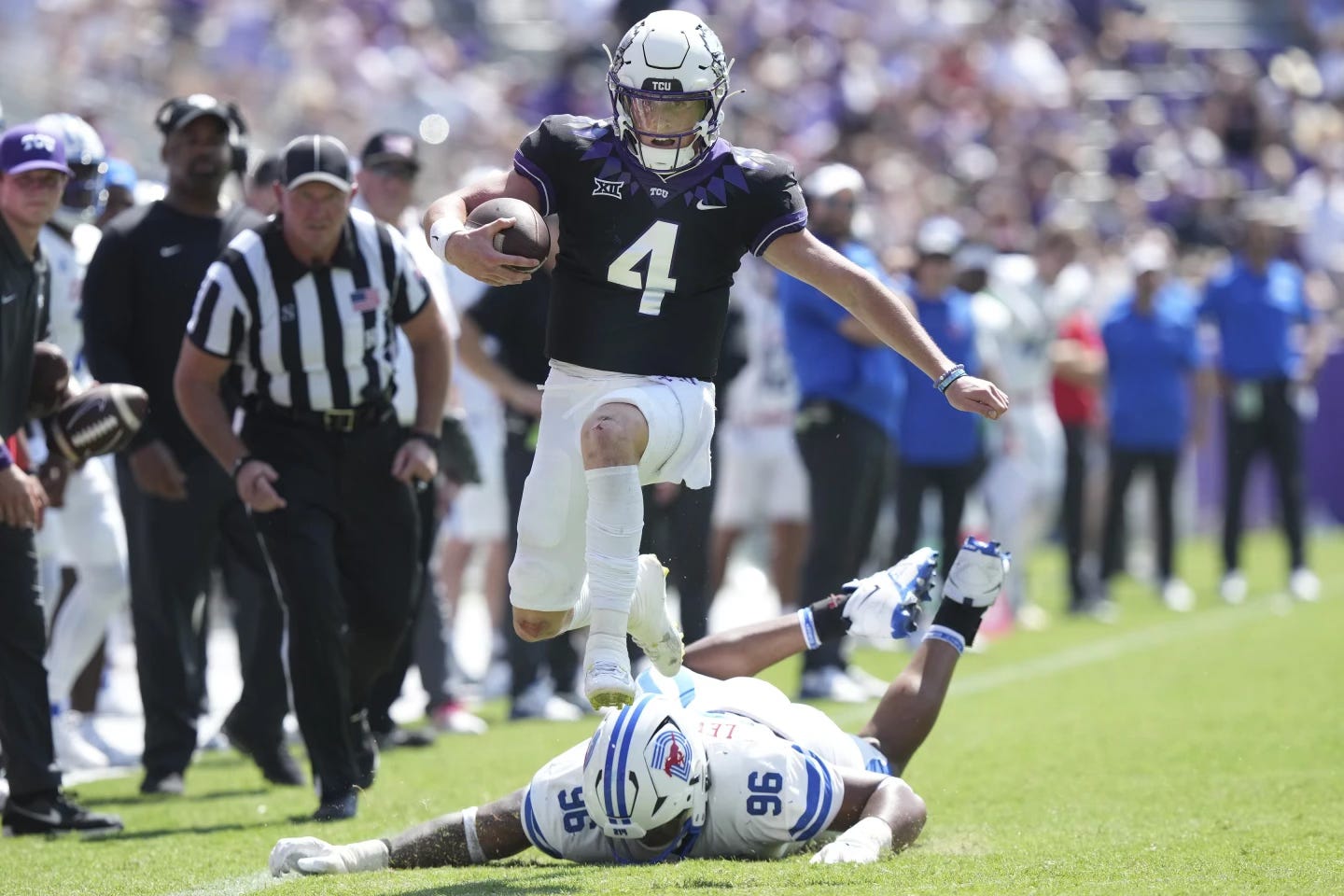
Which brings us to the Iron Skillet: TCU and SMU have met nearly every year since 1915, with only a handful of interruptions—1919, 1920, 1925, 1987–88 during SMU’s Death Penalty, 2006, and 2020. Even when the Southwest Conference broke apart in the 1990s, leaving both TCU and SMU in the dust, the two schools still managed to meet almost every season. That is, until next year.
Saturday’s edition of this storied rivalry is the last one locked into the schedule for the foreseeable future, and that makes me sad. As someone who attended TCU during the resurgence of SMU’s football program, this matchup has never meant more to me than it does now. I’m sure plenty of longtime TCU and SMU fans don’t share those exact feelings; after all, there has never been a time when both schools were good at the same moment until now. In fact, since the creation of the AP Poll in 1936, there has not been a single matchup between the Horned Frogs and Mustangs in which both teams were ranked.
I don’t want to get too granular about why this game isn’t being played anymore. If you’re interested, Shehan Jeyarajah wrote a great article about the rivalry that’s well worth your time. What I want to focus on is the feeling that college football fans get from games like this. Rivalries matter. In my opinion, playing one’s rivals is the foundation on which the entire sport is built. College football would not be the same if Alabama and Auburn didn’t play or if Ohio State and Michigan decided to take a break. Obviously those examples are moot because the teams share a conference, but the point stands: college football desperately needs teams that hate each other to play each other.
When I first began to watch college football, I cared about only one game: Texas–Oklahoma. The Red River Shootout has been a constant in my life for as long as I can remember. With half of my family being die-hard Sooners, we’d sit on the couch every October and root against the Longhorns.
When my love for TCU started to blossom later in childhood, I didn’t get too invested in many games except when the Horned Frogs faced Baylor. No matter how TCU fared in a given season, the result of the Revivalry could make or break the year for me. TCU was awful in 2021, but it upset a Baylor team ranked No. 12 and ruined the Bears’ chances of making the College Football Playoff. No victory has ever tasted as sweet.
That’s what rivalries do—they inject meaning into seasons that might otherwise fade into obscurity. Saturday’s TCU–SMU game carries that same charge. Whether the Frogs are contending for the playoff or slogging through a disappointing season, a win over the Ponies can redeem everything. And now, with no game scheduled next year, the stakes are even higher.
TCU and SMU need each other, whether they want to admit it or not. Fort Worth versus Dallas is more important than either program probably realizes, and this annual clash embodies that contrast of styles and cultures.
What’s arguably more important is that the fan bases want this game. It’s frustrating that TCU’s former athletic administration tossed it aside simply to add more buy games against Arkansas State and Sam Houston. Frog fans don’t want to see TCU play those teams. They want TCU and SMU—two schools separated by only thirty miles—to meet every single season, just as they have for more than a century.
My hope is that the game returns at some point once the higher-ups realize how terrible it is to take away something so historically significant. It needs to happen because without it, a little part of college football is dead and gone.