

The Big 12 has always possessed a certain amount of lunacy, which is probably why I’ve enjoyed it as much as I have over the years. This is the conference that watched TCU materialize out of thin air and play for a national championship in 2022, then two years later handed its championship trophy to an Arizona State team that had been picked to finish dead last before the season. Robert Griffin III once dragged Baylor from the depths of college football irrelevancy to a Heisman Trophy. Kansas was briefly good. Texas lost to Kansas while Kansas was decidedly not good. Nothing about this league has ever made complete sense, and I mean that as lovingly as humanly possible.
Which is why I’m having such a difficult time accepting that the 2026 Big 12 looks, dare I say, predictable.
Texas Tech and BYU are the two obvious favorites, and the gap between those two and everybody else feels considerably larger than what we’ve grown accustomed to seeing in this conference. That doesn’t mean somebody won’t emerge from the giant pile of teams behind them — this is still the Big 12, after all — but there is at least a little more order entering the season than we’re used to. I don’t necessarily like it. I want my Big 12 to look like somebody dumped 16 teams into a washing machine, turned the dial to high and came back in December to see what survived.
Maybe we’ll get there eventually.
Texas Tech and BYU Have Separated Themselves
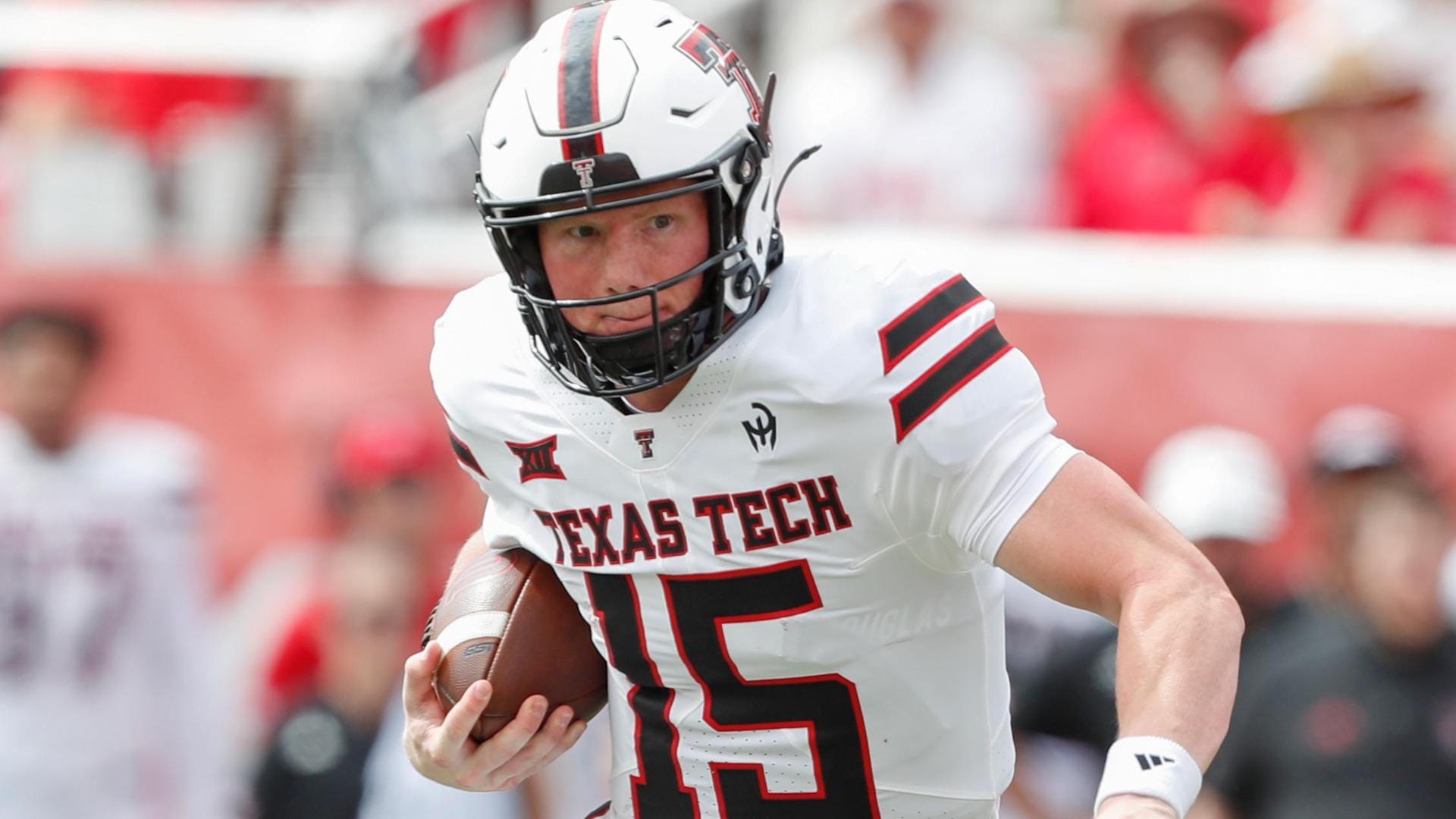
Texas Tech has essentially decided that being a plucky little program in Lubbock was no longer fulfilling enough, opened the checkbook and started constructing a roster like Steve Cohen discovering that Major League Baseball technically does not have a salary cap. It worked, too, unlike Cohen’s Mets experiment. Texas Tech won 12 games, captured its first Big 12 championship and made the College Football Playoff last season, which means we have officially moved beyond the point where the spending spree is some cute achievement. This is what Texas Tech is now. Winning the Big 12 is no longer some wild dream for a program that spent much of the post-Mike Leach era hanging around the middle of the conference. It’s the expectation.
Of course, because this is still Texas Tech and because God apparently enjoys college football storylines, the Red Raiders spent the offseason embroiled in the Brendan Sorsby gambling fiasco that ultimately left their prized transfer quarterback ineligible. That should be the sort of thing that completely derails a season before it begins, except I’m not convinced it will. Will Hammond was already considered a promising option before tearing his ACL last year, and Texas Tech has enough talent surrounding him — particularly on a defense that should hit people like a Ford F-350 barreling down I-27 — that I’m still perfectly comfortable calling the Red Raiders the best team in this conference. The quarterback situation lowers the ceiling a bit, but it doesn’t suddenly make everything else disappear.
BYU is considerably less theatrical, which is probably the most BYU thing imaginable. The Cougars just keep winning football games under Kalani Sitake, who has quietly turned into one of my favorite coaches in the entire sport and could probably convince me to run through a brick wall at 4 in the morning if he asked nicely enough. They’ve won double-digit games in consecutive seasons, reached Arlington last year and now return Bear Bachmeier after he somehow survived a freshman season that included six comeback victories. He still has to become a better passer, and I’m concerned about a receiving corps that doesn’t appear significantly better than the one he had last season, but BYU can hand the ball to LJ Martin and generally trust that Sitake will figure out the rest. That has become a pretty dependable formula.
Martin might be the biggest reason I’m willing to overlook some of the questions in the passing game. He ran for 1,305 yards, scored 12 touchdowns and won Big 12 Offensive Player of the Year last season, giving Bachmeier the sort of security blanket every young quarterback would love to have. Combine that with Bachmeier’s own ability to run, and BYU shouldn’t need him to turn into Patrick Mahomes overnight. The Cougars just need him to be a little better than he was as a freshman. If that happens, I have a difficult time imagining them not being involved in the championship race again.
The Giant “Yeah, I Could See It” Tier
This is where the Big 12 starts feeling like the Big 12 again.
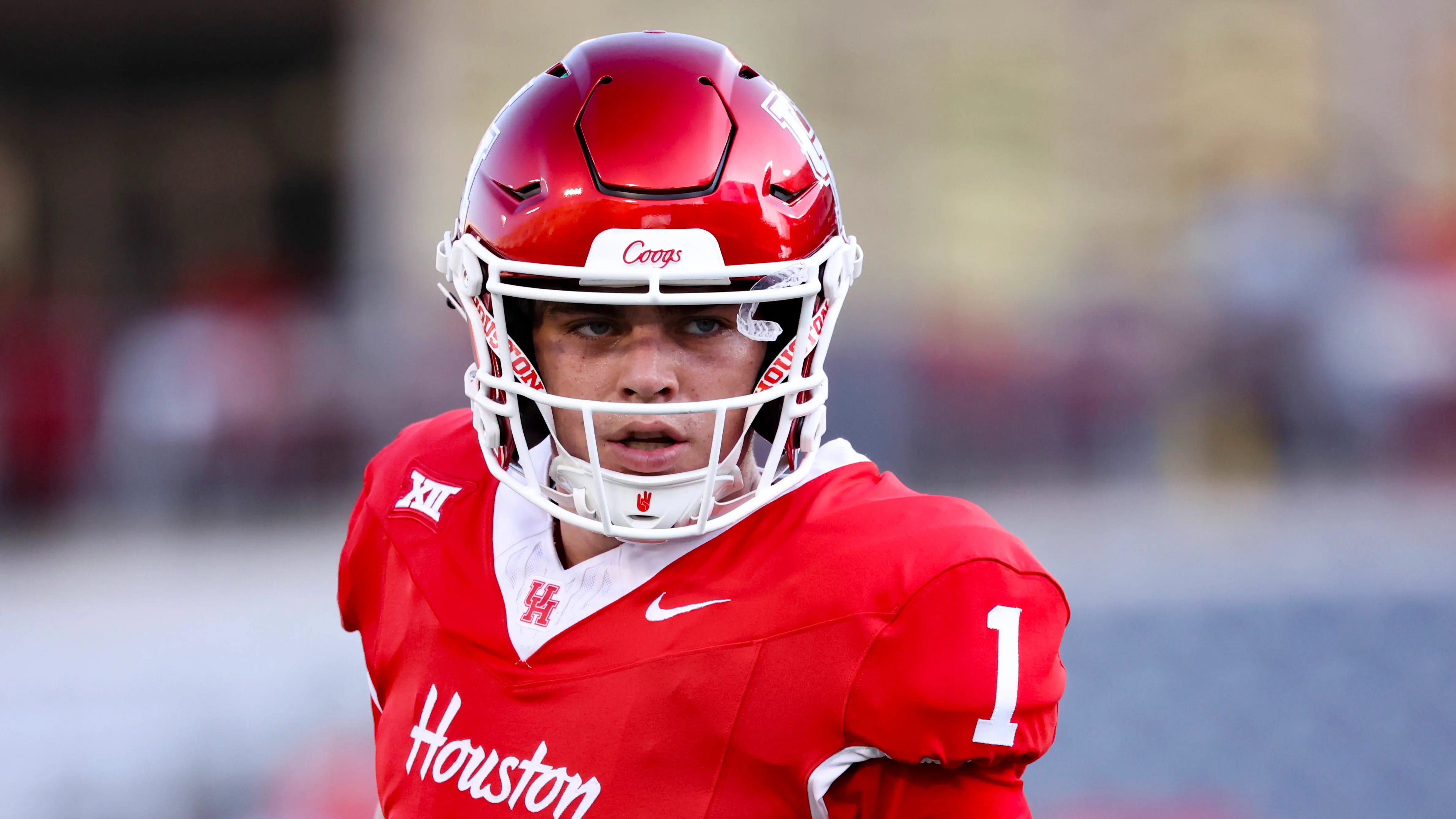
Houston fascinates me because Willie Fritz has basically spent his entire coaching career walking into places, looking around and saying, “Yeah, I can fix this,” before proceeding to do exactly that. The Cougars went 10-3 last season after consecutive 4-8 campaigns, and although I’m not completely sold on Conner Weigman being the quarterback who takes them from fun story to Big 12 champion, five-star freshman Keisean Henderson is sitting behind him like the giant red button everyone in the building knows exists. Weigman was productive last season, accounting for 36 touchdowns, so this isn’t exactly a crisis situation. But Henderson is one of the most talented quarterbacks in the country, at least on paper, and every mediocre Weigman quarter is inevitably going to produce another few thousand people wondering when the kid gets his shot.
Utah and Kansas State are dealing with slightly different versions of the same problem: Two programs that have felt incredibly stable for years are suddenly moving forward without the coaches responsible for much of that stability. Kyle Whittingham finally left Utah after 21 seasons, only to resurface at Michigan after one of the stranger coaching carousels imaginable, and longtime assistant Morgan Scalley now gets the unenviable task of following him. Devon Dampier is back after scoring 34 touchdowns last season, but both lines have undergone significant changes and some important players and coaches followed Whittingham out the door. Utah has spent two decades feeling like the reliable dad of college football — sensible shoes, oil changed every 5,000 miles, probably owns a really nice pressure washer — and now we’re finding out what happens when somebody else gets the keys.
Kansas State’s transition feels a little less dramatic because Collin Klein is about as Kansas State as a human being can possibly be. He played there, nearly won the Heisman there, coached there and now returns to take over for Chris Klieman. Avery Johnson is also somehow still waiting for the breakout season people have been predicting for what feels like my entire adult life, and perhaps this is finally it. Johnson has started 25 games over the last two seasons, Klein knows exactly what Kansas State football is supposed to look like and the Wildcats conveniently avoid Texas Tech, BYU and Utah. If you wanted to talk yourself into Kansas State making it to Arlington, I wouldn’t stop you. I might even join you. I have made significantly worse preseason decisions.
TCU is more fascinating than trustworthy, which has basically become the program’s identity since that magical 2022 season. Josh Hoover is gone, Harvard transfer Jaden Craig takes over and new offensive coordinator Gordon Sammis arrives after running a UConn offense that protected the football and leaned considerably more heavily on the running game. Heck yeah! I’m not expecting Sonny Dykes to suddenly morph into Kirk Ferentz and start treating every forward pass like a federal offense, but a little more control probably wouldn’t hurt. Craig will still get plenty of opportunities to sling the ball around, and there is enough talent here for TCU to matter. Whether that means eight wins or a legitimate run at a championship is where I start having questions.
Arizona deserves considerably more respect than it seems to be getting after quietly going 9-4 last season. Noah Fifita is the most experienced quarterback in the conference, threw 29 touchdowns a year ago and gives the Wildcats something increasingly rare in modern college football: a quarterback who has been around long enough that fans don’t need an offseason flowchart to remember where he came from. Much of the roster around him has changed, particularly on defense, so I’m hesitant to put Arizona alongside Texas Tech and BYU. But having the right quarterback can cover up an awful lot of problems in college football, and Arizona most certainly has one.
Arizona State gets the benefit of the doubt almost entirely because Kenny Dillingham has earned it. The Sun Devils took a step backward after their magical 2024 campaign and now have to replace Sam Leavitt and Jordyn Tyson, but Dillingham turned down multiple high-level coaching offers to remain at his alma mater and already has a Big 12 championship sitting on his résumé. Cutter Boley becomes his latest quarterback project, and while I don’t know whether there’s enough around him for Arizona State to win the conference again, I’ve reached the point where dismissing a Dillingham team in August feels unnecessarily dangerous.
UCF keeps showing up on lists of potential surprise teams, and I don’t really know what to do with that information. Scott Frost’s reunion tour began with a 5-7 season, and although James Madison transfer Alonza Barnett III makes the Knights considerably more interesting after an impressive year that saw him score 38 touchdowns that helped the Dukes make the College Football Playoff, I’m not ready to start jumping to too many conclusions. Maybe Frost finally recreates some of the magic that made his first tenure so much fun and perhaps Barnett is exactly what this offense needed.
I’ll believe it when I see it.
Oklahoma State Has Broken My Brain
My brain tells me to be responsible here. Oklahoma State went 1-11 last season. One and eleven!
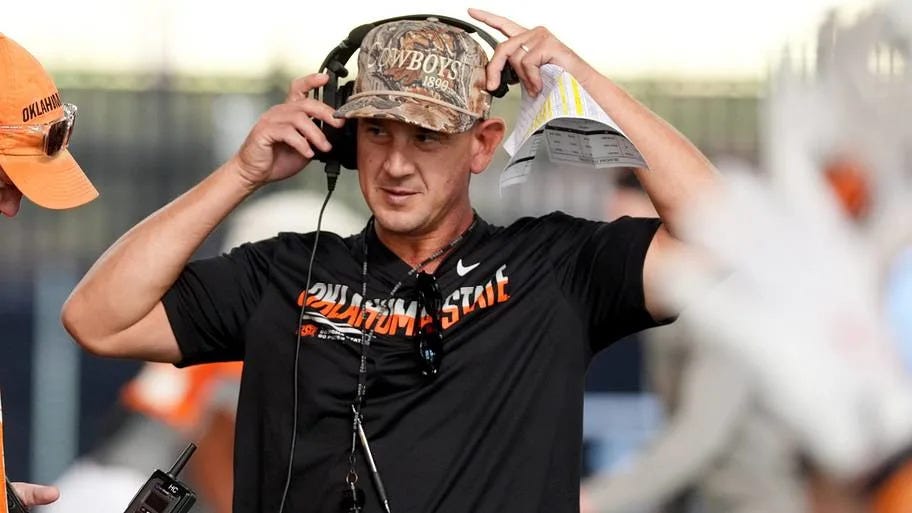
Mike Gundy’s remarkable run in Stillwater ended with the entire building collapsing on top of itself, and Eric Morris has responded by essentially putting North Texas on a U-Haul and driving it three hours north. Drew Mestemaker came with him. Caleb Hawkins came with him. Wyatt Young came with him. Sixty transfers came with him. There are 89 new players on this roster, which is less of a rebuild and more of an episode of Flip or Flop.
And yet … I kind of love it.
Mestemaker led the country with 4,379 passing yards last season. Hawkins rushed for more than 1,200 yards. Young nearly reached 1,300 receiving yards. Morris knows quarterbacks and just built one of the most entertaining offenses in America at North Texas, so I’m fascinated by the idea of transplanting that operation into a Power Four program with considerably more resources. There are legitimate concerns, particularly because Mestemaker struggled against some of the better defenses he faced last season, and some of those defenses weren’t exactly the 1985 Bears. There is absolutely no logical reason I should be sitting here talking myself into the Cowboys as quickly as I am.
Surely nobody would be irresponsible enough to put Oklahoma State in a preseason ranking.
Wait.
I’m receiving word that I did exactly that in the inaugural College Football Corner Poll.
Crap.
I’m one of those people.
The “OK, I’ll See You Next Year” Tier
There are six teams left, and I would like to formally apologize in advance to whichever one inevitably wins eight or nine games and makes this entire section look ridiculous.
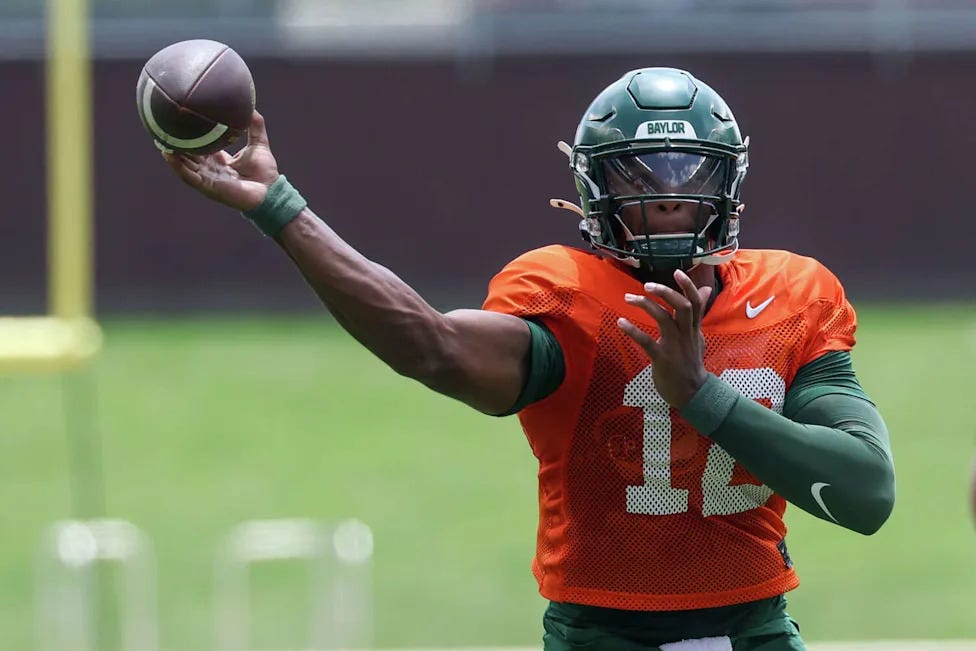
Baylor is probably the most interesting of the bunch because DJ Lagway gives Dave Aranda one final opportunity to turn things around. Lagway was one of the most talented quarterbacks in his recruiting class and provides the sort of upside that can completely change a season if everything clicks, but Aranda is 36-37 and has spent the years since Baylor’s 12-win 2021 campaign drifting further away from it. There isn’t much mystery surrounding the stakes. Baylor needs to be good, and if it isn’t, I have a difficult time imagining Aranda getting another opportunity to fix it.
Scott Satterfield is in a similar position at Cincinnati. The Bearcats finally reached a bowl last season, which qualifies as progress after winning eight games combined across Satterfield’s first two years, but they’ve also won just once after October during his tenure. That is not exactly the sort of trend that gets everyone excited about Year 4. Colorado, meanwhile, is trying to recover from a 3-9 season under Deion Sanders, and I genuinely have no idea what the long-term future of that entire experiment looks like if things go poorly again. Sanders has already taken Colorado from one win to nine and back down to three, which makes charting the trajectory of this program feel like watching somebody’s heart monitor.
Iowa State begins life after Matt Campbell with 84 new players, a sentence that should probably be enough to explain why I’m not particularly bullish on the Cyclones. Kansas finally has to figure out life after Jalon Daniels, whose college career lasted long enough that I’m pretty sure he once played against Nebraska in the old Big 12 North. And West Virginia is entering Year 2 of Rich Rodriguez’s second tenure in Morgantown, which still sounds like a sentence transported directly from 2007. Maybe one of those rebuilds moves faster than expected. I’m simply not betting on it.
The coaching situations might actually be more interesting than the football in this tier. Aranda and Satterfield are obvious candidates to be gone if things fall apart, and I wouldn’t completely rule out Sanders deciding he has had enough of the whole operation if Colorado endures another miserable season.
So, Who Wins the Big 12?
Everything in front of me says Texas Tech.
The Red Raiders have the roster, the defense, the recent proof of concept and the resources to make another run at the College Football Playoff. BYU is the team I trust most to stay on their heels because Sitake has built something incredibly stable in Provo, and Bachmeier becoming even marginally better as a passer could make the Cougars considerably more dangerous. Kansas State, Houston, Utah, Arizona, TCU and the rest of the giant “Yeah, I could see it” tier all have reasonable paths if something breaks their way.
But trying to confidently predict the Big 12 is a little like leaving a toddler alone in a room with a Sharpie. You know what should happen. That has very little bearing on what you’re going to find when you come back.


