

For the Big Ten, national championships have become the new normal. Three straight seasons have resulted in a school from the conference reigning supreme in the end, with Michigan starting the run, Ohio State following and then Indiana — Indiana! — completing one of the most preposterous transformations in college football history by winning the whole dang thing last season. It’s an impressive run, one we haven’t really seen since the SEC spent the better part of the 2000s and 2010s treating the national championship like a timeshare property.
If the trend continues, I suppose it’s Oregon’s turn to win its first title in program history. So, congrats, Ducks. Glad we got that settled.
Obviously, the reality is a little more complicated, although maybe not by much. Ohio State, Indiana and Oregon enter 2026 as three of the best teams in the country, and I would be pretty surprised if the Big Ten champion came from anywhere else. Behind them sits an enormous collection of teams ranging from legitimate College Football Playoff contenders to programs simply trying to remember what happiness feels like. There are also 18 teams in this conference, which means discussing all of them feels less like previewing a league and more like going through the guest list for a moderately sized wedding.
The Three That Can Win It All
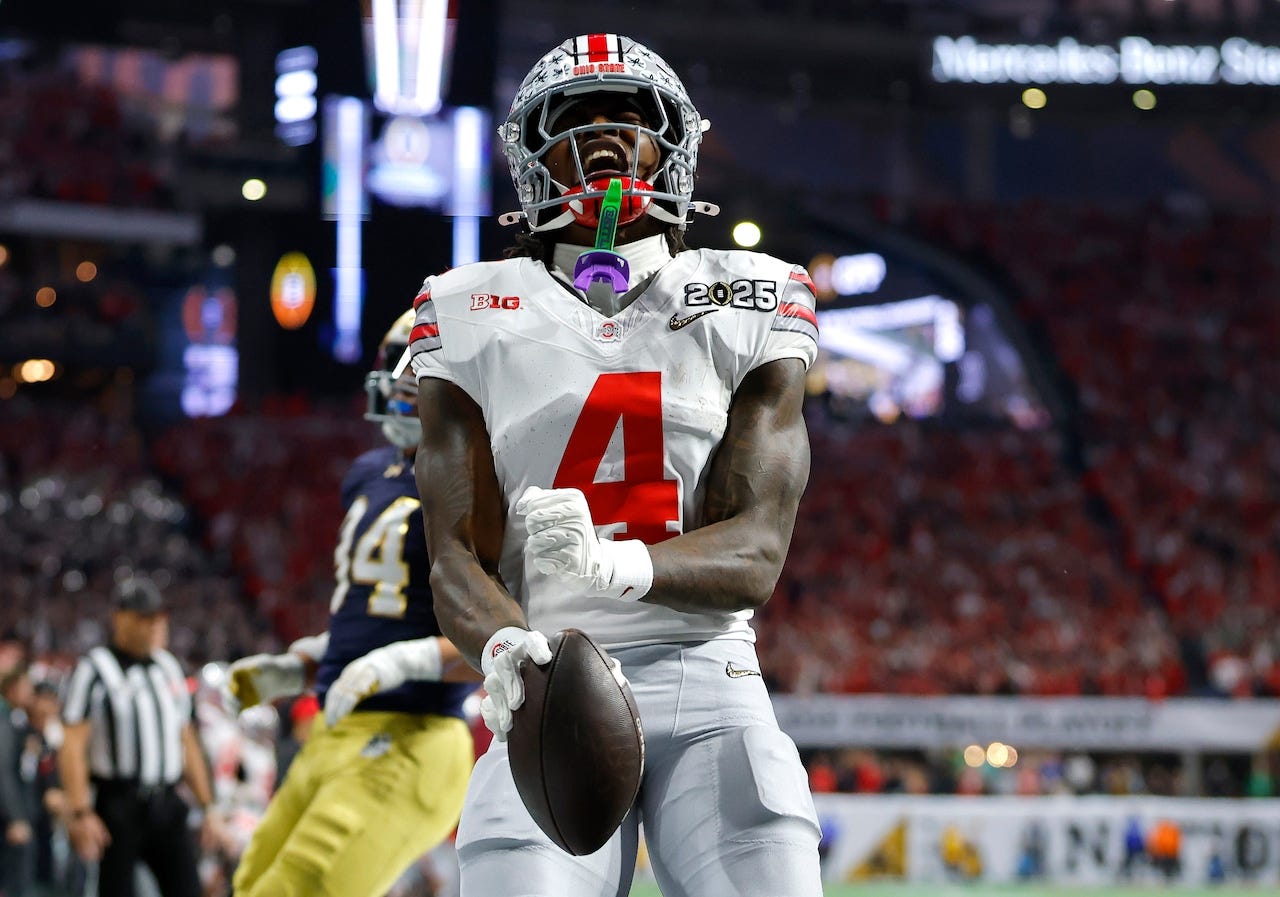
Let’s start with Ohio State, the preseason No. 1 team in the AP poll and a program whose definition of “disappointment” is wildly different from that of approximately 98% of college football. The Buckeyes spent most of last season looking inevitable, rolling through team after team before Indiana finally stepped onto the same field in Indianapolis and everything came crashing down. The Hoosiers won the conference, Miami eventually knocked Ohio State out of the College Football Playoff and everybody in Columbus was left to stare silently into the dark abyss.
Luckily for head coach Ryan Day, 2026 presents another prime opportunity to reach the mountaintop, and having Julian Sayin at quarterback is a pretty good starting point. Sayin’s efficiency was absurd last season, and he once again gets the privilege of throwing footballs in the general direction of Jeremiah Smith every Saturday. That has to make quarterbacking significantly easier. Whenever things get difficult, just press the giant red button labeled THROW IT TO JEREMIAH and see what happens. Most quarterbacks in the country would commit minor crimes to have that luxury, and one of the most accurate passers in the sport just happens to be the lucky dude who gets it.
The funny thing is that Ohio State’s offense obviously doesn’t end there. Sophomore running back Bo Jackson — no, not that Bo Jackson, although his appearance would be somewhat believable given that former professionals are now attempting to return to college football — was dynamite last season, while Brandon Inniss returns alongside transfers Devin McCuin, Kyle Parker and plenty of other weapons. Then you flip over to the defense and find Jaylen McClain, Jermaine Mathews Jr., Zion Grady, Riley Pettijohn and approximately 74 other blue-chip players hiding underneath couch cushions inside the Woody Hayes Athletic Center.
At the end of the day, Day’s objective is a national championship. Anything less is a failure.
Then there’s Indiana, which is somehow a sentence we now say when discussing national championship contenders. I still don’t think we’ve fully appreciated what Curt Cignetti has done in Bloomington, taking arguably the most hopeless Power 4 program in existence and turning it into a national champion with the speed of one of those home renovation shows where a condemned building becomes a five-bedroom farmhouse in 42 minutes. Overstating how unbelievable this rise has been might actually be impossible. Cignetti is Hugh Jackman in The Prestige, except instead of duplicating himself inside a giant machine, he apparently figured out how to manufacture championship football teams in Bloomington.
The terrifying part — at least for the rest of college football — is that Indiana might be just as good again.
Everyone around the program has raved about a transfer portal class that could somehow be better than the one that helped deliver a ring, with the main piece being Josh Hoover’s arrival from TCU to replace Fernando Mendoza at quarterback. I have complicated feelings about that development because Hoover might have the best pure arm talent of any quarterback I’ve watched play for the Horned Frogs, capable of launching a football into spaces most quarterbacks wouldn’t even consider attempting. He can also occasionally throw it directly into the chest of a defender and make you wonder whether somebody changed the controller settings without telling him. If Cignetti and his staff can somehow eliminate that part of Hoover’s game, man, Indiana is going to rock it.
It helps that there’s plenty around him. Turbo Richard is the running back, which, quite frankly, feels like all the scouting information anybody should need. His name is Turbo Richard. He was born to gain 1,400 yards. Charlie Becker was nearly superhuman down the stretch last season, catching just about everything Fernando Mendoza threw in his general vicinity, and there’s so much more on this roster that I’m sure the Indiana fans in my life will immediately begin texting me about the six future All-Americans I neglected to mention.
Oregon completes this trio, and the Ducks are probably the most likely program in the country to do what Indiana did last season and win a national championship for the first time. Unlike Indiana before Cignetti arrived, Oregon has been sitting at the doorstep for years. Dan Lanning has built a formidable operation in Eugene, recruiting at an elite level, spending like an elite program and generally playing like one, with the only thing missing from the trophy cabinet being the one object everybody actually cares about.
The good news is Dante Moore came back. Moore could have entered the NFL draft and potentially heard his name called extremely early, but instead he returns for another season, giving Oregon one of the best quarterbacks in college football and another legitimate opportunity to finally break through. There is talent everywhere — Jordon Davison, Dakorien Moore, A’Mauri Washington, Bear Alexander, Matayo Uiagalelei and plenty more — but listing every great Oregon player eventually starts to miss the point. This season is about Lanning and whether he can finally finish the job.
A lot of resources have been poured into this operation, and last season’s blowout loss to Indiana in the CFP semifinal was simply the newest installment in Oregon’s long-running television series, Maybe Next Year. Lanning is by no means on the hot seat, nor should he be, but eventually, when you build something this good and come this close this many times, you have to become king of the hill at some point. Oregon has just about everything required to do it. Now it actually has to happen.
Playoff Dreams and Increasing Levels of Pressure
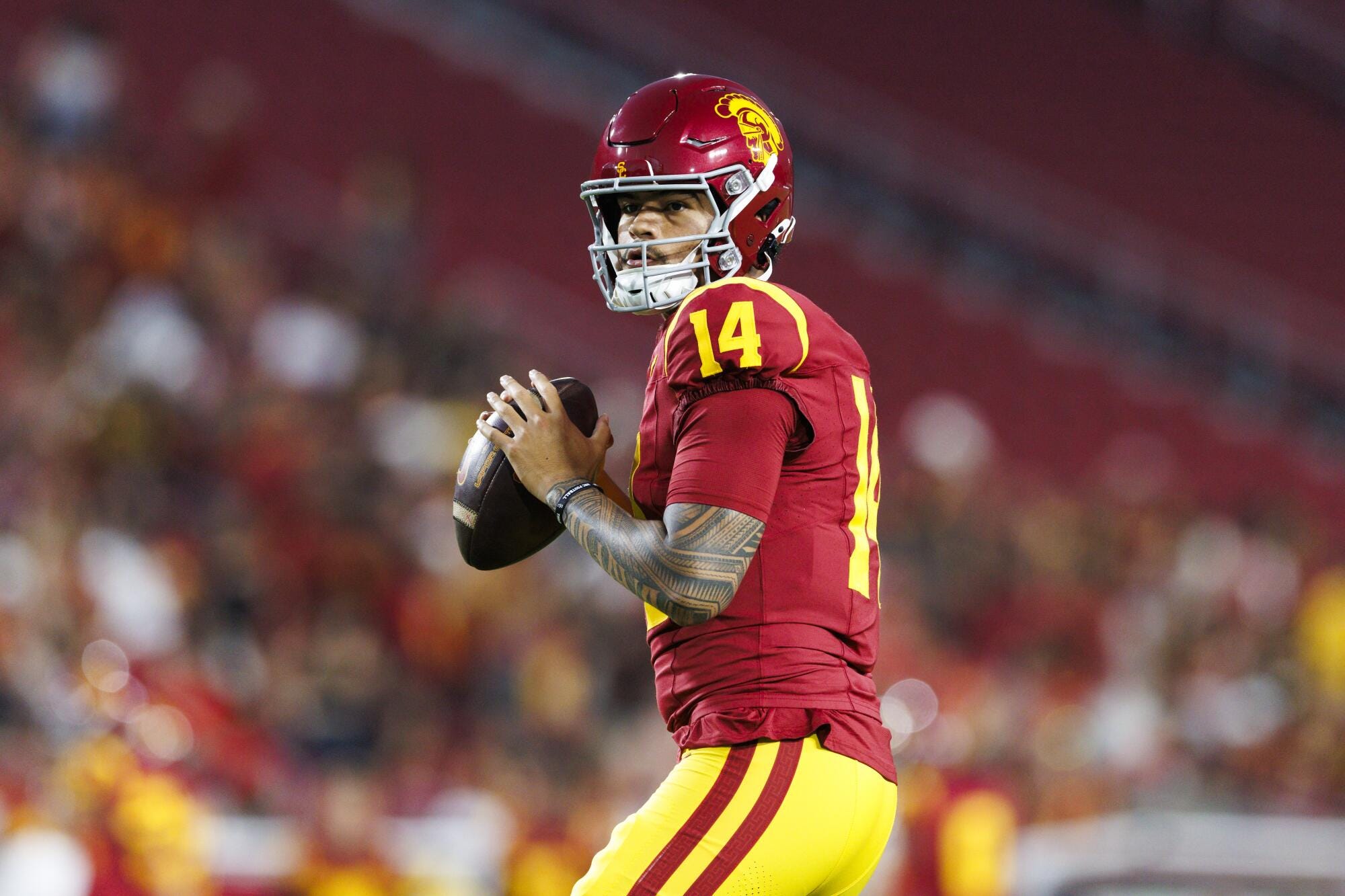
It’s around this point of the Big Ten preview that one truly realizes just how many teams are in this dang conference. Ohio State, Indiana and Oregon are the three I actually trust to win it, while USC, Michigan, Penn State, Washington and Iowa make up the next group down — teams I can absolutely envision reaching the College Football Playoff but need to see something from before I start planning any parades.
USC might have the most pressure of anyone in that group because it’s now or never for Lincoln Riley and the Trojans. Riley was supposed to turn USC back into USC, the version that collects Heisman winners like Pokémon cards and expects to compete for national championships instead of celebrating respectable seasons. Instead, the Trojans have spent much of his tenure hovering around the neighborhood of relevance without ever purchasing property there, despite having essentially every resource imaginable at their disposal.
Now Riley has pointed toward 2026 as the year when this whole thing is supposed to come together, which raises the rather obvious question of what exactly happened to all the other years. Eventually, USC has to produce something that justifies the time and money invested in Riley’s vision, and if another season ends with everybody shrugging their shoulders and wondering when the glory is coming, I’m not entirely sure what happens next. The incubator is sizzling in Los Angeles.
Michigan, meanwhile, has a new man on the headset in Kyle Whittingham, and I absolutely adore this hire. It felt like a coup. Whatever lingering remnants of the Jim Harbaugh era remained in Ann Arbor appear to have finally disappeared, and Whittingham brings precisely the kind of organizational stability Michigan could use after the chaos of the past few seasons.
Imagine what that guy can do with Michigan’s infrastructure. This is a program that needs winning football like James Bond needs his martini shaken instead of stirred. Sure, technically another option exists, but it just feels fundamentally wrong. As such, Whittingham doesn’t need to reinvent the wheel with the Wolverines. All that’s required of him is to stabilize the operation, maximize the enormous amount of talent — quarterback Bryce Underwood being chief among them — and resources available to him, and see how quickly Michigan can return to being what it was just several seasons ago.
Penn State begins its own new chapter with Matt Campbell, who has seemingly picked up Iowa State, stuffed the entire operation into the back of his truck and driven it to State College. Personally, I’m pessimistic that this is all going to work immediately, although plenty of people far smarter than me see a College Football Playoff appearance as not only possible but likely given how manageable the schedule appears to be. That feels a tad bit overzealous, in my opinion, but weirder circumstances have transpired in this wacky sport. Still, I’ll believe it when I see it.
Washington should be fascinating after narrowly avoiding disaster by getting Demond Williams Jr. back into the fold following his attempt to breach his NIL contract and scurry off to greener pastures. Everybody insists the resulting locker room fissures have been repaired, and perhaps they genuinely have, but that was such a bizarre saga that I’m curious whether any residual effects linger into the season. Either way, Jedd Fisch is too good of a coach for Washington to disappear. Whether this is a playoff team is another question entirely, but I’m considerably more bullish than bearish about what’s happening in Seattle.
And then there’s Iowa, beautiful and wonderful Iowa, still coached by Kirk Ferentz and still seemingly committed to discovering how few points a football team can score while technically winning the game. The ceiling might never reach Ohio State or Oregon because Iowa simply doesn’t possess the same talent advantages, but few programs understand themselves better. They are going to play defense, they are going to punt, they are going to score 17 points and you are going to laugh at them for three quarters before realizing they’re beating you 17-13. Then you’re going to sit in your car afterward wondering how you allowed this to happen.
Football perfection.
Good Football Teams With Major Question Marks Attached
Illinois belongs somewhere around this group, too, mostly because Bret Bielema has turned the Fighting Illini into exactly what you would imagine a Bret Bielema football team should be, and I mean that entirely as a compliment. Illinois football being legitimately relevant continues to be one of the sport’s more enjoyable developments, especially considering this is a place that has spent much of my lifetime being significantly more interesting on a basketball court than a football field. Luke Altmyer is gone, though, which introduces some uncertainty at quarterback, with Katin Houser the primary candidate to replace him. If the offense holds together, there’s no reason Illinois can’t continue being an enormous pain in everybody’s butt.
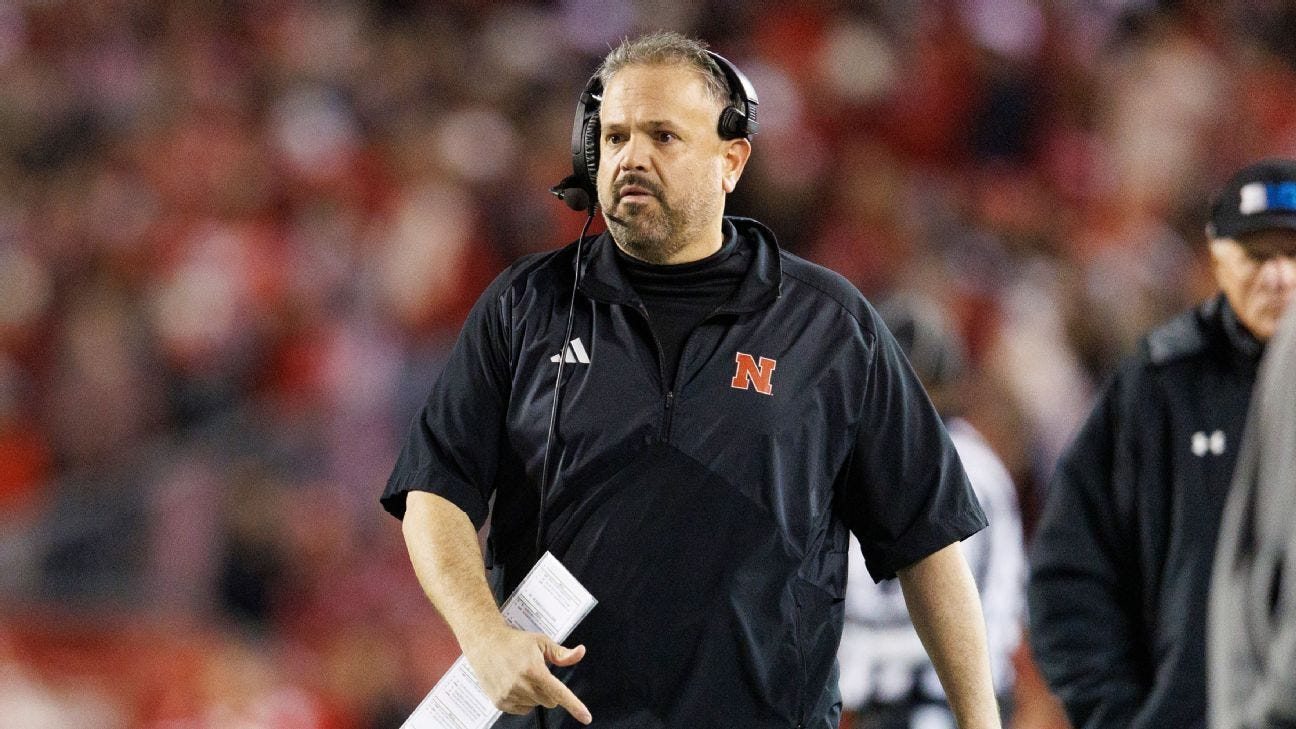
Nebraska is significantly more confusing. Matt Rhule is entering his fourth season, and somehow it still feels like the Cornhuskers are standing roughly where they were when he arrived, even if that isn’t entirely fair considering this program spent years treating a .500 record like an unattainable luxury item. There has been progress; it just hasn’t produced the quantum leap Nebraska fans have spent approximately 15 years waiting for.
At the very least, Anthony Colandrea should make everything entertaining. He is the quarterbacking equivalent of opening a mystery box. At any given moment, he can unleash a throw that makes your eyes pop out of your head. Three seconds later, he’ll throw the football directly to a linebacker. The duality of man is fascinating.
What?! There Are Still Eight Teams Left?
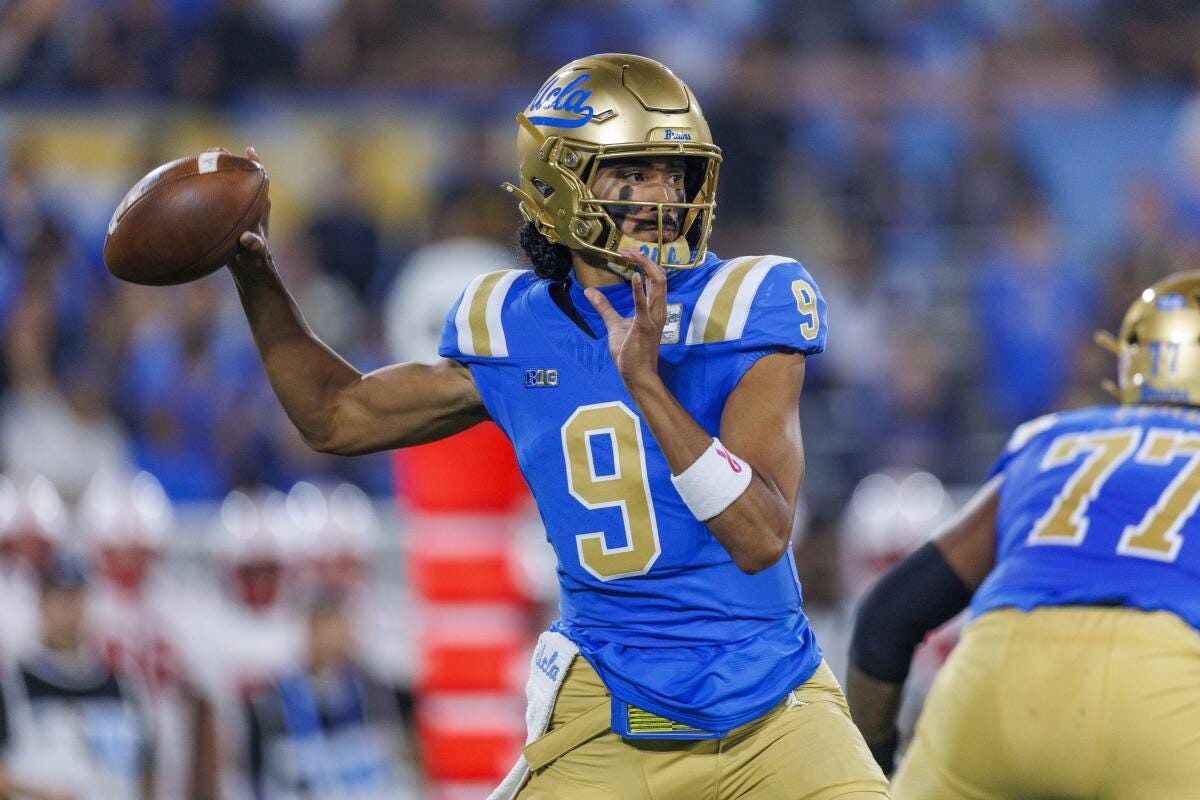
UCLA is significantly more exciting because Bob Chesney has arrived, bringing some desperately needed positive energy to the Rose Bowl after the failures of the past couple of seasons. Chesney was the man responsible for getting James Madison to the College Football Playoff, and while recreating that magic at UCLA is obviously a completely different assignment, the basic question is intriguing enough: If he can build that at James Madison, what can he eventually build with UCLA? I’m willing to find out.
So. Many. Teams. In. This. Conference.
Minnesota remains Minnesota under P.J. Fleck, which is mostly praise. Row the boat, win a respectable number of football games, upset somebody you weren’t supposed to beat and generally remain competent. I’d love to see the Gophers eventually take another step forward because Fleck has built one of the conference’s more reliable programs, but consistency in modern college football shouldn’t be dismissed simply because it isn’t particularly sexy.
Wisconsin might have the simplest equation in the entire conference. It’s now or never for Luke Fickell. Win, show some legitimate progress and perhaps this thing can finally start blossoming into what Wisconsin thought it was getting when it hired him. Lose, and everybody in Madison is going to start Googling “Wisconsin football coaching candidates” before Thanksgiving. There isn’t much middle ground left.
Maryland has always existed in a strange blind spot for me. Growing up in Texas, deep in Big 12 and SEC territory, the Terrapins were somewhere between Bigfoot and Delaware: I understood intellectually that they existed, but they rarely entered my daily life. Malik Washington gives me a reason to pay attention now, though, because Maryland has legitimate talent at quarterback, and if he’s firing on all cylinders, there’s enough here to make the Terrapins considerably more interesting than they usually are to me.
Northwestern, meanwhile, has a beautiful new stadium, is coming off a surprisingly competent season and now has Chip Kelly running the offense, which is a collection of words I never expected to type in that order. Chip Kelly? At Northwestern? College football has officially become somebody’s dynasty mode after six beers. Still, after everything this program has endured, perhaps Northwestern is actually becoming somewhat relevant again. What a concept.
Rutgers is much easier to understand. The offense was legitimately fun last season, while the defense sucked absolute cheeks, which tends to create problems when the basic objective of football is to score more points than the other team. The Scarlet Knights finished 4-8 despite that offensive success, so figuring out how to occasionally prevent the opposition from marching down the field would be a helpful development. Until then, I remain committed to one of college football’s timeless principles: always bet Rutgers overs.
Michigan State hired Pat Fitzgerald, which I’m not particularly sold on. Fitzgerald deserves plenty of credit for making Northwestern relevant for a long time, but the latter years of his tenure there weren’t exactly inspiring, and Michigan State needs somebody capable of dragging the Spartans out of the gutter rather than merely making them respectable. Maybe Fitzgerald proves me wrong, but this is one of the conference’s coaching hires that leaves me with considerably more questions than answers.
And Purdue? If Purdue ever becomes good at football again, please contact me immediately. I will probably be somewhere else watching another game.
So, Who Wins the Big Ten?
Ohio State.
I know, how adventurous of me. But sometimes the obvious answer is obvious for a reason. Julian Sayin, Jeremiah Smith, Bo Jackson, Ryan Day — it’s a great group capable of doing great things.
Indiana is obviously capable of doing it again, and at this point, doubting Curt Cignetti feels like touching the stove for the fourth consecutive time just to make sure it’s still hot. Oregon might have as much talent as anybody, too, and this could finally be the year Dan Lanning turns all those resources and all those almosts into a title. Or maybe somebody completely different — like Michigan or USC — rises up and plucks the title away from everybody else.
But Ohio State feels like the safest bet. There’s too much to love here for me to go anywhere else.