

The World Baseball Classic is awesome.
If you don’t believe me, I honestly don’t blame you. Some of you might not be big baseball fans. Others might not want to wake up early or stay up late to watch games happening in Tokyo. Even more probably aren’t even aware that the World Baseball Classic even exists. For anybody in that latter camp, this article is for you.
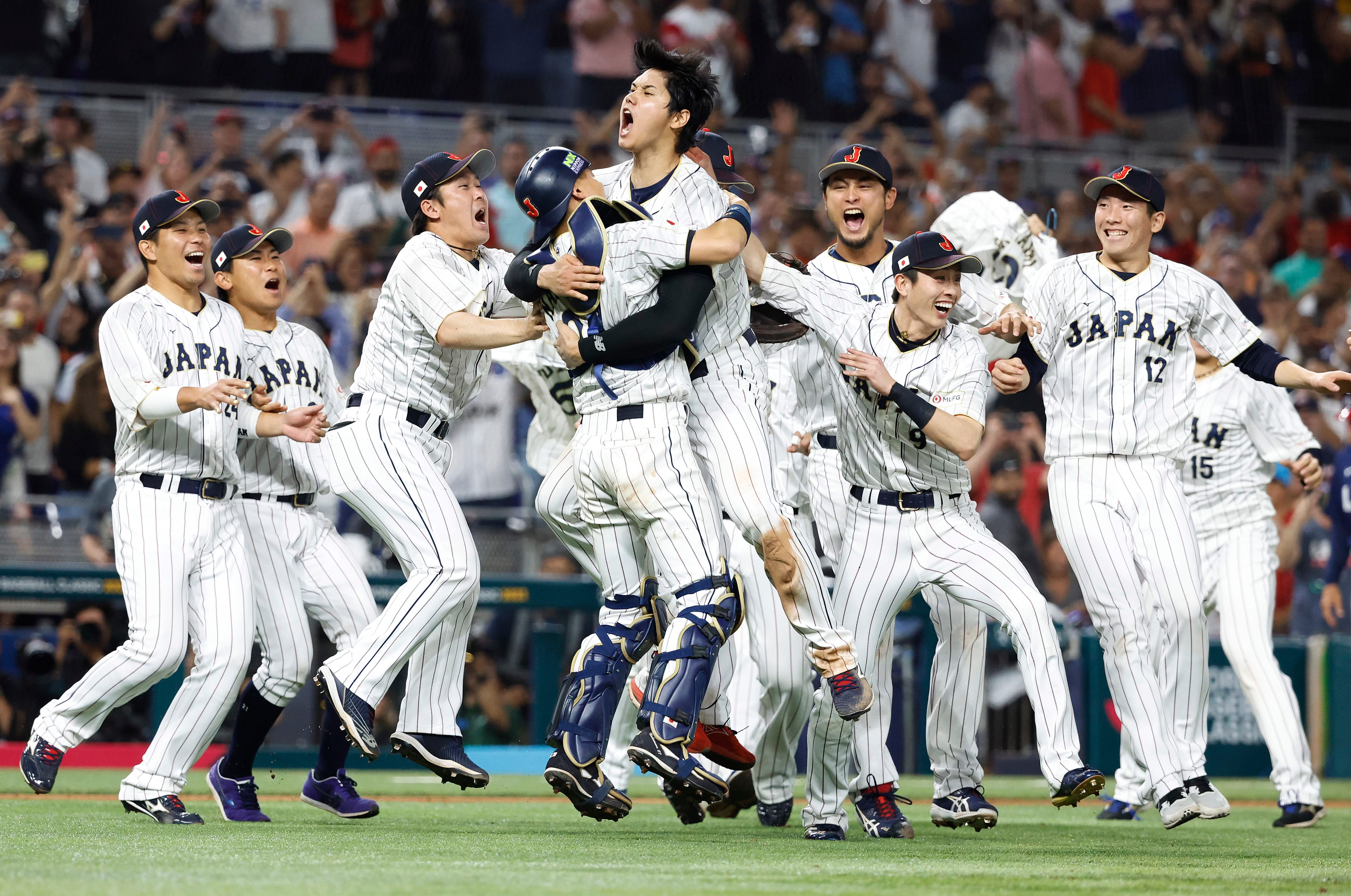
Imagine this scene: It’s the top of the ninth. Japan is up 3-2 against the United States in the championship game of the 2023 World Baseball Classic. There are two outs and nobody on base. On the mound for the Japanese is perhaps baseball’s grandest superstar since Babe Ruth: Shohei Ohtani. From his days in Japan’s Nippon Professional Baseball (NPB) with the Hokkaido Nippon Ham Fighters, to his first season in MLB with the Los Angeles Angels, to now with the Los Angeles Dodgers (the reigning two-time World Series champions), Ohtani’s accomplishments are just pure electricity. Not only is he one of the greatest pitchers of his generation — his fastball lives in the upper 90s, sometimes touching 100, and his sweeper is a hitter’s nightmare — but he’s probably the greatest hitter on the planet, too. He was the Rookie of the Year in 2019, then the MVP in 2021, 2023, 2024 and 2025. Yeah, he’s good.
At the plate facing this mammoth of an arm was Mike Trout. Prior to Ohtani’s arrival stateside, it was Trout who was the sport’s greatest player. From 2012-19, Trout — a native of New Jersey — slashed .310/.420/.579, hitting 235 home runs and collecting 218 doubles. His defense in center field was pretty stellar as well, making him one of the sport’s most well-rounded athletes. By the time he stepped into the box to face Ohtani in an at-bat I’ll remember for the rest of my life, Trout’s production had begun to wane with age. Multiple back injuries hampered both his output and his availability. He appeared in just 36 games in 2021, but bounced back (no pun intended) with a really good 2022 season, posting a 6.1 bWAR after hitting 40 home runs in 119 games. And even though the Angels stunk — how that was even possible with both Trout and Ohtani on the roster for six consecutive seasons is beyond even the most knowledgeable baseball fan — Trout’s presence consistently provided a glimmer of hope.
It was that hope the U.S. was counting on as Trout dug in to battle his Angels teammate and friend, Ohtani.
The first pitch, an 88-mph sweeper, just missed the zone. Trout didn’t bite. One ball, no strikes.
Ohtani then unfurled a 100-mph fastball right in Trout’s wheelhouse at the bottom of the zone. This was the moment. If Trout was going to be the hero for the Americans, this was the pitch.
He swung and missed. One ball, one strike.
Ohtani went back to the fastball, trying to paint the outside corner, but missed by a couple inches. Two balls, two strikes.
A 2-1 count is one of the best hitter’s counts. In 2025, hitters batted .329 in that situation, meaning Trout was in a spot to do real damage. Despite those odds, Ohtani challenged him again, pumping a 100-mph fastball right down the middle. Trout swung and missed. Two balls, two strikes.
With adrenaline coursing through his veins, Ohtani went for the jugular. He threw as hard as he possibly could — 101.6 mph — but missed badly. Three balls, two strikes.
Everybody at loanDepot Park in Miami was on their feet. Everybody watching at home was, too. This was surreal. The game’s most recognizable stars, Trout and Ohtani, facing off for international glory. This wasn’t the World Series, but it somehow felt even bigger. The United States and Japan, the two greatest baseball nations on the planet, relying on their best when it mattered most.
Three balls, two strikes.
Ohtani had thrown four straight fastballs at 100-plus. If he dropped a sweeper into the zone, there was a decent chance Trout wouldn’t be ready for the velocity change and would hack over the top. If he missed, though, the tying run would reach and the go-ahead run would step to the plate. Still, the risk was worth it. Ohtani’s sweeper is that lethal.
He reared back and fired.
Everybody held their breath.
(Is this too dramatic?)
Trout loaded up, ready to swing.
He missed.
Strike three. Ballgame.
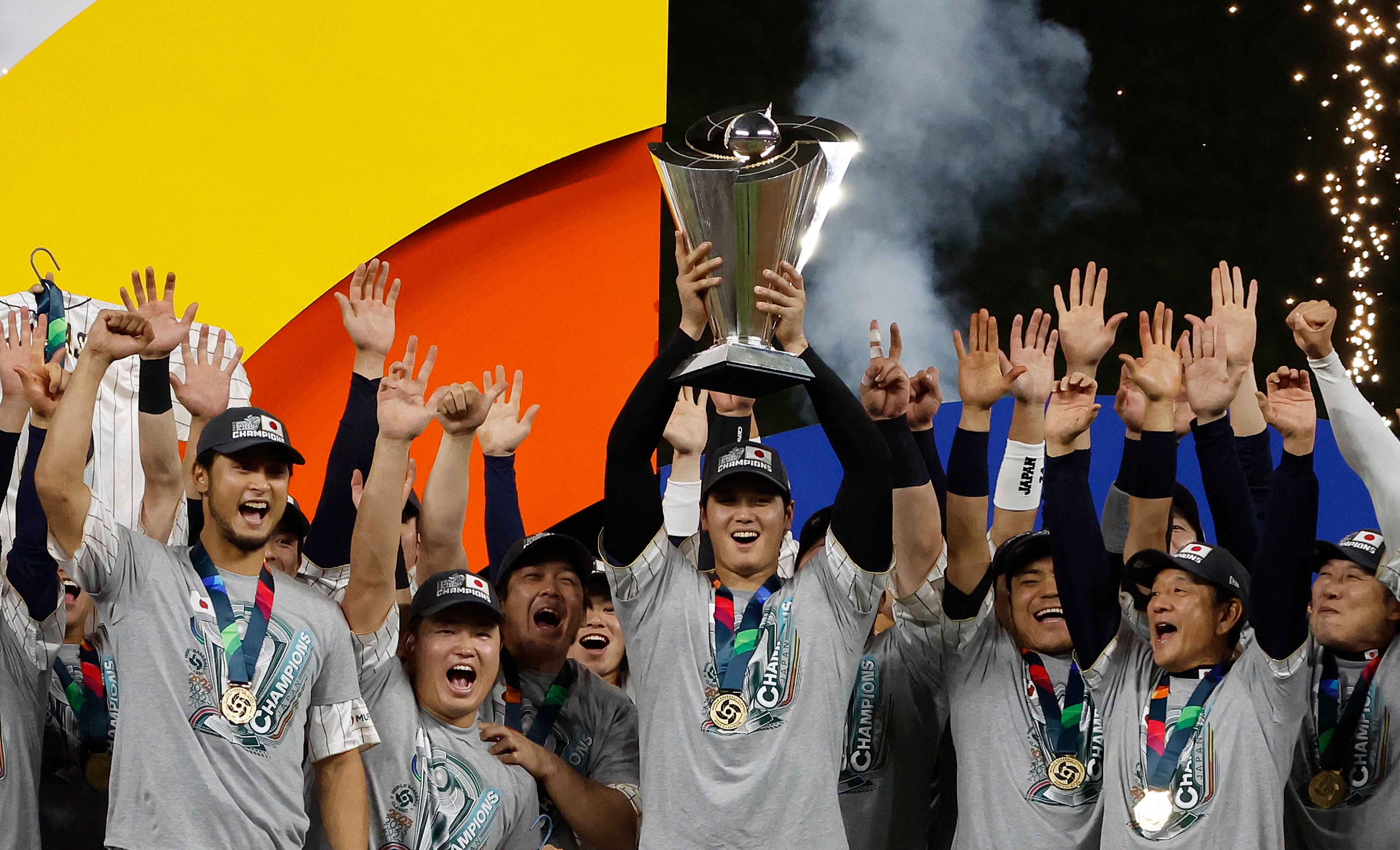
Ohtani spread his arms wide before tossing his glove in jubilation. The Japanese dugout spilled onto the field, mobbing their star pitcher. Japan had won the World Baseball Classic for the third time. The Americans, the reigning champions, were heading home empty-handed.
That’s the joy of the World Baseball Classic — and that’s the joy I hope we all get to experience again in 2026.
So. . . What Is This Thing Anyway?
The World Baseball Classic is a simple enough concept to explain. Twenty international teams battle for global baseball supremacy. Like most international sporting competitions, those 20 teams are split into groups. Each group plays a round-robin schedule, with the top two squads advancing to a single-elimination knockout tournament. Survive and advance long enough, and you’re crowned champion.
The nuances come fast once you get into the nitty-gritty, though. For starters, the World Baseball Classic — especially compared to events like the FIFA World Cup or the Olympic Games — is still relatively new. The first iteration took place in 2006 with 16 teams, and Japan emerged on top. Since then, five WBCs have been played, with Japan winning three times (2006, 2009, 2023), while the Dominican Republic (2013) and the United States (2017) have each claimed one title.
Second, buy-in has been a slow burn. Countries like Japan, South Korea, the Dominican Republic, Puerto Rico and Venezuela have rarely struggled to get their best players to participate. The United States, on the other hand, has dealt with some hurdles. The last two tournaments have helped, especially on the position-player side, but getting pitchers fully on board has remained a challenge. That’s not because those players lack patriotism or don’t want to represent their country — it’s all about timing.
The World Baseball Classic is held every four years (well, every three for a bit, then every four, then COVID blew the whole thing up, so honestly, who knows anymore) during MLB spring training, right before the regular season. Spring training is a critical ramp-up period for pitchers preparing for the 162-game grind, and workload management is everything. As a result, many pitchers have been hesitant to jump into a tournament where they’re expected to go full throttle.
That issue appears to be at least partially alleviated for 2026. Both Cy Young winners from last season — Tarik Skubal and Paul Skenes — have agreed to represent Team USA. Everybody was understandably fired up, until it was announced this past week that Skubal would make just one short group-stage start before returning to Detroit Tigers camp to continue preparing for the 2026 MLB season. His reasoning makes sense in a vacuum, but it’s still frustrating. For what it’s worth, Skenes is expected to make two starts — one in group play and another in the knockout round if the U.S. advances.
But all of the nuts and bolts can wait for another time. Because at its core, this is a fun event, even with limited participation from some elite pitchers. It’s a fantastic way to kick off the baseball season, and I sure as heck can’t wait for it to get started on March 4.
My goal is to have extensive coverage of the World Baseball Classic right here on SethStack. I can’t promise exactly what “extensive” means, but I’m hoping for at least a couple of posts per week throughout the tournament.
What I do know is that I’ll be watching every single game — and doing it my own way. Anyone who knows me knows I love scoring a baseball game. iPad, paper scoresheet, or an app like GameChanger — it doesn’t matter. I just love scoring baseball games. I’ll be doing exactly that throughout the 2026 World Baseball Classic, and if you’re interested, you can follow along. You can click here to track the tournament and each individual team via my scorekeeping! And if you want to help me keep score, that’d be fun too! Just give me a shout and I’m sure we can work something out.
I hope you’ll join me on this WBC journey. Stay tuned in the coming days for breakdowns of each group, plus any news and notes that feel worth your time.
SethStack’s coverage of the 2026 World Baseball Classic is all because of you! Yes, that’s right — you! Thank you so much for taking the time to read my work. If you’d like to contribute monetarily to my work — even though your eyes and attention over these past ~1,500 words is more than enough — you can do so by clicking the subscribe button below. Or you could just give me a wad of cash next time you see me on the street. If you don’t know what I look like, don’t worry, I’m easy to spot. I’m average height, a little skinny, have dark hair, wear glasses. . . wait, never mind. I’m pretty innocuous. I guess I’d make a good spy.
So happy to see you love it as much as I do. I recently posted a newsletter and it pitched the same narrative that the WBC is awesome. Love it brotha. Great post.