

Germany 7, Brazil 1.
That’s the score of the first soccer game I remember watching in its entirety. While the match itself happened on July 8, 2014, I actually laid my eyes upon it a year later when it was replayed on some network prior to the 2015 FIFA Women’s World Cup final. The timing of the viewing doesn’t really matter. All that does is the impression I was given. As somebody who was just beginning to discover this wonderful sport, Germany didn’t simply look like the best team in the world. It looked unbeatable. It looked like a dynasty that would spend the next decade-plus collecting trophies like a child collects coins.
For those unfamiliar, the infamous Mineiraço — as the match is called in Brazil — occurred during the 2014 FIFA World Cup in Brazil. The two world powers met in the semifinals in Belo Horizonte with more than 58,000 people in the stands spurring them on. If Brazil could find a way to win, then its hopes and dreams of capturing a sixth star on home soil remained alive. If Germany won, those dreams would be crushed.
What none of us knew at kickoff was just how thoroughly those dreams would be obliterated.
Goal after goal after goal flew into the back of the net for the Germans. In the span of six minutes during the first half, Germany scored four times, with Toni Kroos netting two while Miroslav Klose and Sami Khedira added the others. It wasn’t merely a defeat — it was a national embarrassment for Brazil and a coming-out party for Germany.
Several days later, Mario Götze’s extra-time winner against Argentina delivered Germany its fourth World Cup title. At that exact moment, there was nothing German football could do wrong. The squad was filled to the brim with superstars. Its youth system was the envy of the footballing world. Years and years of future success seemed preordained from the stars above. It appeared as if Germany had permanently planted its flag atop the footballing mountain.
Then the story turned.
The 2016 European Championship ended with a respectable semifinal defeat to host nation France. It was disappointing, but hardly alarming. Germany was still Germany. Then came the 2018 FIFA World Cup in Russia. Placed in a group with Sweden, Mexico and South Korea, the Germans looked primed for another deep run. Instead, they stumbled to a shocking defeat against Mexico before crashing out of the tournament with an even more stunning 2-0 loss to South Korea. I remember sitting there completely dumbfounded. The last time I’d really watched Germany play, it was dismantling Brazil 7-1. Now it couldn’t even survive the group stage.
Things never really recovered. Germany reached the Round of 16 at Euro 2020 before falling to England. The 2022 FIFA World Cup in Qatar brought another painful group-stage exit after a loss to Japan ultimately proved too much to overcome. And while 2026 is technically an improvement because Germany actually escaped the group, it somehow feels like another step backward. Outside of a 7-1 demolition (throwback) of Curaçao and a narrow 2-1 victory over Côte d’Ivoire, Germany looked pedestrian throughout this tournament. Even in victory, it never felt worlds above its opposition. In the end, the warning signs were there all along.
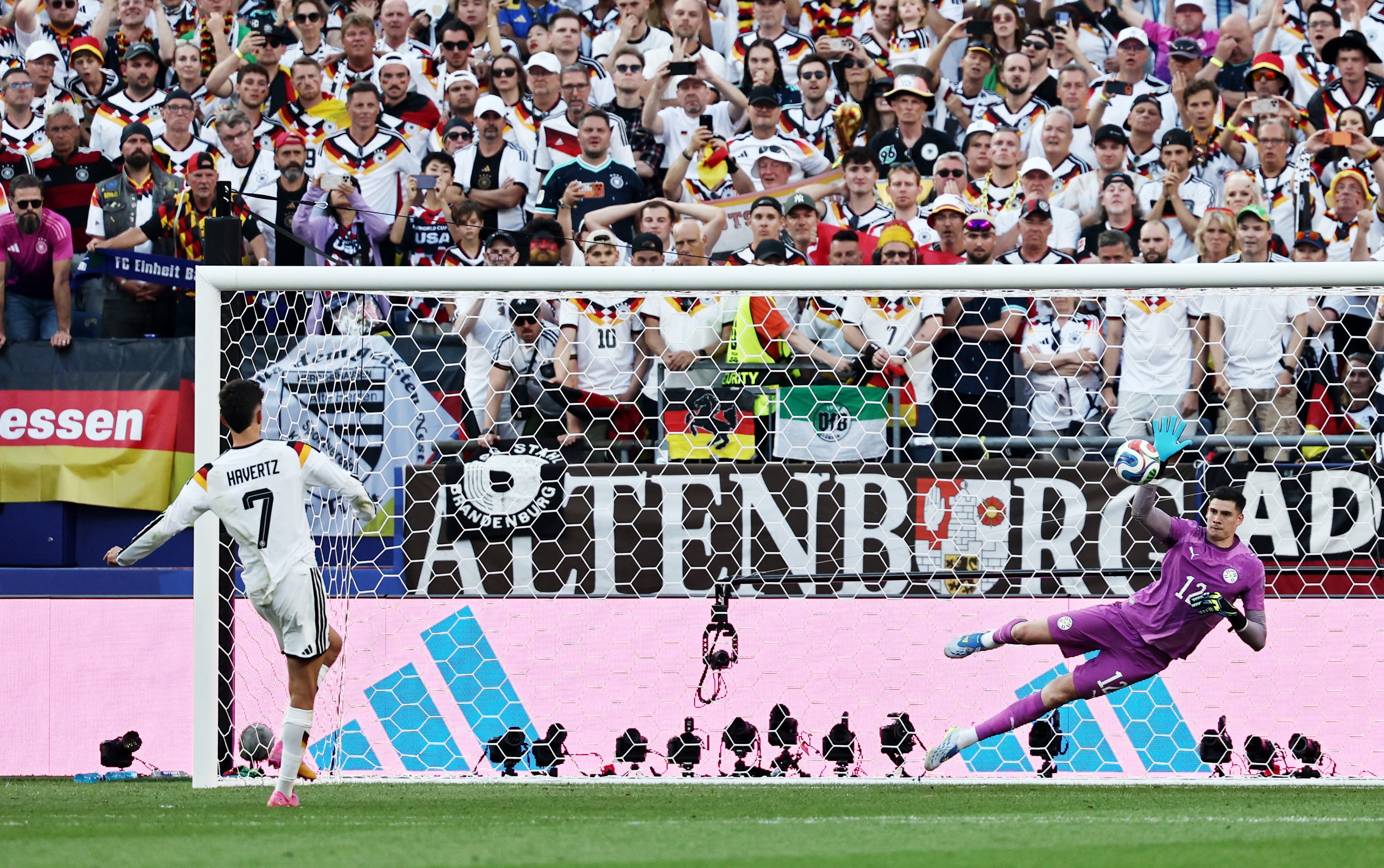
Look, Paraguay should’ve been a layup. The Paraguayans had shown some teeth during qualifying, but they also got whooped 4-1 by the United States earlier in this tournament. Germany controlled 76% possession, outshot Paraguay six shots on target to three and held a 1.57-0.35 expected-goals advantage. Orlando Gill stood on his head in goal, making six saves, while Paraguay waited patiently for its chance. It finally came in the 42nd minute when Julio Enciso finished off a perfect counterattack. Kai Havertz brought Germany level nine minutes into the second half, but the breakthrough never truly arrived.
Well ... kind of.
Germany thought it had won the match in extra time before the goal was wiped away because of what the referee — with a VAR assist — ruled was a foul on the goalkeeper. (Germans far and wide will argue that it wasn’t a foul until the day they die.) Was it a foul? Probably. Does that sort of incidental contact usually get called? Not from what I watched in the Premier League this past season. If that same referee had officiated Arsenal all year, I’m fairly convinced the Gunners would’ve finished fourth instead of first. (I’m just jesting and am totally not salty.) Anyway, the goal came off the board, and the match drifted toward penalties, shifting all the pressure entirely onto Germany.
The drama that unfolded from there was magnificent. When Kai Havertz missed his first penalty, putting Germany in a hole straight from the jump, I gasped. I did the same when Paraguay somehow squandered two separate opportunities to put the shootout away. Then came perhaps the defining image of Germany’s tournament. Jonathan Tah, who reportedly only stepped forward because nobody else wanted the responsibility despite the fact that he’d never taken a penalty in a competitive match, launched his effort somewhere into the upper deck of Gillette Stadium. Moments later, Alan Cantero calmly buried the winner to hand Paraguay arguably the greatest victory in its footballing history while Germany walked off the field in shame.
“What happened to German football?” is the question everybody will be asking today, and the honest answer is that it’s complicated. This feels like a team stuck between generations, one that’s filled with technically gifted players but lacks an identity. Julian Nagelsmann spent much of the tournament facing criticism from some of Germany’s biggest football voices, and that couldn’t have helped the confidence in the dressing room, either. Rory Smith put it better than I ever could when he observed that Germany’s youth system “produces loads and loads and loads of the same players. They produce nothing but neat, technically good midfielders... They have no cutting edge.” Watching this team over the past three weeks, it’s hard to argue with that assessment.
Germany still has outstanding players. Jamal Musiala is brilliant. Florian Wirtz is brilliant. Kai Havertz has had brilliant moments throughout his career, too. But when the lights shine their brightest, something just seems to shrivel. France has Kylian Mbappé. Spain has Lamine Yamal. England has Harry Kane and Jude Bellingham. Argentina has Lionel Messi. Heck, Paraguay has Julio Enciso. Germany, despite all of its talent and a population of more than 84 million people, doesn’t seem to have that difference-maker anymore.
When I watched Germany dismantle Brazil all those years ago, I thought I was watching the birth of football’s next great dynasty. Looking back now, I was unknowingly watching the end of one.