

This is a free excerpt from The Football Notebook. To read the full article, click the link below.
The Football Notebook: Man City Fans Pick Up the Pieces, the SEC Eats Itself and Colorado Loses Its Playbook

Welcome to The Football Corner, the place where it appears Jason and Kylie Kelce have finally resolved their issue.
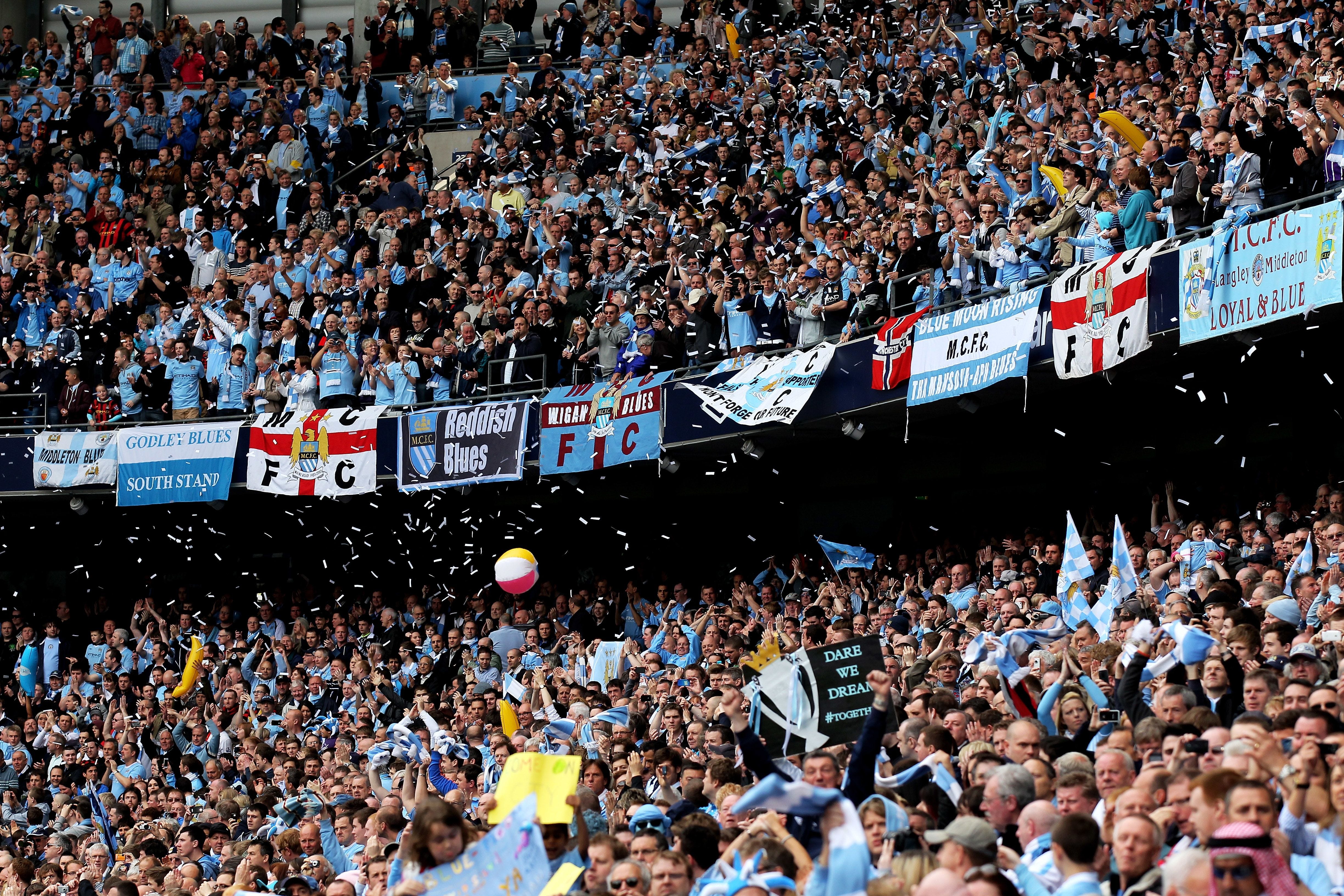
The Manchester City scandal has engulfed the football world much like Mount Vesuvius overwhelmed Pompeii 2,000 years ago. Nobody can outrun the metaphorical lava of City’s cheating, least of all the supporters of the club who have stood by their team through thick and thin.
For many, it’ll be easy to be unsympathetic to City fans’ plight. After all, the club has won pretty much everything under the sun for the last decade-and-a-half, something most supporters will never have the luxury of experiencing. Feeling bad for a group of people who have experienced overwhelming joy while you’ve had to wallow down in the muck, often because of that team’s triumphs, is difficult for any reasonable person. And most supporters of sports teams are anything but reasonable.
At the same time, however, I don’t think the emotions of City fans should be discounted at this particular moment.
Yes, there are some who will defend the club and its ownership to the very end, insisting that the rhetoric pushed by the Abu Dhabi billionaires should be trusted just as much as Newton’s laws of physics. Those people will probably never be persuaded to see anything differently, even though the Premier League’s independent commission decided that City broke financial rules in an effort to gain an advantage over its competition, helping build the machine that eventually collected trophy after trophy.
Other City supporters are in a much more precarious place than the people spending their days defending ownership on the internet. The moments of happiness City provided them will never go away. Sergio Aguero’s goal in the 93rd minute against Queens Park Rangers to win the title in 2012 happened in front of their very eyes. Winning the treble — taking home the FA Cup, Premier League and Champions League in the same season — in 2022-23 happened, too.
There are so many other moments like those. The goals happened. The trophies were lifted. People hugged their fathers and mothers, brothers and sisters and complete strangers in the stands. They cried in pubs and screamed themselves hoarse celebrating something they had dreamed about for years, sometimes decades.
City went from being a club that spent much of its existence living in the considerable shadow of the other team in Manchester to the top of the footballing world in less than 20 years. On its face, it should be one of the greatest stories the sport has ever produced. A fan base that had watched Manchester United win just about everything finally got its turn.
Those experiences were real, and I think the distinction is important. No commission can travel backward through time and remove those memories from somebody’s life.
What has changed is everything surrounding them.
Perhaps the cruelest part of this entire thing for the ordinary City supporter is having to reconcile the happiest sporting moments of their lives with the realization that the foundation underneath those moments may have been fundamentally dishonest. For years, they were told the Premier League was conducting a witch hunt, that City had done nothing wrong and that vindication would eventually arrive. Now they have to reconsider the story they were told.
Imagine growing up supporting a club from the time you were a little boy or girl, watching it climb from places you never wanted to be into places you never imagined it could reach, only to eventually discover that the explanation you were given for how it happened could no longer be trusted. The club that had given you some of the happiest moments of your life had simultaneously become something almost everybody outside of it despised.
None of that is the supporter’s fault. I think it’s an important line to draw because football clubs mean radically different things to the people who own them and the people who love them. An ownership group can view a club as an investment, an international brand, a strategic asset or some combination of all three. Supporters don’t get that luxury.
Manchester City isn’t an item on a balance sheet to the person whose dad took him to games when he was 6 years old. It’s part of his life. The badge is tied up in family and place and memories that existed long before anybody in Abu Dhabi decided owning a Premier League club sounded like a worthwhile venture.
There were undeniably good things that came alongside the Abu Dhabi ownership, too, which makes the whole thing even messier. Prime Minister Andy Burnham, who served as mayor of Greater Manchester for much of the ownership’s tenure, has pointed toward the role those owners played in the building of modern Manchester. He’s not necessarily wrong about that. There has been investment, development and genuine change in the city that extends well beyond what happened on a football pitch.
Improving Manchester, though, was never the same thing as loving Manchester City for the reasons its supporters did. An ownership group could spend billions transforming a neighborhood while still fundamentally viewing the football club as something different from the people who had followed it their entire lives. I think you can read between the lines of what I’m trying to say.
In the end, those supporters are among the people who have been harmed most by all of this because they’re the ones being asked to rethink something they never imagined they would have to question. Nothing can erase what they felt in those moments, but the pride attached to them has been complicated in a way that may never fully go away. The memories are still theirs. What has changed is the story they were told about what made those memories possible.
Jack Pitt-Brooke, a football contributor at The Athletic and a Manchester City supporter, wrote about that feeling in a way that I don’t think can really be improved upon:
“Learning that those wins and titles were seemingly built on cheating is extremely difficult to process. If you roll your eyes at that, just try telling yourself that your own happiest memories, the things that mean most to you in the world, were seemingly built on lies. It is not easy to sit with.”
Outsiders should at least try to understand this part. We can condemn what Manchester City did and believe the punishment should be severe without treating ordinary supporters as if they were somehow participants in it. They didn’t build the financial structure behind the club’s rise. They simply believed in the team in front of them.
City supporters may now have to start making a distinction of their own. Their loyalty to Manchester City does not have to become loyalty to Manchester City’s ownership, no matter how successfully those two things have been intertwined over the last decade-and-a-half. Supporting the club and defending the people who ran it are not the same act.
Pitt-Brooke gets at that, too:
“Perhaps now is the time to start the long overdue work of drawing these lines and distinctions clearly again. Only when the fans have started to put some distance between themselves and those in charge can they even begin to think about the future. Rallying behind the people who brought City to this point is a moral and practical dead-end.”
Manchester City supporters have been left in an uncomfortable place. They don’t have to reject their own history, but they may have to reconsider who deserves to be included in it. Manchester City is bigger than the people who currently own it, just as it existed long before they arrived.
The ownership can leave. The club, and the people who love it, remain.